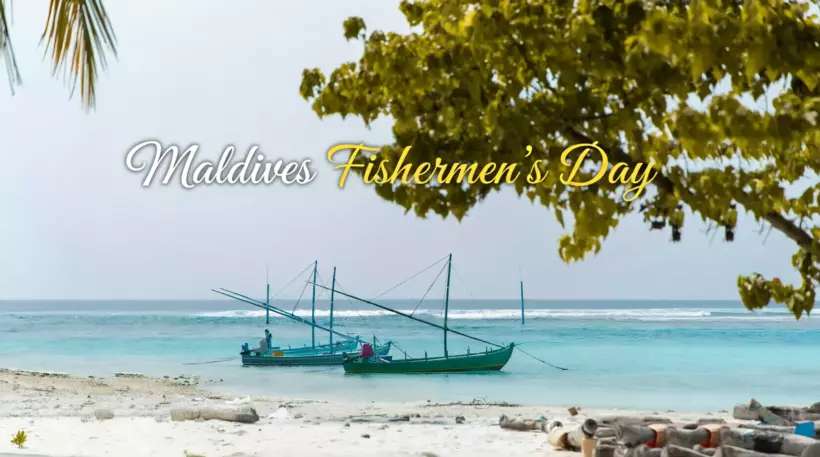
Every December 10, something remarkable happens on the islands of the Maldives that almost no travel guide bothers to mention. Fishermen’s Day — a national holiday celebrating the men and women who have kept these atolls alive for over a thousand years — fills local harbors with boat races, community feasts, fish fairs, and the smell of smoked tuna simmering in open pots. While resort marketing directs visitors toward overwater villas and infinity pools, the most authentic culinary and cultural experience on the Maldivian calendar is unfolding just a speedboat ride away on the local islands.
Here’s what makes this day genuinely different: the Maldives has the highest per capita fish consumption in the world. Maldivians eat roughly a pound of fish every single day. Tuna alone accounts for 85% of the protein in the Maldivian diet, and skipjack tuna is consumed at a rate of 94 kilograms per person annually. That is not a statistic about abundance — it is a statement about identity. Fishing is not background scenery in the Maldives; it is the civilization. And Fishermen’s Day is when that civilization celebrates itself in the open.
If you are planning a December trip to the Maldives, building one full day around this holiday will transform an already beautiful holiday into something that actually means something.
Why the Maldives Is Built on Tuna, Not Tourism
Tourism is the biggest industry in the Maldives today, but fishing built the nation. For centuries before the first resort opened in 1972, the Maldivian economy was entirely dependent on the sea. Former President Maumoon Abdul Gayoom described it plainly: “Fishing is the lifeblood of our nation. It is inborn. From the soil on which we live, to the sea around us, it remains an integral part of our existence.”
That history goes back at least to the 9th century CE, when tuna fishing was already documented in the atolls. By the 14th century, the Moroccan explorer Ibn Battuta visited the islands and wrote about the unique pole-and-line fishing practices he observed — the same techniques still used today, over 700 years later. The traditional fishing vessel, the dhoni, was already admired by travelers in the 12th century: a handcrafted wooden boat with a curved hull, planks sewn together with coir rope rather than metal nails, deliberately designed to flex against coral reefs without shattering.
The dhoni was not just a boat. It was the economic engine of the entire archipelago. Fish products were the Maldives’ main export for most of recorded history. Dried tuna — called Maldive fish — was traded across the Indian Ocean to Sri Lanka, India, and beyond, prized as a long-lasting protein source in an era before refrigeration.
When tourism arrived, fishing did not disappear. It adapted. Today the fisheries sector supports the livelihoods of roughly 30% of the Maldivian population, with over 30,000 people directly employed in pole-and-line fishing alone. Fish and fish products still make up over 90% of total Maldivian exports. The skipjack and yellowfin tuna combined account for 98% of the total catch. And Maldivians at home still consume fish at a rate unmatched anywhere on earth — 181 kilograms per person per year according to Ministry of Fisheries data — because this is not a food trend or a lifestyle choice. It is simply what people eat.
Understanding this is the prerequisite for understanding what Fishermen’s Day actually represents. This is not a tourist-friendly cultural show. It is a country acknowledging the industry that made it.
What Actually Happens on Fishermen’s Day
Fishermen’s Day is a public holiday. Across the inhabited islands — particularly those with strong fishing communities — the day fills up with activity from morning to evening.

Each year the main celebration rotates to a different island, and the host island becomes the focal point for national-level events. In 2022, for instance, the celebration was held in Gdh. Faresmaathodaa in Huvadhu Atoll, known as one of the great fishing hubs of the Maldives and situated on the Huvadhu Channel, one of the most biologically rich waterways in the Indian Ocean.
What you will find at a Fishermen’s Day celebration:
Fishing competitions and demonstrations. Fishermen showcase traditional pole-and-line techniques, working with live baitfish from the bow of a dhoni exactly as their ancestors did in the 14th century. Watching a skilled pole-and-line fisherman at work — a single bamboo rod with a barbless hook, a flash of silvered bait, a tuna flipped onto the deck in under a second — is one of the most impressive things you will see anywhere in the Maldives, and it happens here for free.
Boat races. Traditional dhoni races are a highlight, with fishermen competing in decorated vessels. The boats are vivid: painted in greens, blues and whites, flags flying. Local rivalry is fierce and the races draw community crowds to the harbor.
Fish fairs and temporary markets. Pop-up markets appear all over the local islands, selling fresh catch, smoked fish products, and prepared traditional foods. According to Responsible Travel, local islands on December 10 see “impromptu markets pop up all over the place” near fishing communities, and the food quality is exceptional — you will be eating fish that was in the water that morning.
Cultural performances. Bodu beru music, the traditional Maldivian percussion tradition with African roots, is performed throughout the day. The deep, steady beat of the drums and the call-and-response vocals are the sound of the Maldives at its most unfiltered.
Community meals and exhibitions. Schools, community centers, and local organizations run educational events about marine conservation, traditional fishing techniques, and the economic importance of the fisheries sector. These are aimed at Maldivian audiences but are typically open and welcoming to visitors who show up with curiosity rather than cameras in their faces.
The celebrations are spread across all 26 atolls, with larger events in recognized fishing communities: South Ari Atoll, Huvadhu Atoll, Baa Atoll, and the islands around Malé.
The Four Dishes Every Visitor Should Eat on December 10
The single most compelling reason to spend Fishermen’s Day on a local island rather than in a resort is the food. Not restaurant food — market food, home food, community food. Here is what to look for.
Mas Huni — The Breakfast That Defines the Nation
Mas huni is what most Maldivians eat before they do anything else. Shredded smoked tuna is mixed raw with freshly grated coconut, finely sliced onion, lime juice, and green chili, then served with roshi — a thin, slightly charred flatbread. There is no cooking; the acid from the lime does the light work. The result is a dish of startling freshness: the smoke of the tuna, the sweetness of coconut, the sharp bite of raw onion and chili, the brightness of lime.
On Fishermen’s Day, mas huni appears at breakfast tables, in market stalls, and as a free morning offering at some community events. Eating it in a harbor-side tea house while fishermen prepare their boats for the day’s race is the closest you will come to a genuinely local Maldivian morning. The dish is served at room temperature and requires no utensils — eat it with roshi, torn by hand, used as a scoop.
Garudhiya — The National Soup
Garudhiya is the Maldivian national dish, and it is deliberately simple in a way that rewards the finest possible ingredients. Chunks of fresh tuna are simmered in unseasoned water with only a little salt. The broth is clear, faintly golden, and intensely savory — not in the way of a long-reduced stock, but clean and oceanic. It is served with steamed rice, raw sliced onion, lime wedges, and fresh chili on the side, so each eater seasons their own bowl at the table.
The taste is best understood as a test of fish quality. Bad fish makes a flat, slightly funky garudhiya. Excellent fish — skipjack caught that morning and cooked within hours — produces a broth with a sweet, mineral depth that is impossible to fake. December 10, with fishing boats landing fresh catch in the morning, is one of the better days of the year to encounter garudhiya at its finest. Many locals take a spoonful of rihaakuru (see below) and stir it into the rice before eating — a combination that amplifies the dish into something considerably more complex.
Rihaakuru — The Dark Paste That Underpins Everything
Rihaakuru looks alarming if you encounter it without context: a thick, dark brown paste ranging from amber to almost black, with a sharp, pungent fermented smell. It is made by cooking down tuna in water for hours, then continuing to reduce the liquid until almost nothing remains except concentrated protein and umami. The result is the Maldivian equivalent of fish sauce, miso, and Worcestershire sauce combined.
Eat rihaakuru as locals do: dragged across the top of a piece of roshi flatbread, mixed into a bowl of rice with garudhiya, or used as a dipping base for raw vegetables. Its intensity is formidable at first, but it is one of those flavors — like aged parmesan or anchovies — that becomes addictive once your palate locates the underlying sweetness. Rihaakuru sold in local markets on Fishermen’s Day is often made in small batches by fishing families and is considerably more nuanced than the commercial versions exported internationally.
Kulhi Boakibaa — The Festive Fish Cake
If there is one dish that belongs to celebration in the Maldives, it is kulhi boakibaa. This dense, fragrant fish cake is the traditional food of weddings, Eid, and community festivals — and December 10 is firmly in that category. Ground rice is mixed with smoked tuna, freshly grated coconut, onion, ginger, garlic, and fresh green chili, pressed into a baking dish, and cooked until golden on top and soft inside. Slices are sold at every market stall on Fishermen’s Day, usually alongside afternoon tea.
The texture sits between a cake and a tart: firm enough to pick up with your fingers, slightly chewy from the rice, with the alternating warmth of chili and sweetness of coconut running through each bite. It is perfect street food. Eat it hot from a market counter with a glass of sweet tea and you have the authentic Maldivian snacking experience that resort menus spend years trying, imperfectly, to replicate.
The Pole-and-Line Fishery: Why the Maldives Is a Global Sustainability Model
Most tuna on the world market is caught by enormous purse seine vessels that encircle entire schools — and everything else in the water — in a single net. Bycatch in these fisheries can include dolphins, sharks, juvenile tuna, and a range of non-target species. The Maldives has never fished this way.
Maldivian tuna fishing uses a technique called pole-and-line, known locally as mas jajehun. A vessel carrying 15 to 20 fishermen locates a school of tuna, then uses live baitfish — usually sprayed from hoses to create the illusion of a bait ball — to bring the tuna to the surface in a feeding frenzy. The fishermen then work in a line along the bow, each with a bamboo pole, a short line, and a barbless hook. They catch tuna one fish at a time, flipping each one behind them in a single fluid motion, at a rate that can reach dozens of fish per minute per fisherman.
The environmental implications are profound. Bycatch in pole-and-line fishing is negligible — the method targets precisely what it intends to catch. Habitats are undisturbed; the vessels do not drag nets across the seabed. The Indian Ocean skipjack stock fished by Maldivian vessels has been independently assessed and found to be in a healthy state.
In 2012, the Maldives pole-and-line skipjack tuna fishery became the first in the Indian Ocean to receive Marine Stewardship Council (MSC) certification — the globally recognized ecolabel for sustainable seafood. The certification followed rigorous independent assessment against the MSC’s environmental standard and included stakeholder input from organizations including WWF. Skipjack tuna from MSC-certified Maldivian fisheries now appears in supermarkets across Europe and North America, where it commands premium pricing precisely because consumers can trace it back to one of the most ecologically sound large-scale fisheries on earth.
The Maldivian pole-and-line fleet currently includes over 677 vessels operating under a strict management framework. Since 2022, an electronic logbook system integrated into the national Keyolhu fisheries management platform has recorded catch data in real time; use became mandatory across the entire fishery in 2025. This level of data transparency is exceptional in global tuna fisheries and is a direct result of Maldivian advocacy within the Indian Ocean Tuna Commission — the multinational body that governs regional tuna management.
Fishermen’s Day is, among other things, a celebration of this system. The fishermen being honored are not just practitioners of an ancient tradition; they are active participants in a fisheries management model that the rest of the world is slowly, inadequately trying to catch up to.
How Tourists Can Participate — Without Intruding
The Maldives has two distinct travel realities: the private resort islands, which operate as self-contained luxury environments and have little contact with local Maldivian life, and the inhabited local islands, where the population lives and where real cultural events actually happen.
Fishermen’s Day takes place on the local islands. If you are staying at a resort on an uninhabited island, participating requires a day trip. This is straightforward to arrange, costs a fraction of most resort excursions, and is one of the more rewarding things you can do in the Maldives.
Practical approaches:
Book a local island guesthouse for December 9-10. A growing network of locally owned guesthouses operates on inhabited islands across all the major atolls — Thulusdhoo, Maafushi, Ukulhas, Dhigurah, and dozens of others. Staying overnight on a local island puts you in the harbor at sunrise on December 10, when the day’s activity begins. Prices are dramatically lower than resort rates.
Day trip from your resort. Arrange a speedboat transfer to the nearest inhabited island for December 10. Most resort concierge desks can organize this, though they may not proactively offer it. Ask specifically for an island known for its fishing community. The trip by speedboat typically takes between 20 and 45 minutes depending on your location.
Join a traditional fishing excursion. Many local tour operators across the atolls offer half-day pole-and-line fishing experiences on working dhonis. These are not theatrical recreations; you are on a working vessel with a working crew. December is the dry season and seas are calm, making it an excellent time for this. Sunset fishing excursions — which include a barbecue of your own catch on return — are widely available for $50–80 per person.
Attend community events openly. Maldivian hospitality is genuine and communities hosting Fishermen’s Day events are accustomed to curious visitors. The rule is the same as in any culture: dress modestly on local islands (shoulders and knees covered away from the beach), show interest rather than just taking photographs, and if you eat at a local stall, pay the local price rather than attempting to bargain at a community food fair.
Where specifically: The host island for each year’s national celebration is announced by the government in the weeks before December 10. For travelers who want the most concentrated experience, traveling to whichever island is hosting the national event guarantees the largest celebrations. For a more intimate experience, any island in a fishing-heavy atoll — Huvadhu, Baa, Lhaviyani — will have meaningful local celebrations without the national-event crowds.
Building Fishermen’s Day Into Your December Itinerary
December is peak season in the Maldives for straightforward reasons: the northeast monsoon has arrived, bringing dry air, calm seas, clear skies, and water temperatures averaging a comfortable 28°C. Visibility underwater is excellent — consistently above 20 meters in most atolls. This is the window serious divers and snorkelers plan around, and it is the same window that produces ideal conditions for dhoni races and outdoor fish fairs.
Flights into Velana International Airport (Malé) are at their most competitive if booked early; December bookings fill faster than any other month. A practical itinerary structure:
Days 1-3: Arrival and atoll orientation. Fly into Malé, take a speedboat or seaplane transfer to your chosen atoll. If your resort or guesthouse is in Baa Atoll, Ari Atoll, or North Malé Atoll, you are within easy reach of inhabited fishing islands.
Day 4 (December 10): Fishermen’s Day. Arrange your local island day or overnight in advance. Morning: fish fair and market, mas huni breakfast, boat-race watching. Afternoon: community events, kulhi boakibaa and afternoon tea. Evening: bodu beru music and community dinner if available.
Days 5-10: Standard Maldives itinerary. Diving, snorkeling, reef exploration, resort experience. December conditions make every water activity exceptional. Sailfish peak from December through May; reef fish species including grouper, snapper, and giant trevally are year-round.
The key logistical note: book your Fishermen’s Day island accommodation or day-trip transfer at least two weeks in advance. Local guesthouses on fishing islands are small — typically 10 to 30 rooms — and December demand is high. December 10 specifically is a public holiday, meaning transportation from Malé (public ferry) may run on a modified schedule. Speedboat charter is the reliable option.
What Resort Tourism Gets Wrong About the Maldives
There is nothing dishonest about the resort Maldives experience. The overwater villas are genuinely extraordinary, the reefs are spectacular, and the service is among the best in the world. But the version of the Maldives sold to most visitors has been filtered until nearly everything that makes the islands culturally distinct has been removed. The dhonis are decorative features by the jetty. The tuna in the resort restaurant comes pre-portioned from a central supplier. Maldivian food, when it appears on resort menus, is a curiosity option alongside the sushi bar and the Italian.
Fishermen’s Day exists precisely because the Maldivian government and people know that something needs to be preserved, celebrated, and passed on. The schools running marine conservation workshops on December 10 are teaching children about an industry that feeds them and their parents, that has shaped their language (the Dhivehi word for the fishing technique, mas jajehun, is used daily), and that continues to give the Maldives a legitimate claim to global environmental leadership in a way that no luxury resort ever could.
The pole-and-line fishery that MSC certified in 2012 is not just a sustainable food source. It is a 700-year-old technology that has never needed to be replaced because it was never wrong in the first place. Ibn Battuta watched the same technique from a different dhoni in 1340 and thought it was worth writing down.
Going to a fish fair on a local island in December and eating a piece of kulhi boakibaa that cost you the equivalent of $1 while watching a dhoni race in a harbor full of fishermen in their best clothes is not a lesser version of the Maldives experience. It is a deeper one.
Practical Summary: Fishermen’s Day at a Glance
| What | When | Where | Cost |
|---|---|---|---|
| National celebration (rotates each year) | December 10 | Announced host island | Free to attend |
| Fish fairs and food markets | All day | Inhabited islands across all atolls | MVR 15–80 per dish (~$1–5) |
| Traditional fishing excursion (dhoni) | Morning departure | Local tour operators, all atolls | $50–80 per person |
| Local island guesthouse accommodation | Book 2+ weeks ahead | Maafushi, Thulusdhoo, Ukulhas, Dhigurah | $40–120/night |
| Speedboat day trip from resort | Departs morning | Via resort concierge | $30–80 per person |
Frequently Asked Questions
Can tourists attend Fishermen’s Day events? Yes. Community celebrations on local islands are open to visitors. Dress modestly away from the beach (shoulders and knees covered), show genuine interest in what you are seeing, and participate in the market economy by buying food and products rather than just observing.
Do I need to speak Dhivehi? Not at all. English is widely spoken in the tourism sector and on most inhabited islands. Younger Maldivians in fishing communities typically speak functional to fluent English.
Is the food safe for travelers unfamiliar with raw fish preparations? Mas huni is made with smoked tuna, not raw, and the smoking process cures the fish. Garudhiya is fully cooked. Rihaakuru is a fermented, fully preserved product. Street food in the Maldives has an excellent food safety record; the climate demands freshness and local vendors know it.
What if I’m staying at a resort with no organized day trip? Contact the concierge directly and ask to arrange a private speedboat transfer to the nearest inhabited island for December 10. Most resort boats can be hired for island day trips at rates typically ranging from $80 to $200 depending on atoll and distance.
Is December 10 a good time to dive or snorkel as well? Yes. December is among the best months for underwater visibility in the northern and central atolls. Reef fish are plentiful year-round. Combine a morning at the Fishermen’s Day celebrations with an afternoon reef dive and you have one of the best single-day itineraries the Maldives offers at any time of year.
What is the significance of MSC certification for the Maldives fishery? The Marine Stewardship Council certification means Maldivian pole-and-line skipjack tuna has been independently verified to come from a well-managed, sustainable stock with minimal ecosystem impact. The blue MSC ecolabel on tuna cans in European and North American supermarkets specifically signals Maldivian-standard sustainability. When you eat the fish directly in the Maldives on Fishermen’s Day, you are at the source of that chain.