
The Maldives Public Holidays Calendar: Fourteen Dates, One That Matters
The Maldives observes around fourteen public holidays a year. If you are staying on a resort island, thirteen of them will pass without you noticing anything at all. That is the first thing to establish, because holiday calendars written for travellers usually imply a country closing down…

Power in the Maldives: Six Socket Types, and One Adapter That Covers Them
The Maldives runs on 230 volts at 50 hertz, and the sockets on the wall are usually Type G — the British three-pin — or Type D, the older round-pin standard from South Asia. You will also meet Type C, and occasionally J, K and L. Six standards in a country of 380,000 people, which is why so…

The Maldives Time Zone, and the Second Clock Your Resort Is Running
The Maldives runs on UTC+5, all year, with no daylight saving. That is the entire official answer, and it is not the one that will cost you a flight. Most resorts in the country set their clocks one hour ahead of the national time zone, and a few go two. Your villa says 8am. Malé says 7am.…

Five Words, and a Key to the Whole Map: Dhivehi for Travellers
You do not need any Dhivehi to travel in the Maldives. English is the working language of tourism, it is the medium of instruction in schools, and every resort and guesthouse will handle you in it without difficulty. Five words will still change the temperature of every interaction you have…

Twenty Past Nine: What the 2004 Tsunami Did to the Maldives
The tsunami reached the Maldives at twenty past nine on 26 December 2004, three and a half hours after a magnitude 9.1 earthquake tore open the seafloor west of Sumatra. It crossed the open ocean at over 700 kilometres an hour. It arrived one to four metres high, modest against the walls…
The Evidence on the Maldives Sinking: Not Drowning, Not Safe Either
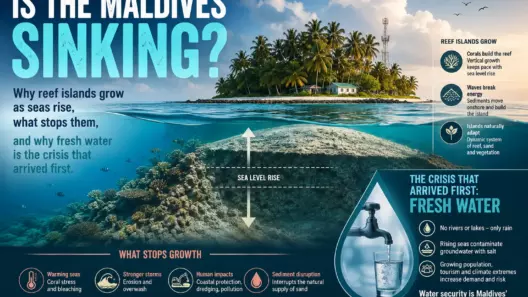
In 1988 Maldivian authorities warned that rising seas would cover the country within thirty years. That deadline passed in 2018. The islands are still here, and some are larger. Most writing on this goes wrong in one of two directions: treating the country as already lost, or treating the…

Already Paid, Equally Split: How Tipping in the Maldives Actually Works
Every bill you sign in the Maldives already carries a 10% service charge, and it is not a tip. It is a legal obligation on the business, collected under the Employment Act, and it must be handed to staff in full. That single fact changes the whole question. In most destinations the argument…

Where You Can Legally Drink: Alcohol Rules in the Maldives, Island by Island
Alcohol is illegal in the Maldives. It is also served, chilled, on a beach, within forty minutes of the airport. Both statements are true, and the gap between them is the single most confusing thing about Maldivian law for visitors. The country prohibits alcohol for its citizens and on every…

Where the Reefs Are Now: Maldivian Coral After the Fourth Bleaching Event
The honest answer to “are the reefs still worth seeing” is yes, with a significant qualification that most travel content skips. Between 2023 and 2025 the world went through the largest coral bleaching event ever recorded. In the Maldives, sea surface temperatures hit 31.5°C in…

Three Ingredients and One Constraint: What Maldivian Food Actually Is
Maldivian food is built from three things: tuna, coconut and a starch. Almost everything else on your plate arrived by ship. That is not a criticism, it is geography. The country has 298 square kilometres of sandy coral soil spread across 90,000 square kilometres of ocean, and almost nothing…

Mobile Data in the Maldives: Buy It Before You Fly, or Queue for It on Arrival
A Maldives SIM card is the cheapest useful thing you will buy on this trip, and half of visitors do not need one. That is the honest starting point. Fly in, transfer to a resort, stay put for a week, and the wifi covers almost everything you do. If you are island-hopping, riding public…

Counting a Country That Will Not Hold Still: How Many Islands the Maldives Has
Ask how many islands are in the Maldives and you will be told 1,192. It is on the tourism board’s site, in every guidebook, and in the opening line of a thousand travel articles. The Maldives’ own Permanent Mission to the United Nations says 1,190. The same government, a…

Very Safe, and Very Far From a Hospital: Assessing Risk in the Maldives
Ask whether the Maldives is safe and the answer comes back reassuring, because on the risk most people have in mind — crime — it is genuinely excellent. Resort islands are private, staffed by vetted employees, and effectively crime-free. Violent crime against tourists is close to unheard of.…
Two Currencies, One Country: How Money Actually Works in the Maldives
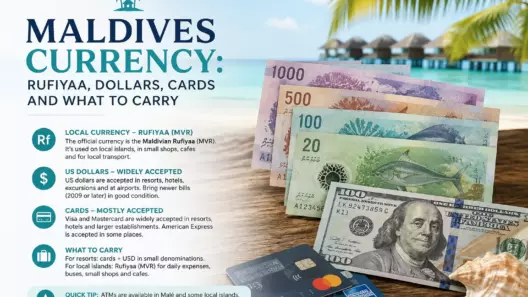
The Maldives runs two currencies at the same time. The rufiyaa is the only legal tender, and the country’s entire tourism economy is priced in US dollars. Which one you need depends almost entirely on what kind of trip you booked. On a resort island you can spend a week without opening…

Filing the IMUGA Traveller Declaration Without Paying Anyone for It
IMUGA Traveller Declaration: The Form Every Maldives Visitor Has to File IMUGA is the Maldives Immigration portal, and the Traveller Declaration is the one piece of paperwork standing between your flight and the immigration counter. It is free, it takes about six minutes, and it is the only…

Free, Automatic and Still Refusable: The Maldives Visa on Arrival Explained
There is no Maldives visa to apply for. Almost every passport in the world receives a free 30-day visa on arrival, stamped at the border, with no form to file in advance and no fee to pay at the counter. That simplicity is why people arrive underprepared. The visa is automatic; admission is…
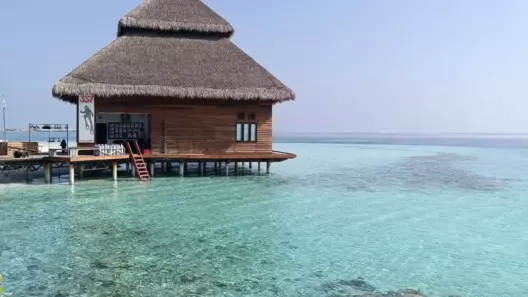
What Changes When You Cross the Waterline: Resort Island vs Local Island in the Maldives
Most people think they are choosing between an expensive Maldives and a cheap one. They are not. They are choosing between two legally separate tourism systems that happen to share a flag, a language and the same turquoise water. On a resort island, alcohol is licensed, swimwear is normal…
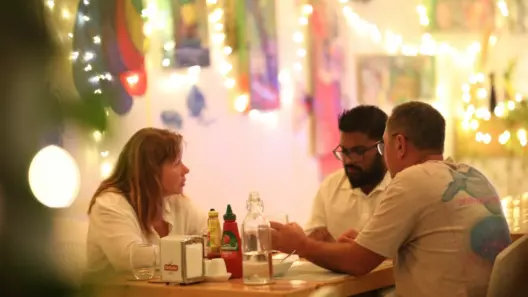
What to Pack for the Maldives: Dress Codes, Banned Items & the Rules Most Guides Forget
Most packing guides for the Maldives focus on what swimsuit to bring. This one focuses on what happens when you get it wrong — confiscated luggage at customs, a fine on a local island street, or an awkward moment at a resort restaurant. The Maldives is a Muslim-majority nation operating…