Maldives Independence Day (July 26): Plan Your Trip Around the Nation’s Most Patriotic Week
Most travelers arrive in the Maldives and never leave their resort island. They check in, slip off their shoes, and spend a week watching the Indian Ocean from an overwater bungalow — which is a perfectly valid way to spend a holiday. But if you happen to be in the archipelago in late July, specifically within speedboat range of the capital Malé on the 26th, you will witness something that most Maldives visitors never see: a real city celebrating something real.
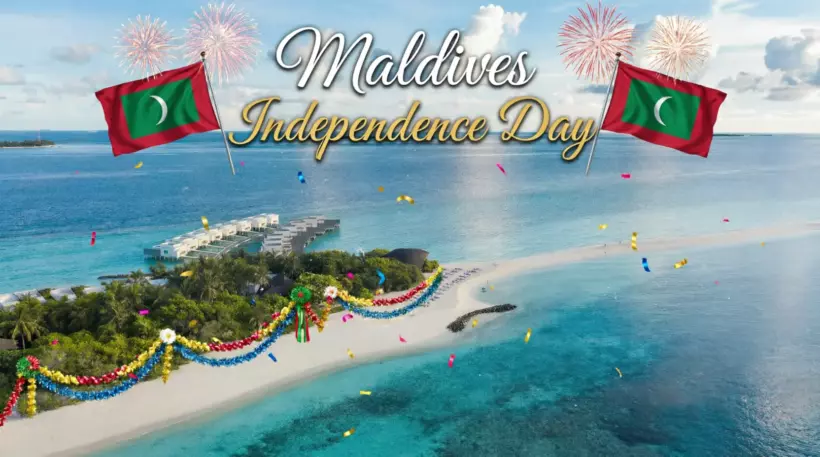
Maldives Independence Day, marking the end of 78 years of British protectorate status in 1965, is observed with a three-day programme of military parades, traditional dance performances, float processions, and fireworks. It also falls squarely in the shoulder season, when resort rates drop by 40–50% compared to the December-to-April peak. That combination — genuine national celebration plus significantly cheaper accommodation — makes the last week of July one of the most underrated windows to visit the Maldives.
This guide covers the full picture: the history behind July 26, the schedule of events in Malé, the dances you will actually see performed in the streets, how to get there from a resort, and what you should know before you go.
From Protectorate to Sovereignty: 78 Years Under the British Flag
The word “protectorate” sounds mild, and in the Maldives’ case it partly was. When Sultan Mohamed Mueenudeen III signed an agreement with the British Governor of Ceylon on December 16, 1887, the arrangement was deliberately asymmetrical: Britain would handle defense and foreign affairs; the sultanate would retain control over its domestic governance, laws, and religion. Unlike India or Burma, the Maldives was never directly administered as a colony. The British largely stayed out of internal Maldivian affairs, which is partly why the protectorate lasted as long as it did without provoking mass revolt.
What the agreement did create, however, was a structural dependency that took nearly eight decades to untangle. Foreign economic interests — particularly the Borah traders, a community of Indian Muslim merchants — gained a stranglehold over the Maldivian economy with implicit British backing. The country could not negotiate its own trade treaties, accept foreign aid independently, or position itself within the emerging postwar international order.
The push for full independence accelerated after World War II, when decolonization reshaped the map of Asia and the Indian Ocean. Ibrahim Nasir, who became Prime Minister in December 1957, drove the process with unusual pragmatism. He did not pursue independence through confrontation — he negotiated from a position of leverage. The British operated an important Royal Air Force base at Gan, in the remote southern Addu Atoll, which they needed. Nasir’s government used that need as a bargaining chip.
The immediate trigger for the final push was almost mundane. In the early 1960s, a Maldivian citizen was removed from the country without the Maldivian government being informed. When Nasir confronted a British official about it, the response was blunt: anyone under the British protectorate could be taken anywhere. Nasir’s reply, as recorded by government representative Abdul Sattar who was present: “In that case, we do not want protectorate status any longer.”
Negotiations moved to Colombo, and on the morning of July 26, 1965, the agreement was signed at the British High Commissioner’s Residence in Ceylon (now Sri Lanka). Nasir signed on behalf of His Majesty the Sultan. Sir Michael Walker, British Ambassador-designate to the Maldive Islands, signed on behalf of Queen Elizabeth II. Britain retained the right to use the Gan base under a separate arrangement until 1976. The population of the Maldives at the moment of independence was 97,743 people.
The Maldives joined the United Nations on October 12, 1965. Three years later, in 1968, the country replaced the sultanate with an elected presidency, establishing the republic that exists today.
That history — peaceful, diplomatic, achieved through leverage rather than armed struggle — shapes why Independence Day in Malé feels the way it does. It is a celebration of sovereignty, not a commemoration of war. The mood is proud rather than solemn.
The July 26 Programme in Malé: What Happens, Hour by Hour
The Maldivian Ministry of Dhivehi Language, Culture and Heritage organises Independence Day as a three-day programme running from July 26 to 28. The capital hosts the main events, with parallel celebrations in the neighbouring suburb of Hulhumalé on July 27.

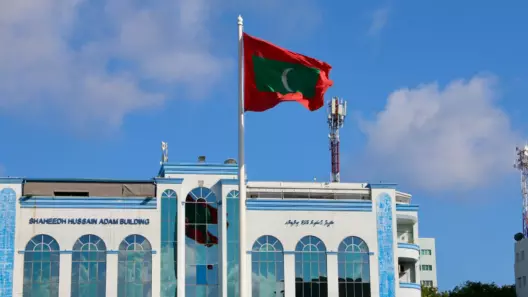
6:00 AM — National flag-hoisting ceremony, Republic Square. The day begins before the city heats up. The President, the Vice President, cabinet ministers, and senior officials gather at Republic Square on the waterfront for the flag-raising ceremony, which opens with a special prayer and closes with the Maldives National Defence Force (MNDF) military band performing the national anthem. This is a brief but emotionally direct ceremony. It is open to the public and accessible from the harbour waterfront.
4:15 PM — Military parade and route march, Republic Square to Sosun Magu. The main daytime event begins in the early evening. The MNDF parade sets off from Bandaara Koshi (the MNDF headquarters), moves through Republic Square, and continues along Chaandhanee Magu, Orchid Magu, and Sosun Magu before concluding in front of Kalhuthukkalaa Koshi. The parade features combat and manoeuvre forces, support services, the MNDF military band, a drill squad, the female squad, and retired high-ranking officers. The National Cadet Corps and school sports teams march alongside. Traffic restrictions along the route are announced in advance. The military band performs at four designated stops along the way.
Evening of July 27 — Float parade, Malé streets. The float parade is the more visually spectacular element of the three-day programme. Decorated floats tour the streets of Malé in the evening, with a parallel procession held in Hulhumalé. This is when the national celebration takes on a more festive, community tone — floats represent government agencies, companies, cultural groups, and schools.
8:30 PM, July 27 — Fireworks display, Malé. A fireworks show is timed for the evening of July 27 over the capital. A second display follows on the evening of July 28 at Hulhumalé Central Park.
Cultural performances — traditional dances, music, and historical reenactments — are scheduled throughout the three-day period at various venues in the city. Republic Square is typically closed to the public for roughly two weeks before July 26 to allow for preparation; it reopens on the day itself.
The Dances You Will Actually See (and What They Mean)
The cultural performances on Independence Day are not staged for tourists. They are performed by local groups for local audiences, which makes them qualitatively different from the resort-beach Boduberu shows that most visitors encounter. Three forms of traditional performance dominate the July 26 programme.
Bandiyaa Jehun: The Pot Dance Inherited from the Indian Ocean Trade
Bandiyaa Jehun is performed exclusively by women and traces its origins to the Indian pot dance — a legacy of the centuries-long maritime trade that connected the Maldives to the Indian subcontinent. The performers stand in two parallel lines facing each other. Each woman holds a metal water pot (the bandiyaa) and wears metal rings specifically designed to produce a sharp, resonant sound when tapped against the pot. The dance is built around that rhythm: the women sing as they move, and the tapping of rings against pots creates a layered percussion that the accompanying drums and harmonica play into.
There is no fixed traditional costume, though performers typically dress uniformly in a long skirt and blouse called Dhigu Hedhun. The dance fell into decline in the mid-20th century and has been partially revived through both tourism and national events. Seeing it performed on Independence Day — with a full group, in a street context, for a Maldivian audience — is different from watching a hotel cultural night. The precision of the ring-tapping and the call-and-response singing carry a quality that only comes from performance within community.
Dhandi Jehun: The Stick Dance That Changes with Every Atoll
Dhandi Jehun is performed by a group of around 30 men, each holding a stick (dhandi). A lead singer begins with traditional “Thaara” or “Unbaa” songs; the remaining performers join in chorus and dance to the beat, striking their own stick against the stick of the performer facing them in rhythm with the music. The key detail: the dance varies significantly from island to island. Some atolls use slower music with long sticks; others feature faster rhythms with shorter sticks and female performers. The Maldivian government traces the dance’s origins to Malik, the southernmost island of the Lakshadweep (Minicoy) archipelago, indicating a lineage that pre-dates any fixed national form.
At Independence Day events in Malé, you are likely to see a Dhandi Jehun group representing one of the atolls, and the regional variation is part of what makes the performance interesting. The coordinated stick-striking, when performed by a tight group of 30, creates a sharp, almost architectural sound pattern.
Boduberu: The Percussion Tradition That Binds the Islands
Boduberu — literally “big drum” in Dhivehi — is the most widespread and emotionally resonant musical form in the Maldives. Unlike Bandiyaa Jehun or Dhandi Jehun, which are dance-specific forms, Boduberu is a percussion-centred musical tradition that men and women both participate in. Each inhabited island has historically had its own Boduberu group, which performed at weddings, festivals, and important ceremonies. On Independence Day, Boduberu performances appear at multiple venues throughout the city, often late into the evening. The rhythms build gradually, increasing in speed and intensity, and audiences typically respond physically — which is unusual for a culture otherwise characterized by restraint in public expression. If you encounter a full Boduberu performance in the streets of Malé on the night of July 26, the sound alone will explain why it has persisted for centuries.
The Evening Spectacle: Float Parade and Fireworks Over Malé Harbour
The fireworks display timed for 8:30 PM on July 27 is visible from the waterfront and from the harbour. Given that Malé is one of the most densely built cities in the world — approximately 212,000 people on an island of roughly 5.8 square kilometres — most viewing spots are simply “the nearest street with a clear view of the sky.” The waterfront promenade along the northern coast offers the clearest sight lines.
The float parade on the same evening is worth positioning yourself for deliberately. The floats tour Malé’s main streets, and the capital’s small size means a slow walk can put you in front of several passes of the same route. The most concentrated viewing is along Chaandhanee Magu (the main commercial street running north-south through the city) and near Republic Square.
For visitors staying in North Malé Atoll resorts, the combination of the late-afternoon parade (4:15 PM) and the 8:30 PM fireworks makes a single-day visit viable if you arrive by speedboat mid-morning and return after the fireworks. The practical logistics of that trip are covered in a later section.
July as Shoulder Season: The Weather Trade-Off (and Why It’s Worth It)
The Maldives’ rainy season runs from May to October, driven by the southwest monsoon. July sits in the middle of that window. This is what the weather data actually shows, as opposed to what the phrase “rainy season” implies.
Average temperatures in July range from 27°C to 30°C — essentially identical to the peak-season months of January through March. Rainfall averages between 147mm and 161mm for the month, spread across approximately 14 rainy days. “Rainy day” is not the same as “day of rain.” A typical July shower in the Maldives is a concentrated tropical downpour lasting 20 to 40 minutes, often arriving in the afternoon or evening, after which the sun returns. Most days offer 7 to 8 hours of sunshine. Mornings are typically clear.
The surf is stronger in July, which creates two effects: the western atolls have good conditions for surfing, and speedboat transfers between islands can be rougher than in the calm-season months. If you are prone to seasickness, a morning transfer is usually smoother than an afternoon one.
The price argument for July is concrete. A 4-star all-inclusive resort that costs around $400 per night for two in peak season (December to April) typically starts from around $200 in July. Five-star properties show comparable discounts. Occupancy is lower, which means the same villa, the same beach, and the same snorkelling with significantly fewer guests on the property. For whale shark and manta ray encounters, July is actually an advantage: both species are present in high numbers in the waters around Baa Atoll’s Hanifaru Bay during the southwest monsoon season, and July falls within the peak window for both.
The one genuine compromise is diving visibility. Monsoon water movement can reduce underwater clarity in some areas, though conditions vary significantly by atoll and week.
Day Trip to Malé from Your Resort: How to Make It Work
The Maldives’ geography works in your favour for an Independence Day visit. A large proportion of the country’s resort islands are in North Malé Atoll and South Malé Atoll, accessible from Velana International Airport — and from each other and from Malé — by speedboat in 20 to 60 minutes.
To attend the full July 26 programme, the practical plan looks like this: arrange a speedboat transfer from your resort to Malé harbour, timed to arrive by mid-morning. The July 26 public holiday means government offices and banks are closed, but the city’s waterfront areas, restaurants, cafés, and local markets are open. Spend the morning in the city — the Old Mosque (Hukuru Miskiy), the fish market (open from early morning), the National Museum, and the waterfront walk along the northern coast take a comfortable half-day. The military parade begins at 4:15 PM from Republic Square. Position yourself along Chaandhanee Magu or on the harbour-facing side of Republic Square before 4:00 PM. After the parade, most of the cultural performances continue into the evening. If your resort is close enough and transfers run until late, the float parade (evening of July 27) and fireworks (8:30 PM) justify an overnight stay in a city hotel on July 26 to catch both days.
One important logistical note: speedboat transfers in the Maldives are not flagged down like taxis. All transfers must be booked in advance. Contact your resort’s water transport desk at least 24 to 48 hours before the visit and confirm the return time, especially if you are planning to stay for the evening. Weather-related delays are a real possibility in July, so build buffer into your schedule and confirm that your resort does not have a strict last-arrival policy for the evening.
For resorts reachable by seaplane rather than speedboat — those further than 50 minutes from Malé — a dedicated Independence Day visit requires either a return domestic flight or an overnight stay in the capital. Seaplanes operate only in daylight hours, which makes the evening events unreachable from distant atolls without a city-hotel night.
What Stays Open, What Closes on July 26
Independence Day is a gazetted public holiday covering both July 26 and July 27. Government offices, banks, and all state-run services are closed on both days. The People’s Majlis (parliament) and all ministries are closed. ATMs remain operational; credit card payments at shops and restaurants continue to work normally.
Resorts operate their full standard service — restaurants, dive centres, water sports, and transfers — without interruption. The resort experience on July 26 is identical to any other day. Local restaurants and cafés in Malé are open; the fish market operates on its usual early morning schedule. The ferry terminal and speedboat operators run normal services, though some routes may have modified schedules on the public holiday. Confirm your transfer times directly with the operator.
Shops in Malé vary: the larger commercial areas tend to stay open on public holidays, especially in the late afternoon and evening when foot traffic is highest. The main Chaandhanee Magu shopping street is generally active on Independence Day, with many businesses treating the parade and evening programme as an opportunity rather than a closure reason.
One practical consideration: Republic Square is closed for roughly two weeks before July 26 to set up the ceremonial infrastructure. This means anyone visiting Malé in the days before Independence Day will find the main waterfront square fenced off. It reopens on the day itself.
Practical Tips for July 26 in Malé
Arrive before 10 AM. The flag ceremony at 6 AM is worth attending if you are already in the city, but even a 9 or 10 AM arrival gives you time to cover Malé’s compact cultural geography before the afternoon parade.
Position yourself for the parade route early. The military parade moves along Chaandhanee Magu, Orchid Magu, and Sosun Magu before ending near Kalhuthukkalaa Koshi. Traffic restrictions are announced by the MNDF and typically take effect in the early afternoon. The most concentrated viewing, with the military band’s four performance stops, is along the central section of the route near Republic Square.
Dress modestly. Malé is a working Muslim capital. The dress code that applies at the resort beach does not apply in the city. Shorts are acceptable for men; women should cover their shoulders and knees. Swimwear is not appropriate.
Cash in Maldivian rufiyaa helps. While cards work at most restaurants, small street food vendors and market stalls operate on cash. Banks are closed on July 26, but ATMs function normally at the harbour area and main streets.
The rain will likely come in the afternoon. A light, packable rain jacket or poncho is worth carrying. July showers arrive without much warning and end quickly. The parade is held regardless of light rain; significant weather is uncommon during the actual ceremony hours.
Book return transfers before you leave the resort. The evening events can run late, and confirming your return speedboat time before you depart removes a significant logistical stress from the day.
Frequently Asked Questions
Is Maldives Independence Day on July 26 or 27? July 26 is the official Independence Day, marking the 1965 agreement. The Maldivian government typically observes both July 26 and July 27 as public holidays, with the three-day celebration programme extending to July 28.
Can tourists attend the parade in Malé? Yes. The military parade and the route march are held on public streets, and visitors are welcome to watch from the pavement. No ticket or reservation is required. The float parade and evening cultural events are similarly open to the public.
How do I get to Malé from a resort island? Most resorts in North Malé Atoll and South Malé Atoll are 20 to 60 minutes from Malé by speedboat. Book transfers in advance through your resort. Shared transfers are cheaper; private speedboats offer flexibility on timing.
Is July a good month to visit the Maldives? Yes, with the right expectations. July falls in the southwest monsoon season, which brings short tropical showers (typically 20–40 minutes) and occasional overcast days. Temperatures remain at 27–30°C. Sunshine averages 7–8 hours per day. Prices are 40–50% lower than peak season. Marine life — particularly whale sharks and manta rays — is abundant.
What traditional dances are performed on Independence Day? The main forms are Bandiyaa Jehun (women dancing while tapping metal water pots), Dhandi Jehun (men and sometimes women dancing with sticks in coordinated patterns), and Boduberu (drum-centred communal music and dance). All three appear at publicly staged cultural events during the July 26–28 programme.
Are restaurants open in Malé on July 26? Yes. Restaurants and cafés in Malé operate normally on the public holiday. Government offices, banks, and state services are closed.