
Most tourists treat Malé as a transit hub: land, hop on a speedboat or seaplane, and head straight to the turquoise lagoons. But this city has a character of its own. It’s dense, loud, a little chaotic — and nothing like the postcard version of the Maldives. That’s exactly why it’s worth staying for at least a few hours.
The Basics: Numbers That Surprise
Malé is one of the most densely populated cities on the planet. Roughly 150,000 people live within approximately 2 km². For context, the density is comparable to Hong Kong — except there are no skyscrapers here, just an enormous number of people, motorcycles, and tiny shops on every corner.
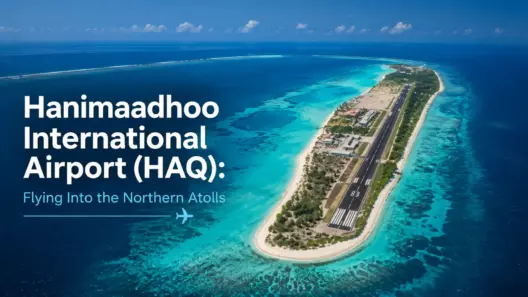
The city sits on an island in North Malé Atoll. The international airport is not here — it’s on the neighbouring island of Hulhulé, now connected to the capital by the China–Maldives Friendship Bridge.
One important practical note: there are no beaches in Malé in the conventional sense. There is one — artificial — and we’ll get to that below.
How Much Time Do You Need in Malé
This is the first question everyone asks. The honest answer:
- 3–4 hours — enough to cover the key sights on foot, browse the market, and have tea at a local café.
- A full day (6–8 hours) — if you want to take your time, have a proper lunch, visit the museum, and simply watch city life unfold.
- An overnight stay — only justified if you have an early seaplane departure or a connecting flight the next morning. Hotels exist, but the urban environment isn’t exactly restful.
Practical note: seaplanes operate only during daylight hours — roughly 6:00 to 16:30. If you arrive late and your transfer is scheduled for the morning, an evening in Malé beats sitting in the airport.
What to See in Malé: A Walking Route
All the sights are compact. The city is very walkable — and walking is actually recommended, because traffic is dense enough that a taxi is often slower than your own two feet.
Islamic Centre and Grand Friday Mosque
The mosque’s golden dome is visible from almost anywhere in the city — it’s Malé’s main visual landmark. The building holds up to 5,000 worshippers at once and is the largest place of worship in the country. Inside: hand-made Pakistani carpets, marble floors, and painted walls. Non-Muslims are permitted entry at certain hours, provided they follow the dress code — covered shoulders and knees, and women must cover their hair.
Hukuru Miskiy — Friday Mosque (1658)
The oldest mosque in the country has an entirely different feel. It’s not about grandeur — it’s about craftsmanship: walls of coral stone, wood carvings, lacquered paintings on the ceiling. It was built on the orders of Sultan Iskandhar I, who personally oversaw construction and hand-picked the materials — sandalwood, rosewood, and golden teak.
Beside it lies the 17th-century Sultan’s Cemetery, where members of the ruling dynasty are buried. Tourists are generally allowed in, but respectful dress is expected. The caretakers tend to be accommodating if they see you’ve made the effort.
Address: Hukuru Miskiiy, Medhuziyaarai Magu
Independence Square (Jumhooree Maidan Park)
The city’s main square is the heart of public life. In the evenings, locals gather here — young people, families with children, older residents catching the breeze. At its centre stands a flagpole flying the largest Maldivian flag in the country. Nearby: the presidential jetty, police headquarters, and national defence barracks. Pigeons have claimed the square as their own, and passersby inevitably end up feeding them.
Mulee’aage Presidential Palace
The official residence of the President, built in colonial style — a white building with a portico and balustrade. You can’t go inside, but the façade is photogenic and the history is worth knowing: the palace was commissioned by the last Maldivian Sultan, who never got to live in it — the country became a republic before he moved in.
National Museum of the Maldives
Small, but genuinely interesting. The collection covers the pre-Islamic period — stone sculptures, everyday objects, jewellery. This is where you begin to understand that the Maldives has a history far older and deeper than its resort industry. Entry is paid; check opening hours in advance — the museum is sometimes closed on Fridays.
China–Maldives Friendship Bridge
A 1.39 km engineering structure connecting Malé with the airport island of Hulhulé. Built with Chinese financial backing at a cost of $250 million. You can walk across it — the views of the city and the ocean are excellent, especially at sunset.
Fish Market (Malé Fish Market)
One of the most alive spots in the city. Tuna is the undisputed king: it’s gutted and filleted right in front of you, quickly and skilfully. Around it: octopus, prawns, and whatever else came in with the catch. The market opens early in the morning. The smell is distinctive; the atmosphere is real.
Fruit and Vegetable Market (Local Market)
Just a few steps from the fish market. Papaya, mango, bananas, coconuts, pineapples — some grown on local Maldivian islands, some brought in from Sri Lanka. A good place to pick something up for the journey: bondi coconut sweets (a local speciality originally from Addu Atoll) and dried tuna slices. Open daily until 17:00–18:00, except Fridays.
Tip: US dollars are accepted everywhere, but bills issued before 2009 may be refused — this is a real issue that travellers have run into.
Artificial Beach
The only beach in the city, built on reclaimed land. No hotel service or overwater bungalows — just a view of the bay and a lively local atmosphere. Local musicians sometimes perform here in the evenings. Swimming is fine, but a bikini is out of place: Malé is a Muslim city, and modest clothing is appropriate.
Where to Eat in Malé
Maldivian cuisine is built on tuna, coconut, and rice. In Malé, you get the real thing — without the resort markup.
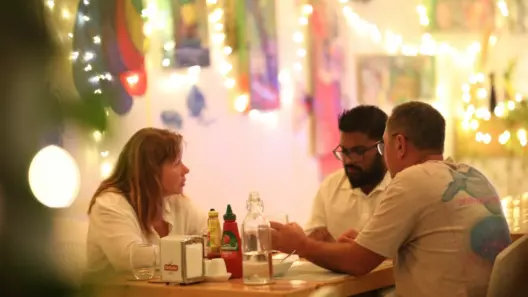
Evening Cafe (Orchid Magu) — a local institution among seasoned travellers. It opens after 18:00, when the evening catch arrives. The interior is simple; the seafood is as fresh as it gets and cheap by Maldivian standards.
In smaller cafés, cash is often the only option. Carry both US dollars and Maldivian rufiyaa.
Practical Tips
Dress code. Malé is an inhabited Muslim island, not a resort. Covered shoulders and knees are the baseline of respect. Beachwear is not appropriate here.
Alcohol. Prohibited on all inhabited islands, including Malé. This is not a resort zone.
Shops. Open from early morning to late evening, with short breaks for prayer. Many are closed on Friday mornings.
Getting around. Taxis are available, but the traffic density means walking is usually faster. Distances in the city are short.
Language. The official language is Dhivehi. In tourist areas and at the airport, English is spoken everywhere.
Malé for the Transit Traveller: A 4-Hour Itinerary
If you have a layover or are waiting for a transfer, here’s a practical route:
- Friendship Bridge → walk across, take photos (15 minutes)
- Fish Market and Local Market → the most alive spots in town, pick up something local (30–40 minutes)
- Hukuru Miskiy → the main architectural landmark (20 minutes)
- Independence Square → stroll, soak in the atmosphere (15 minutes)
- Islamic Centre → golden dome, enter if you wish (20 minutes)
- Lunch or dinner at a local café → Evening Cafe or anywhere on Orchid Magu (45–60 minutes)
- Artificial Beach → evening walk, especially good at sunset (30 minutes)
Total: 3–4 hours at a relaxed pace.
Is Malé Worth a Dedicated Visit?
Honestly: no, if your goal is a beach holiday. There are no proper beaches, the island’s nature is hidden behind buildings, and all the Maldivian magic lives in the lagoons beyond the city.
But if you’re drawn to authentic urban Asia, to a country’s real life rather than the view from a resort bungalow — Malé delivers that in concentrated form. Small but dense. Historical but alive. And nothing like what you imagined looking at Maldives travel brochures.
FAQ
How long does it take to see Malé?
3–4 hours covers the highlights; a full day if you want to take your time.
Is there a beach in Malé?
Only the Artificial Beach. There are no natural resort-style beaches.
Can you swim in Malé?
Yes, at the Artificial Beach, but wear modest clothing — this is a Muslim city.
How do you get from the airport to Malé?
Via the China–Maldives Friendship Bridge, on foot or by taxi (~10–15 minutes).
What should you buy at the Malé market?
Dried tuna, bondi coconut sweets, and tropical fruit.