
Most destination guides bury the transfer question at the bottom of a packing list. In the Maldives, it belongs at the very top — before you book the resort, before you choose the flights, before you even set a budget. Choose the wrong combination and you’ll spend your first day trapped in a departure lounge, watching the turquoise water through a window. Choose wisely, and the transfer becomes part of the experience.
The Maldives is an archipelago of 1,192 coral islands scattered across 90,000 square kilometres of the Indian Ocean. There are no roads between atolls. No bridges. No ferries that a luxury traveller would find practical. Getting to your resort requires either crossing the water or flying over it — and which option applies to you is determined entirely by the atoll your resort sits on. This guide breaks down the three transfer modes in detail, maps them to real destinations, and covers the edge cases that most travel sites skip entirely.
The Three Transfer Modes: A 60-Second Overview
Before diving into each method, here is the framework that governs the whole decision. Every resort in the Maldives uses one of the following transfer types, or a combination:
| Transfer Mode | Who It Serves | Typical Journey Time | Approximate Cost (Return, Per Person) | Operates at Night? |
|---|---|---|---|---|
| Speedboat | Resorts in North & South Malé Atoll, Ari Atoll | 15–90 minutes | $50–$250 | Yes — 24/7 |
| Seaplane | Mid-range atolls: Baa, Lhaviyani, North Ari, Raa | 20–60 minutes | $450–$800 | No — daylight only |
| Domestic flight + speedboat | Far northern and southern atolls: Addu, Laamu, Gaafu, Haa Dhaalu | 45–80 min flight + 15–60 min boat | $200–$400 flight (often included) | Yes — scheduled services |
Your resort will tell you which transfer they use. What they often won’t tell you — with adequate urgency — is that the timing of your international flight may force an overnight stop in Malé. That single fact is the most consequential piece of logistics in any Maldives trip.
Speedboat Transfers: The Fastest Path to Your Overwater Villa
Speedboats are the default transfer for resorts within roughly 60 kilometres of Velana International Airport (MLE). If your resort is in North or South Malé Atoll — think Baros, Kurumba, Anantara Veli, Coco Bodu Hithi, and dozens of others — you will arrive by speedboat. Some properties in Ari Atoll also use speedboat, though longer runs take up to 90 minutes.
The ride typically lasts between 15 and 90 minutes, with journey time determined by the specific resort’s position rather than which atoll it’s in. Closer resorts in North Malé Atoll can be reached in under 20 minutes. Outer South Malé properties may take 45–60 minutes. Resorts on the edge of Ari Atoll can stretch to 90 minutes.
Cost and Availability
Speedboat costs vary widely. Some resorts include the transfer in the nightly rate; others charge separately. Shared transfers — where multiple guests from different flights board the same boat — range from around $30 to $195 per person per way. Private transfers, where the boat waits only for your group, run higher but eliminate the wait.
The decisive advantage of speedboats over all other options is 24-hour operation. A 3:00 AM arrival on an Emirates red-eye from Dubai? Speedboat works. A midnight departure from a New Year’s Eve party? Speedboat works. No other Maldives transfer mode matches this flexibility.
The Honest Downside: Sea Conditions
Speedboats are the only transfer type where the physical journey can genuinely spoil the mood. During the southwest monsoon (May to October), swells across the Indian Ocean build quickly. A 45-minute crossing can become an extremely bumpy ride, and even experienced travellers sometimes arrive at their resort feeling queasy and needing time to recover before they can enjoy anything.
Who should think carefully before choosing a speedboat resort:
- Anyone who experiences motion sickness — even mildly
- Pregnant travellers (rough water and constant jarring are not recommended)
- People with existing back or spine conditions
- Older travellers who find prolonged vibration and impact tiring
- Families with infants under 12 months
If a speedboat resort is the right choice for your budget or preferences but sea conditions concern you, two practical adjustments help: take seasickness medication at least 30 minutes before departure, and choose a seat in the centre of the boat rather than the bow. The back third of most Maldives speedboats absorbs the least movement.
Seaplane Transfers: The Most Iconic Journey in Tropical Travel
The moment a Twin Otter or DHC-6 seaplane banks over a ring of coral and descends toward a shimmering lagoon is one of the more extraordinary things you can do in travel. Seaplanes serve the mid-range atolls — Baa, Lhaviyani, North Ari, parts of South Ari, and Raa — from the Noovilu Seaplane Terminal at Velana Airport, the largest seaplane hub in the world.
Trans Maldivian Airways (TMA) is the primary operator, running over 50 aircraft to around 79 resort destinations. Manta Air offers a competing seaplane service alongside its fixed-wing domestic routes, operating scheduled services to Dhaalu Atoll and others. Some ultra-luxury resorts operate private charter seaplanes exclusively for their guests — Six Senses Laamu, for example, runs a direct private charter at approximately $1,200 per adult return.
Flight duration runs from 20 to 60 minutes depending on your resort. The experience from the air is genuinely exceptional: passengers look down over reef systems, coral atolls, and sandbars that are impossible to appreciate from ground level.
The Daylight-Only Rule: The Single Most Important Logistics Fact in the Maldives

Seaplanes operate under Visual Flight Rules (VFR), which prohibits flying after dark. The last seaplane of the day typically departs Malé between 3:30 PM and 4:15 PM local time. This means the last seaplane arrives at any resort lagoon by roughly 4:30–5:00 PM at the absolute latest.
The practical cutoff is around 14:00 (2:00 PM) for your international flight to land at MLE. If your flight arrives after that time, you will likely not clear immigration, collect luggage, transfer to the seaplane terminal, wait for loading, and still make the last departure. Attempting it with a 2:30 PM or 3:00 PM landing is a gamble that regularly fails — immigration queues after a large international arrival can take 45 minutes or more.
If your flight lands after 14:00 and your resort requires a seaplane, you have two options:
- Stay overnight in Malé or Hulhumalé and take the first seaplane of the following morning (typically between 6:00–8:00 AM)
- Choose a different resort in North or South Malé Atoll that operates speedboat transfers around the clock
The overnight Malé scenario adds cost (hotel, transfers, an extra meal) and, crucially, cuts your first resort day short. Budget at least $100–200 for a decent overnight, more for comfort. Several hotels on Hulhumalé specifically cater to this scenario and offer early morning transfers back to the seaplane terminal.
The same rule applies on departure. For an international flight leaving before roughly 9:30–10:00 AM, you may need to leave your resort by seaplane the previous afternoon — meaning your final night is effectively spent in Malé, not at your resort.
What the Wait at the Seaplane Terminal Actually Looks Like
Something most guides mention only in passing: waiting at the seaplane terminal is a normal, sometimes extended part of the seaplane transfer experience. Shared seaplane flights load once enough guests bound for your resort have arrived on their various international flights. If you land at 11:30 AM and the next group of guests heading to your resort arrives at 2:45 PM, your departure waits. Waiting times of two to four hours are common and well-documented. Waiting times of five hours, though exceptional, do occur.
The Noovilu Seaplane Terminal has air-conditioned lounges, food and beverage options, and reasonable facilities. TMA and Manta Air both operate seaplane lounges on the upper level of the terminal — some resorts include lounge access; others offer it at a fee. The wait is manageable, but it matters for your first-day experience, especially with jet-lagged children.
Private seaplane charters eliminate the wait entirely. The aircraft leaves when you are ready. Rates vary from approximately $1,200 to $3,500 one-way depending on the aircraft type and atoll distance. For a group of six or more, the per-person premium over shared transfers often becomes modest.
Seaplane Baggage Rules
Seaplane baggage allowances are strict and frequently surprise first-time visitors. The standard allowance is typically 20 kg checked plus 5 kg cabin per adult. Excess baggage is charged at approximately $4–$5 per kilogram, which adds up quickly for overpackers.
One specific and rarely mentioned issue: hardshell suitcases. They are accepted on seaplanes, but the floatplane hold is oddly shaped, and rigid cases sometimes cannot be loaded on the same flight as the passenger. Your luggage may arrive on a subsequent flight — usually the same day, but occasionally the next morning. Soft-sided bags fit the hold reliably. If you have a seaplane transfer, consider packing in duffel bags or flexible-sided luggage.
Children under 2 typically fly free on seaplanes when seated on a parent’s lap. Ages 2–11 pay a reduced child fare.
Domestic Flights + Speedboat: The Underrated Option for Remote Atolls
Seaplanes do not reach every corner of the Maldives. The far southern atolls — Addu, Gaafu Alifu, Gaafu Dhaalu, Laamu, and parts of the far north including Haa Dhaalu — are beyond seaplane range. Resorts in these locations require a domestic flight from Velana International to a regional airport, followed by a speedboat to the resort itself.
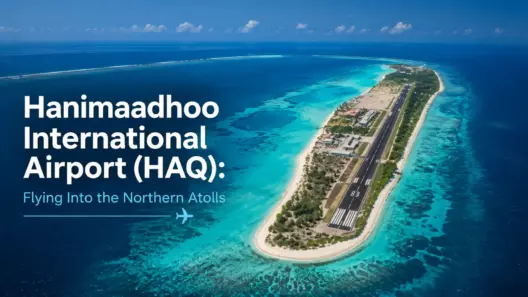
Three main carriers operate domestic fixed-wing services: Maldivian (the national airline, operating Dash 8 and ATR aircraft across 60+ seats), Manta Air (newer ATR 72 fleet, praised for comfort and punctuality), and Flyme (operated by Villa Air, specialising in Baa and South Ari Atoll routes). Flight time from Malé is typically 45–80 minutes, landing at regional airports such as Kooddoo (Gaafu Alifu), Kadhdhoo (Laamu), Hanimaadhoo (Haa Dhaalu), Gan (Addu Atoll), or Dharavandhoo (Baa Atoll). From the regional airport, a speedboat covers the remaining distance to the resort in 15–60 minutes.
The Key Domestic Flight Advantages
The domestic flight plus speedboat route is often treated as a compromise option — the choice for travellers who “can’t afford” the seaplane. That framing is wrong for several important reasons:
Domestic flights operate at night. Regional airports have proper runways, lighting, and instrument approaches. This makes the domestic flight route the right choice for travellers arriving on late international flights. A 10:00 PM landing at MLE can still connect to a midnight domestic departure to Gan or Kadhdhoo, delivering guests to their resort without an overnight.
Domestic flights handle weather better than seaplanes. Pressurised fixed-wing aircraft are significantly less affected by the cloud and wind conditions that regularly delay or cancel seaplane operations during the monsoon months.
Domestic flights are the only realistic option for the deep south. Addu Atoll (home to Shangri-La Villingili and other properties) sits below the equator — a seaplane cannot physically make this journey. Laamu Atoll, Gaafu, and other southern atolls are similarly out of seaplane range. For these resorts, the question is not “seaplane or domestic” but simply “domestic.”
The Domestic Flight Downsides
Domestic flight schedules are fixed and do not adapt to your international arrival time. This is the critical difference from seaplanes, which load whenever resort guests have cleared immigration. If the next domestic flight to your destination is six hours after your international landing, you wait six hours — in the domestic terminal, which offers more modest facilities than the seaplane lounge.
Luggage is re-handled at the regional airport. This adds a small logistical step and occasional delay. Journey time overall is longer than the equivalent seaplane transfer because the regional airport adds a connection point.
One insider tip rarely published in standard travel guides: if you are booking your domestic flight yourself rather than through a resort, contact your guesthouse or resort first. Several experienced travellers report booking directly through the airline at significantly inflated rates compared to what resort staff or local agents can obtain. A booking through the right contact can be roughly half the airline’s public fare.
Which Transfer Mode for Which Atoll: A Practical Decision Guide
Use this table when you know which atoll your resort is in. If you don’t know, ask the resort before completing your booking.
| Atoll | Transfer Method | Notes |
|---|---|---|
| North Malé Atoll (Kaafu) | Speedboat | 15–45 minutes; 24/7; most accessible |
| South Malé Atoll (Kaafu) | Speedboat | 30–60 minutes; some resorts up to 90 min |
| Ari Atoll (North & South) | Speedboat or seaplane | Depends on specific resort and distance |
| Baa Atoll | Seaplane or domestic + speedboat | ~30 min by seaplane; Dharavandhoo airport for domestic |
| Lhaviyani Atoll | Seaplane | ~30–40 min from Malé |
| Raa Atoll | Seaplane | ~50–60 min from Malé |
| Dhaalu Atoll | Seaplane or domestic | Manta Air scheduled services to Kudahuvadhoo |
| Noonu Atoll | Domestic + speedboat | Maafaru Airport (NMF); luxury-oriented |
| Laamu Atoll | Domestic + speedboat | Kadhdhoo Airport; ~45 min flight |
| Gaafu Alifu / Dhaalu | Domestic + speedboat | Kooddoo Airport; southern atolls |
| Addu Atoll | Domestic + speedboat | Gan Airport; below the equator; overnight arrival feasible |
| Haa Dhaalu | Domestic + speedboat | Hanimaadhoo Airport; far north |
When a resort says “seaplane or domestic,” this typically means both options are physically available, and the choice comes down to budget, arrival time, and personal preference.
Overnight in Malé: What to Do When the Timing Doesn’t Work
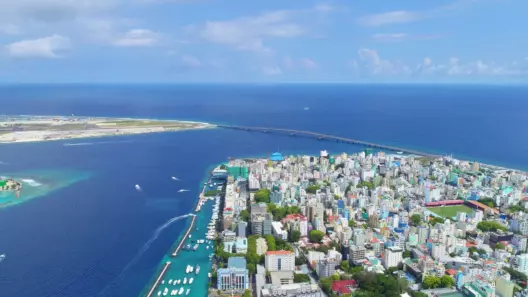
If your international flight arrives after 14:00 and your resort requires a seaplane, treat the overnight not as a disaster but as a planned extra night. Malé and Hulhumalé have improved substantially as short-stay destinations. Crossroads Malé, a dedicated marina and resort complex on Emboodhoo Island, sits immediately adjacent to the airport and offers a resort experience with direct boat transfers — some travellers with late arrivals deliberately choose a Crossroads night before moving to their main resort the next morning.
Hotels near the airport in Hulhumalé — including Dhigali, Cinnamon, and several mid-range properties — position themselves specifically for transit guests. Booking one with confirmed early morning transfer logistics back to the airport eliminates the main stress of the overnight stop.
On the departure side, if your outbound flight leaves before 9:30 AM, the same arithmetic applies in reverse. The seaplane from your resort would need to depart the previous afternoon. Some travellers prefer this; it allows a relaxed evening in Malé with a good meal before an early morning check-in.
Eight Things Nobody Tells You About Maldives Transfers
Most guides cover the basics. These points are either missing or buried:
1. The seaplane terminal is a 10-minute shuttle from the international terminal — not a short walk. The Noovilu Seaplane Terminal is a separate building. Allow extra time between clearing customs and your seaplane departure window.
2. Resort representatives are there to help — use them. After customs, resort reps wait in the arrivals hall with name boards. They handle the logistics of getting you to the right place. Let them lead; do not attempt to navigate independently on your first visit.
3. The waiting time at the seaplane terminal is not the resort’s fault, the agent’s fault, or the seaplane operator’s fault. It is a structural consequence of shared loading: the aircraft departs when enough guests bound for your resort have cleared immigration. You may arrive at 11:00 AM and depart at 4:00 PM. This is normal.
4. Domestic flight timetables are guidelines. Experienced Maldives travellers note that domestic departure boards frequently do not show your flight until close to boarding time. Schedules shift. Build in flexibility and treat the posted time as approximate.
5. Luggage on seaplanes sometimes travels separately. If your hardshell case cannot fit on the same flight due to hold geometry or weight limits, it follows on the next available aircraft — usually the same day but not guaranteed. Keep a day’s essentials in carry-on when using seaplane transfers.
6. Children under 2 fly free on seaplanes and domestic flights. Many parents don’t realise this until after booking. Confirm directly with your resort or carrier.
7. The back seats of speedboats absorb significantly less motion than the front. If you’re prone to seasickness, request a rear seat before boarding.
8. Private seaplane charters can be cost-competitive for larger groups. A private charter for four to six people often costs only marginally more per person than shared transfers, and eliminates the wait entirely. Ask your resort what their private charter rate is before assuming it’s out of reach.
Quick Summary: How to Choose
The transfer decision in the Maldives reduces to three practical questions:
What time does your international flight land? If before 14:00 local time and your resort uses seaplanes → you’re fine. If after 14:00, plan for an overnight or choose a speedboat resort.
Which atoll is your resort in? North and South Malé Atoll → speedboat. Mid-atolls (Baa, Lhaviyani, Raa, Ari) → likely seaplane. Southern atolls (Laamu, Gaafu, Addu) → domestic flight plus speedboat.
Do you have any physical sensitivities or special circumstances? Motion sickness, pregnancy, spinal issues, or travelling with infants → consider whether a long speedboat crossing is appropriate.
The Maldives is one of the few places on earth where the journey to the destination is part of what people book. A seaplane descent over a coral atoll at sunset is not a footnote to the holiday — for many visitors, it is the first memory they carry home. Giving the transfer decision the same attention as the resort choice itself is not over-planning. It is how you avoid a five-hour wait in a terminal that could easily have been a first afternoon on the sand.
Frequently Asked Questions
Can I reach my resort at night in the Maldives? Yes, but only via speedboat or domestic flight. Seaplanes do not fly after dark. Resorts in North and South Malé Atoll offer 24/7 speedboat transfers. Resorts in far atolls reachable by domestic flights can be reached at night via fixed-wing services.
How much does a seaplane transfer cost in the Maldives? Shared seaplane transfers typically range from $450 to $800 per person return, depending on the resort and atoll. Private charters range from $1,200 to $3,500+ one-way. Some resorts include seaplane transfers in the room rate; others quote separately.
What is the baggage allowance on Maldives seaplanes? The standard allowance is 20 kg checked luggage plus 5 kg cabin baggage per adult. Excess baggage is charged at approximately $4–$5 per kg. Soft-sided bags are strongly recommended; hardshell cases occasionally travel on a later flight due to hold space constraints.
How long is the wait at the Maldives seaplane terminal? For shared transfers, typical waiting time is one to four hours. Waits of five hours or more are unusual but possible. Private charters depart on your schedule with no waiting.
Do I need to stay overnight in Malé? Only if your international flight lands after approximately 14:00 and your resort requires a seaplane transfer. Resorts with speedboat transfers can be reached at any hour.
What is better — seaplane or domestic flight to Baa Atoll? Both options exist for some Baa Atoll resorts. The seaplane is faster and more scenic (around 30 minutes). The domestic flight to Dharavandhoo Airport followed by a speedboat is slower overall but operates at night and is sometimes cheaper. The right choice depends on your arrival time and priorities.
Are there transfer options for late flights to luxury resorts? Yes. Resorts in North and South Malé Atoll operate private speedboats 24/7 and can accommodate midnight or later arrivals. For seaplane resorts with late arrivals, the standard solution is an overnight transit hotel on Hulhumalé, followed by the first seaplane departure the following morning.