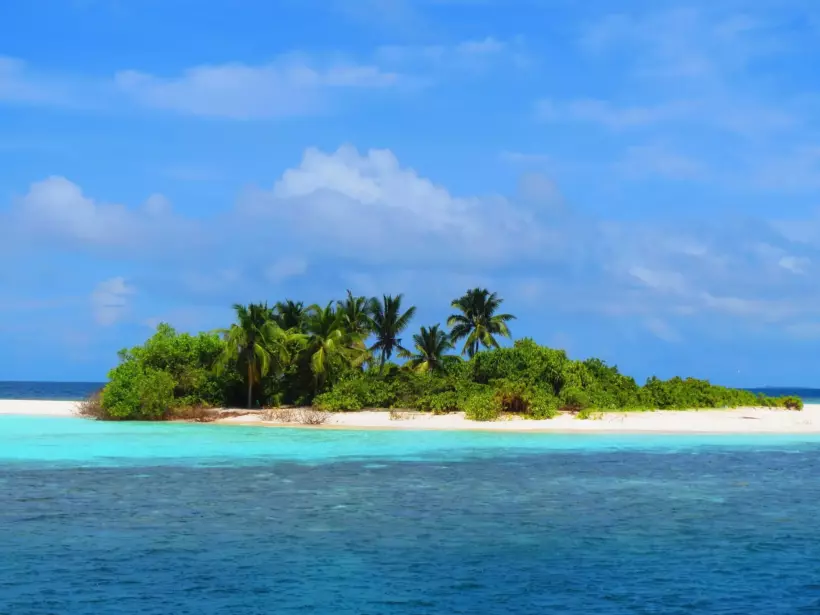
If you’ve spent any time browsing ultra-luxury Maldives resorts, you’ve noticed the pattern: Soneva Jani, Velaa Private Island, Cheval Blanc Randheli — the names keep circling back to the same stretch of water. That water is Noonu Atoll, a remote, thinly developed atoll roughly 180–200 km northwest of Malé that has quietly become the most concentrated address for the highest tier of Maldives travel. It isn’t the atoll with the most resorts. It isn’t the atoll with the famous manta-ray migration. It’s the atoll where three of the world’s most talked-about private-island resorts happen to share one exceptionally wide, exceptionally calm body of lagoon — and where a private-jet-capable airport now sits close enough that guests can skip the seaplane altogether.
Noonu rewards a very specific kind of traveler: someone who wants total seclusion, is comfortable paying four and five figures a night, and doesn’t need a headline wildlife spectacle to justify the trip. For nearly everyone else, it’s the wrong atoll. This guide covers what actually sets Noonu apart, how to get there, the resorts worth knowing, what’s underwater, and — honestly — who should book somewhere else instead.
What Makes Noonu Atoll Different
Most Maldives atolls compete on reef quality or nightlife or price. Noonu competes on scale and restraint. The atoll spans 71 islands, but only 13 are inhabited, and just a handful carry resorts — a density so low that lagoons here run wider and quieter than almost anywhere else in the country. Soneva Jani alone sits inside a private 5.6-kilometer lagoon, which is an unusual amount of open water to hand a single property. That kind of space is the real product Noonu sells: not a beach, not a pool, but the feeling that no one else exists within eyeshot.
The philosophy across Noonu’s flagship resorts leans toward architecture and service rather than manufactured spectacle. Soneva runs on a “no news, no shoes” ethos built around eco-conscious design and wellness. Velaa Private Island was built around deep customization — a low villa-to-space ratio across 43 hectares, with only 47 villas total, so guests rarely cross paths. Cheval Blanc Randheli, an LVMH property, brings the French idea of art de recevoir — hospitality as a formal art — to villa design with cathedral ceilings and a dedicated spa island. None of these resorts are chasing volume. They’re chasing exclusivity as a design constraint, not a marketing line.
That restraint has a geographic root: unlike atolls with tightly packed reef systems, Noonu’s islands are widely dispersed, which produces milder channel currents and gives resort developers room to build without crowding a reef edge. The result is an atoll where “remote” isn’t a marketing word — it’s an accurate description of how far apart everything actually is.
Getting There: Seaplane or Maafaru Airport
For most of its history, reaching Noonu meant one thing: a roughly 35–45 minute seaplane flight from Velana International Airport in Malé, weather- and daylight-dependent like every seaplane transfer in the country. That’s still how most guests arrive at Soneva Jani and Velaa Private Island, and it’s part of the experience — the descent over reef edges and sandbanks is, for many first-time visitors, the moment the trip actually starts.
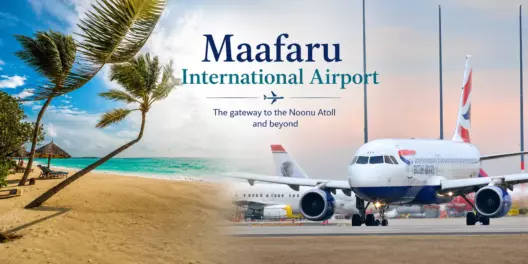
But Noonu now has a second, faster option that’s reshaping how the ultra-wealthy reach it: Maafaru International Airport (NMF), built specifically to serve the atoll’s luxury resorts and opened in 2019. What began as a domestic-flight strip has turned into the country’s private-jet hub. A 2025 runway extension took Maafaru to 2,850 meters — long enough for wide-body aircraft, including Airbus A330s and Boeing 787s flying direct from the Gulf or southern Europe without a fuel stop. The apron now parks up to 30 jets, more than double its earlier capacity, and a two-storey terminal with a permanent fuel facility is under construction for 2026.
In practical terms, that means a guest flying private no longer needs a seaplane connection at all: land directly at Maafaru, then take a short speedboat or a 10–15 minute seaplane hop to the resort. It’s also pulled traffic in from neighboring atolls — guests bound for Joali in Raa or Soneva Fushi and Four Seasons Landaa Giraavaru in Baa increasingly route through Maafaru rather than Malé, since it now sits closer to the flight paths favored by European and Middle Eastern private aviation. That single piece of infrastructure is arguably the biggest reason Noonu has pulled ahead of comparable northern atolls over the past two years.
The Big Three Resorts: Soneva Jani, Velaa Private Island, Cheval Blanc Randheli
Soneva Jani
Soneva Jani sits on Medhufaru Island inside its own 5.6-kilometer private lagoon, with uninterrupted ocean views in every direction. It’s best known for two signature details: retractable bedroom roofs that let guests stargaze from bed, and water slides built directly into overwater villas, dropping guests straight into the lagoon. The resort’s wellness identity runs through the Soneva Soul Spa, a marine biology and astronomy program with an on-site observatory, and one of the more talked-about dining formats in the Maldives — Cinema Paradiso, a silent, over-water open-air cinema paired with dinner. Villas start north of $1,800–1,900 a night in low season and climb sharply at peak times. Guests arrive via a roughly 40-minute seaplane from Malé, a scenic domestic flight to Maafaru followed by a short speedboat, or a leisurely half-day cruise aboard the resort’s own vessel from sister property Soneva Fushi.
Velaa Private Island
Velaa occupies the northern reaches of Noonu and takes its name from the Dhivehi word for turtle — a nod to the generations of sea turtles that nest on its shores. It’s built around genuine scarcity: only 47 villas, houses, and residences spread across 43 hectares, giving it one of the lowest guest densities of any Maldives resort. Accommodation ranges from private pool villas to multi-bedroom houses and boat-only villas reachable exclusively by water, designed for guests who want to disappear entirely. The resort houses one of the largest wine collections in the Indian Ocean inside its Tavaru Tower, runs the Maldives’ first golf academy and a racquet club, and leans hard into adrenaline water toys — hoverboards, jetpacks, flyboards — alongside diving and snorkeling on its house reef. Nightly rates run from roughly $3,100 into five figures for the most private accommodations.
Cheval Blanc Randheli
Cheval Blanc Randheli is the LVMH-owned property spread across a complex of private islands — sources describe it variably as five or six, with the resort’s operational footprint built around one main natural island and several reclaimed ones. Architect Jean-Michel Gathy — also behind several Aman properties — designed it around cathedral-ceilinged villas, large infinity pools, and a dedicated Spa Island featuring the only Guerlain spa in the Maldives. Dining spans multiple restaurants moving between French, Japanese, Southeast Asian, and Mediterranean menus, anchored by the nine-course Le 1947. The resort runs 45–46 villas across island, water, garden, and lagoon categories. It’s reachable by a roughly 40-minute private seaplane from Malé, and nightly rates typically start around $3,000–3,400, rising past $12,000 for the top categories in peak season.
Other Resorts in Noonu Atoll
The “big three” get the attention, but Noonu has a handful of other properties worth knowing, each aimed at a slightly different guest than the ultra-luxury flagships:
- Noku Maldives — an IHG Vignette Collection property on Kudafunafaru Island, capped at 50 villas to keep density low. Its house reef is the draw here: turtles, rays, and reef sharks are visible right off the beach, and the resort runs its own hydroponic garden for the kitchen.
- Sun Siyam Iru Fushi — a larger, more accessibly priced resort that broadens Noonu’s range beyond the billionaire-island tier, popular with families and repeat Sun Siyam guests.
- Mövenpick Resort Kuredhivaru Maldives — sits in the atoll’s northern reaches with a PADI five-star dive center close to the welcome jetty, running excursions to Noonu’s best-known dive sites and a weekly marine-biologist presentation for guests.
None of these compete directly with Soneva Jani, Velaa, or Cheval Blanc on price or exclusivity — and that’s the point. They give Noonu a second tier, so travelers drawn to the atoll’s lagoons and reef quality aren’t locked out by five-figure nightly rates.
Diving and Marine Life: What’s Underwater

Noonu’s underwater profile is different from the manta-ray theatrics of Baa Atoll to the south. What Noonu offers instead is density and quiet — the highest concentration of swarming fish species anywhere in the Maldives, particularly fusiliers and snappers, plus a resident pod of spinner dolphins that regularly plays in dive-boat wakes even when they don’t show up on a dive itself.
The atoll’s signature site is Orimas Thila, a deep pinnacle dive known locally as a shark point for the grey and whitetip reef sharks that patrol its structure. The reef top sits around 20 meters, dropping well past 30, and in stronger currents divers hook in to hold position against the fish life streaming past. Its neighbor, Christmas Tree Rock (Vavathi Kurohli Thila), gets its name from reef pinnacles stacked to resemble a Christmas tree and is known for whitetip reef sharks resting under its overhangs and rich soft coral growth. Other named sites — Salim’s Lot off Maafaru Island, Fairy Meadow, the Dome, Golden Caves, and the Felivaru wreck — round out an atoll with enough variety that a week of diving rarely repeats a profile.
Manta rays are present but less reliable here than in Baa, typically glimpsed out in open water off the atoll’s eastern edges rather than gathered at a predictable feeding site. Whale sharks turn up occasionally, though less consistently than in South Ari. What Noonu does guarantee, more than most atolls, is the spinner dolphins — and a level of dive-site solitude that comes directly from having so few resorts pulling from the same reef system.
The Honest Drawback: Noonu Is Not for Everyone
Here’s the part most resort write-ups skip: Noonu is a genuinely poor fit for most Maldives travelers, and it’s worth saying plainly before anyone books.
It’s expensive in a way that changes the trip’s character. Entry-level villas at the big three start around $1,800–3,400 a night before food, transfers, and activities, and peak-season top villas run into five figures. That’s not “expensive for the Maldives” — it’s expensive relative to nearly every other luxury destination on earth. Travelers weighing a first Maldives trip against a fixed budget will get more resort, more reef, and more flexibility in Baa, Ari, or even North Malé for a fraction of the cost.
It has no signature wildlife event. If the primary goal is swimming with hundreds of manta rays or guaranteed whale sharks, Noonu isn’t the atoll for that — Baa’s Hanifaru Bay and South Ari’s whale shark grounds do that specific job far better. Noonu’s marine life is real and rewarding for divers, but it’s ambient rather than headline.
The isolation itself can be a liability. Guests who want island-hopping, easy access to a lively local island, or a resort with a party atmosphere will find Noonu quiet to the point of sparse — that’s the design, not a flaw, but it disappoints travelers expecting more going on beyond their own resort.
Transfer logistics still bite. Even with Maafaru’s growth, the majority of guests still connect via seaplane, which means daylight-only transfers, weather delays, and an added transfer leg that adds hours and cost to what’s already a long-haul trip for most Western visitors.
Noonu earns its reputation. It just earns it for a narrower set of travelers than the marketing suggests: honeymooners and anniversary trips with a serious budget, guests who’ve already done the Maldives once and want the next level of privacy, and anyone flying private who can now land minutes from their villa.
Noonu vs Baa vs Raa: Ultra-Luxury Comparison
Noonu, Baa, and Raa are the three northern atolls travelers most often weigh against each other, and each has a distinct reason to win.
| Noonu | Baa | Raa | |
|---|---|---|---|
| Signature strength | Scale, seclusion, ultra-luxury design | Hanifaru Bay manta/whale shark aggregation | Authentic local-island culture, value |
| UNESCO status | No | Yes — Biosphere Reserve (2011) | No |
| Flagship resorts | Soneva Jani, Velaa Private Island, Cheval Blanc Randheli | Soneva Fushi, Four Seasons Landaa Giraavaru, Anantara Kihavah | Joali, InterContinental Maamunagau, Faarufushi |
| Transfer from Malé | ~35–45 min seaplane, or Maafaru Airport (jets, domestic flights) | ~30–40 min seaplane, or Dharavandhoo Airport + speedboat | ~40–50 min seaplane, or Ifuru/Maafaru Airport + speedboat |
| Marine highlight | Orimas Thila, spinner dolphin pods, dense reef fish | Hanifaru Bay manta/whale shark season (May–Nov) | Manta cleaning stations (Bathalaa Kandu), pristine visibility |
| Typical price tier | Highest in the Maldives | High, but wider range (mid-luxury to ultra) | Mid to high, more budget/guesthouse options |
| Best for | Privacy-first, big budget, repeat Maldives guests | Wildlife-focused travelers, first-time snorkelers | Culture-curious travelers, better value luxury |
The short version: choose Baa if the goal is guaranteed megafauna, choose Raa if the goal is a strong resort at a gentler price with genuine local-island access, and choose Noonu if the goal is privacy and villa-level design with money as a secondary concern.
Frequently Asked Questions
How do you get to Noonu Atoll from Malé? Most guests take a 35–45 minute seaplane transfer from Velana International Airport, though private-jet travelers increasingly fly directly into Maafaru International Airport (NMF) in Noonu itself, then take a short speedboat or seaplane hop to their resort.
Is Noonu Atoll worth it compared to Baa Atoll? It depends on the priority. Baa wins decisively for guaranteed marine-life spectacle at Hanifaru Bay; Noonu wins for privacy, villa scale, and overall exclusivity. Neither atoll is a downgrade — they’re built around different goals.
What is Maafaru International Airport used for? Maafaru serves both scheduled domestic flights and a fast-growing volume of private jets, following a 2025 runway extension to 2,850 meters that allows wide-body aircraft to land direct from the Gulf and Europe, cutting out the Malé stopover entirely for private travelers.
Can you see manta rays in Noonu Atoll? Occasionally, mainly at the atoll’s eastern edges, but sightings are far less reliable than at Baa’s Hanifaru Bay. Noonu’s more consistent marine draw is its resident spinner dolphin pod and dense reef-fish populations.
Which Noonu resort is best for honeymoons? Soneva Jani is the most consistently recommended for honeymooners thanks to its overwater slides, stargazing roofs, and adults-leaning design, though Velaa Private Island’s boat-only villas offer an even more secluded alternative for couples prioritizing total privacy.