
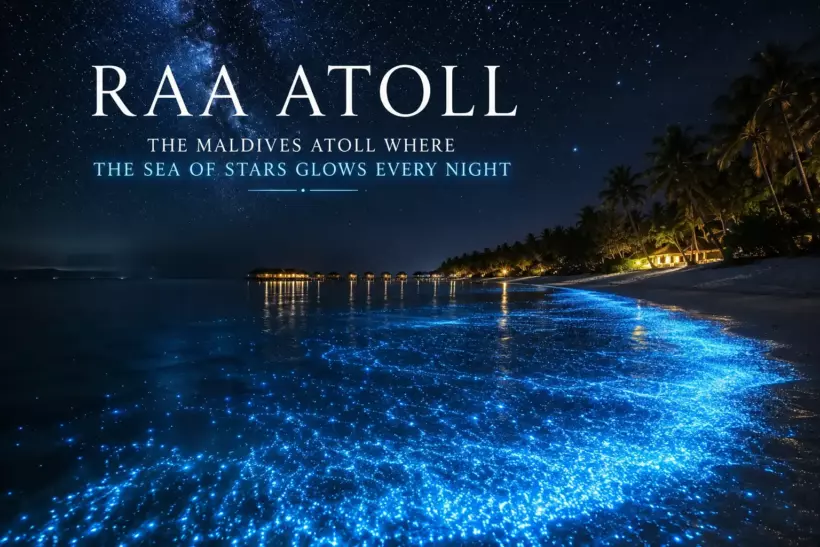
Raa Atoll: The Maldives Atoll Where the Sea of Stars Glows Every Night
Most people planning a Maldives trip choose between two postcards: an overwater villa in North Malé, or a honeymoon package in Ari Atoll. Raa Atoll (also known as Northern Maalhosmadulu Atoll or Maalhosmadulu Uthuruburi) rarely makes the shortlist, and that is exactly its advantage. It is one of the few places in the Maldives where a genuinely rare natural phenomenon, serious luxury, and untouched local culture sit inside the same 35-minute seaplane radius.
Raa Atoll is home to Vaadhoo Island’s famous bioluminescent beach — the “Sea of Stars” — plus manta ray cleaning stations, art-immersive resort Joali Maldives, and a scatter of fishing villages that still build wooden dhonis by hand. This guide covers what actually makes Raa worth the flight, what nearby atolls get mistakenly credited for, and how to plan the trip properly.
Where Is Raa Atoll and Why It’s Worth Choosing Over the Obvious Options
Raa Atoll sits in the northern Maldives, roughly 150–280 km from Malé depending on which island you’re headed to. It’s one of the largest and deepest atolls in the country, which matters practically: more depth and more open water means healthier coral, stronger currents that keep reefs fed, and a wider range of dive sites than the smaller, more heavily dived southern atolls.
Because Raa sits further from Malé than Ari or North Malé, it never developed the day-tripper crowds those atolls see. The inhabited islands — Ungoofaaru, the atoll capital, along with Meedhoo and Thulhaadhoo — still run on fishing and traditional craft rather than tourism. Thulhaadhoo is the only island in the Maldives still practicing liyelaa jehun, a centuries-old lacquer-work technique, and you can watch it being made and buy it directly from the artisans.
That combination — an active, spectacular natural phenomenon, resort-level luxury, and inhabited islands where nothing has been staged for visitors — is what no southern atoll can currently offer in one trip.
The Sea of Stars: Vaadhoo Island’s Bioluminescent Beach, Explained
Vaadhoo Island, a small local island inside Raa Atoll, is the most consistently cited bioluminescent beach in the Maldives. After dark, the shoreline lights up in an electric blue glow wherever the water is disturbed — by waves, footprints, or a hand dragged through the shallows. Locals call the phenomenon Redhan lun.
What Actually Causes the Glow
The light comes from bioluminescent phytoplankton, mostly dinoflagellates, that carry a chemical compound called luciferin. When the water is agitated, the organisms react defensively and emit a cold blue light — cold in the literal sense, since no heat is produced, so it’s completely safe to walk and swim through.
The display isn’t guaranteed on any single night. It depends on plankton density, water temperature, and how dark the sky is. New-moon nights give the darkest conditions and the most visible glow, and sightings become more frequent during the warmer months from roughly May through October, when plankton blooms are heavier. If a first attempt is a no-show, a different stretch of beach the following night often works.
Seeing It From Vaadhoo vs. From a Resort
Vaadhoo itself is a working local island with guesthouses, not a resort — you can walk the beach after dark for free, no tour or equipment required. Several Raa Atoll resorts, including Joali Maldives, also run guided evening excursions to Vaadhoo or nearby beaches by private yacht or dhoni, useful if you’d rather not arrange local-island logistics yourself. Either route puts you in front of the same phenomenon; the difference is transfer time and whether you want a guided experience or a solo one.
Manta Rays and the Reefs of Raa Atoll
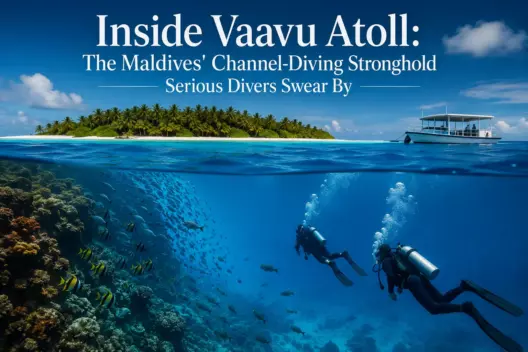
Raa Atoll’s marine life is arguably a bigger reason to visit than the glow itself. The atoll holds close to 40 documented dive sites within a 15- to 60-minute boat ride of most resorts, ranging from shallow coral gardens to channel dives with strong currents and big pelagic traffic.
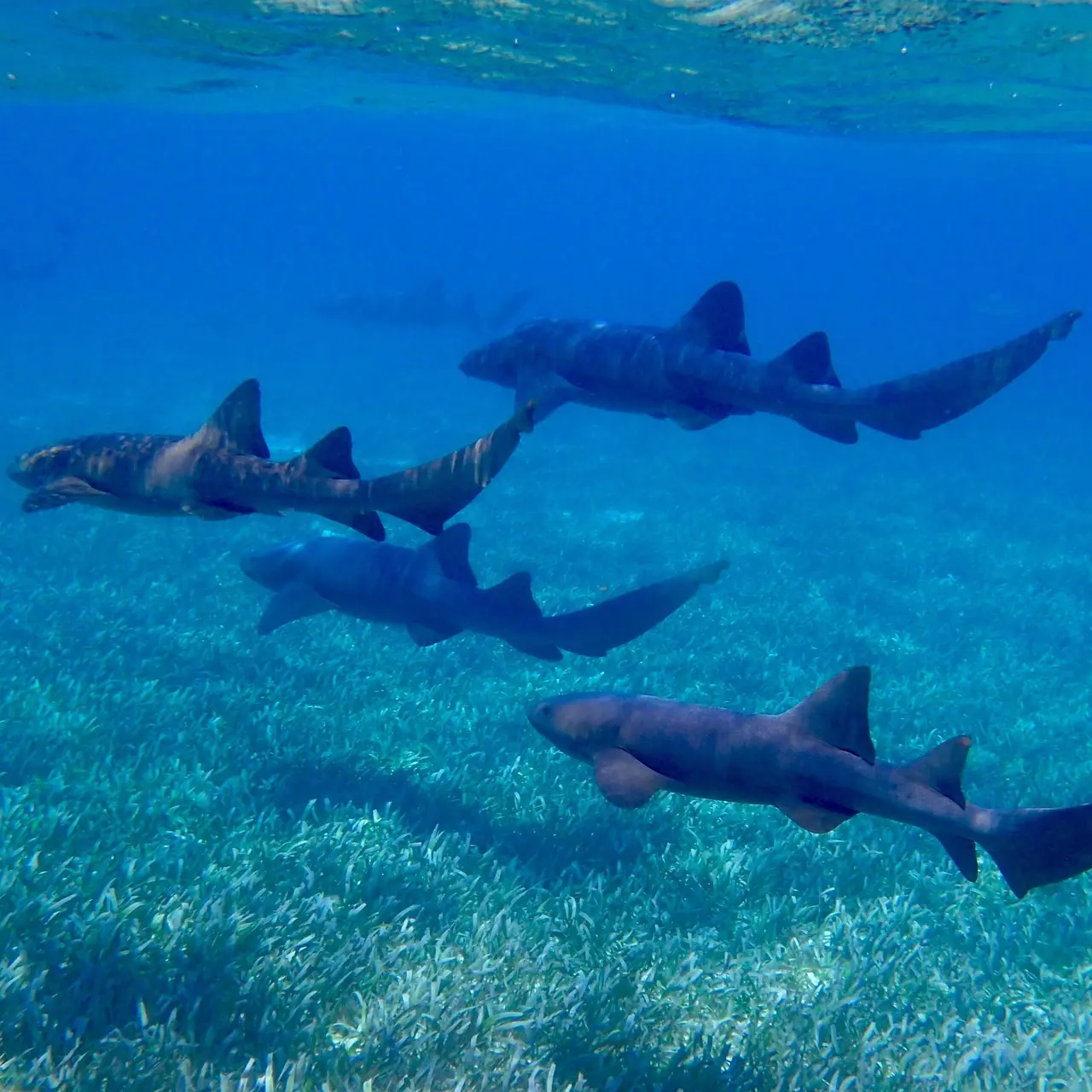
Manta rays are the headline species. The waters around InterContinental Maldives Maamunagau, at the southern tip of the atoll, contain one of the region’s known breeding grounds for juvenile manta rays, and sightings there are common enough that the resort partners with the Manta Trust on ongoing research. Joali Maldives runs manta snorkeling excursions with its resident marine biologist, and the atoll’s proximity to Hanifaru Bay — the Maldives’ only UNESCO Biosphere Reserve, technically just across the channel in neighboring Baa Atoll — makes a manta feeding aggregation day trip realistic from several Raa resorts during the June–November season.
Beyond mantas, expect reef sharks, eagle rays, napoleon wrasse, turtles, and — around dive sites like Kottafaru and Sola Corner — the kind of visibility that regularly exceeds 25 meters.
Luxury Resorts of Raa Atoll — and Its Underrated Neighbors
Raa Atoll has fewer resorts than Malé or Ari, which is part of why it stays quiet. Here’s what’s actually inside the atoll, plus two well-known resorts that get pulled into “Raa Atoll” search results without belonging there.
Joali Maldives — Raa’s Art-Immersive Flagship
Joali sits on Muravandhoo Island, roughly 40–45 minutes from Malé by seaplane (or a 35-minute domestic flight to Ifuru Airport plus a 15-minute speedboat). It’s the resort most associated with Raa Atoll internationally, largely because of its identity as the Maldives’ only fully art-immersive property — 73 villas, a resident curator, more than a dozen commissioned art installations, and a manta ray-shaped treehouse restaurant designed by Porky Hefer. Guests can snorkel with manta rays directly off the house reef, and the resort arranges private yacht trips to Vaadhoo for the Sea of Stars.
InterContinental Maldives Maamunagau — the 35-Minute Seaplane Icon
Maamunagau sits at the southern tip of Raa Atoll and is consistently the fastest resort in the atoll to reach: a 35-minute seaplane transfer from Velana International Airport, with a domestic-flight-plus-speedboat alternative for late arrivals. It’s the resort resort with the strongest manta ray credentials in Raa, sitting near a known juvenile manta breeding area and running conservation work through the Manta Trust. It’s also the only resort globally offering full Club InterContinental benefits as standard, which matters for anyone comparing loyalty-program value.
Don’t Get Confused: JW Marriott and Six Senses Kanuhura Aren’t in Raa
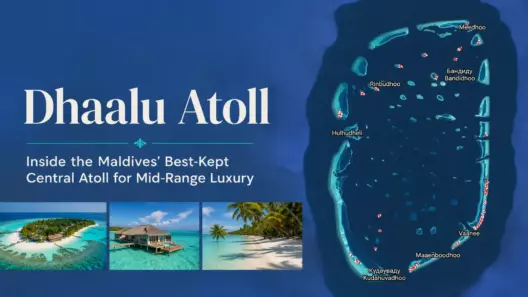
Two resorts frequently show up in “Raa Atoll” searches and articles, and both are misplaced. JW Marriott Maldives Resort & Spa sits on Vagaru Island in Shaviyani Atoll, one atoll further north — a 55-minute seaplane flight from Malé. Six Senses Kanuhura occupies three islands in Lhaviyani Atoll, south of Raa, reached in about 40 minutes by seaplane. Both are genuinely excellent properties and both sit in the same northern-Maldives corridor as Raa, which is likely why the confusion persists — but if a resort’s exact atoll matters to your booking (it affects transfer routing and which reefs you’ll actually dive), it’s worth knowing the difference before you commit. For travelers building a two-resort trip, pairing Raa with either atoll works well logistically, since seaplane routes north from Malé often service all three.
Getting to Raa Atoll: Seaplane, Domestic Flight, and Speedboat Routes

Every resort in Raa Atoll is reached from Velana International Airport (MLE) in Malé, and transfer method depends on the specific resort and arrival time:
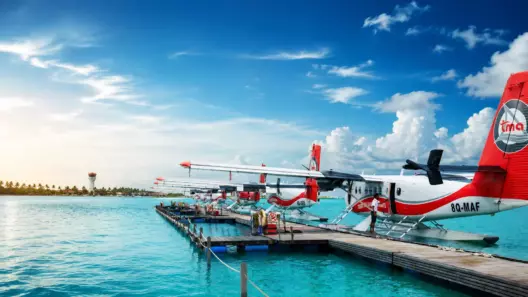
- Seaplane is the default and the scenic option. Times range from about 35 minutes (InterContinental Maldives Maamunagau) to 45 minutes (Joali Maldives), with flights operating only in daylight, roughly 6:00 am to 3:30 pm.
- Domestic flight + speedboat is the fallback for late arrivals. A short domestic hop to Ifuru Airport (for Joali) or Dharavandhoo (for Maamunagau) followed by a 15–35 minute speedboat ride covers most late-evening landings.
- Speedboat direct from Malé exists in theory but is a 6–8 hour journey and isn’t practically recommended by any resort in the atoll.
Because seaplanes don’t fly after dark, anyone landing in Malé late at night should plan an overnight stay near the airport before continuing to Raa the next morning.
Best Time to Visit Raa Atoll for Bioluminescence and Manta Rays
The dry season, November through April, brings the calmest seas, the clearest skies, and the best overall diving visibility — the standard “best time to visit the Maldives” answer applies here too. But the two signature draws of Raa Atoll actually peak on different calendars:
- Bioluminescence is most visible during the wetter months, roughly May through October, when plankton density is higher, paired with new-moon nights for maximum darkness.
- Manta rays are most reliably sighted from May through November, when southwest monsoon currents push plankton — and the mantas that feed on it — through the channels around Raa and neighboring Baa Atoll.
That overlap means late May through October is arguably the sharpest window for a trip built specifically around Raa’s two headline experiences, even though it isn’t peak resort season. Expect lower rates and thinner crowds as a trade-off for slightly rougher seas.
Local Islands and Authentic Maldivian Culture in Raa Atoll
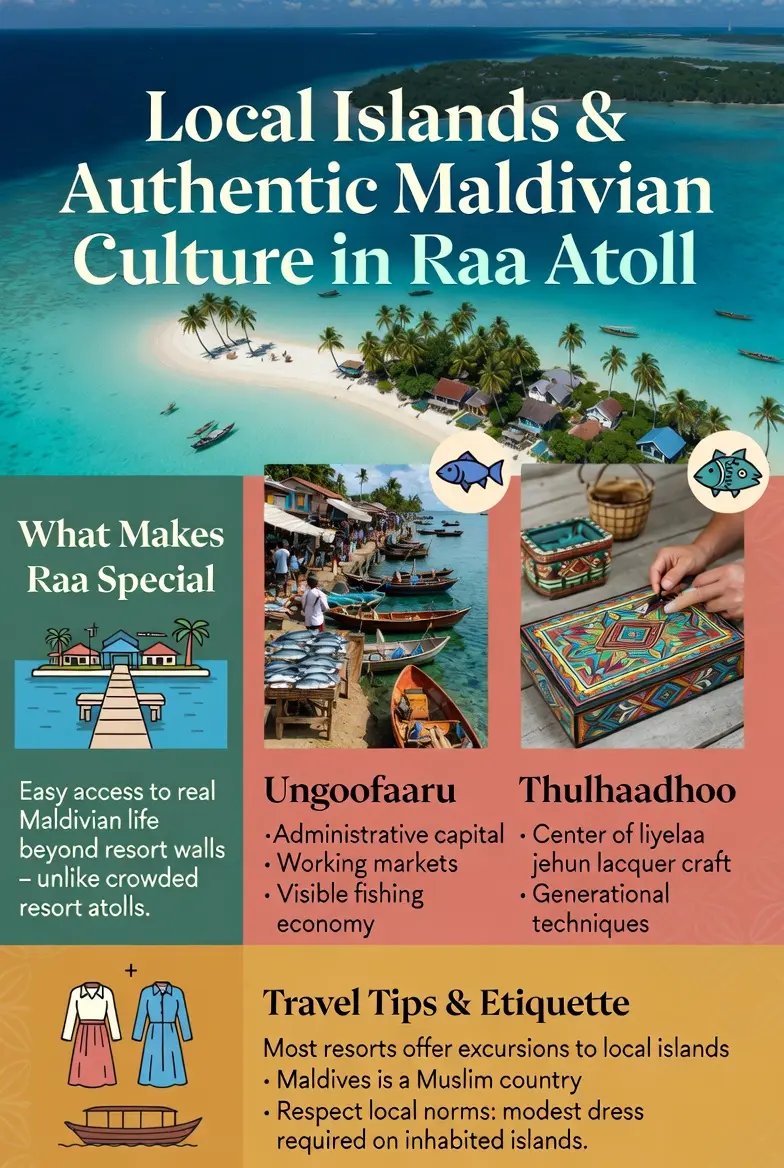
What separates Raa from more resort-dense atolls is how easy it is to step off resort grounds into inhabited Maldivian life. Ungoofaaru, the atoll’s administrative capital, has working markets and a visible fishing economy. Thulhaadhoo remains the country’s center for liyelaa jehun lacquer craft, with artisans still hand-engraving lacquered wood using techniques passed down for generations. Most resorts in the atoll run excursions to these islands, and the etiquette is straightforward: modest dress on local islands, with swimwear reserved for designated bikini beaches, since the Maldives is a Muslim country and local islands operate under different norms than resort islands.
Frequently Asked Questions
Is Raa Atoll good for a Maldives trip? Yes, particularly for travelers who want a rare natural phenomenon (bioluminescence), strong manta ray diving, and quieter local-island culture in one destination, rather than choosing between them.
How do I get to Raa Atoll from Malé? Mostly by seaplane, ranging from about 35 minutes (InterContinental Maldives Maamunagau) to 45 minutes (Joali Maldives), with a domestic-flight-plus-speedboat option for arrivals after seaplanes stop flying around 3:30 pm.
When is the Sea of Stars visible in Raa Atoll? It can appear year-round but is most reliable from May through October, especially on new-moon nights when the sky is darkest. It isn’t guaranteed on any single night.
Are JW Marriott Maldives and Six Senses Kanuhura in Raa Atoll? No. JW Marriott Maldives Resort & Spa is in Shaviyani Atoll, and Six Senses Kanuhura is in Lhaviyani Atoll — both neighboring atolls, not Raa itself.
Where are manta rays most commonly seen in Raa Atoll? Around InterContinental Maldives Maamunagau at the atoll’s southern tip, which sits near a known juvenile manta breeding area, and via excursions toward Hanifaru Bay in adjacent Baa Atoll during the June–November season.
Raa Atoll’s case makes itself once the geography is straight: a real bioluminescent beach you can walk onto for free, manta ray encounters backed by active conservation work, one of the Maldives’ most distinctive resorts in Joali, and local islands where craft traditions are still a living industry rather than a display. The atoll doesn’t need borrowed resorts from Shaviyani or Lhaviyani to make its case — it has enough on its own.