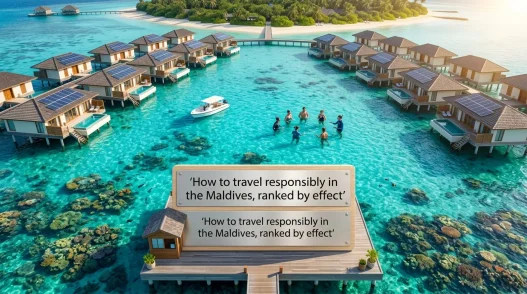


Maldives in March: Is It Worth Going? Weather, Beaches, and Real Traveler Insights
March is the month most Maldives experts quietly agree on as the sweet spot of the entire year. Not December, not January — March. The northeast monsoon is fully settled, the seas are as flat as glass, and the light over the atolls in the late afternoon turns everything amber and gold. But before you book, there is one thing that almost no travel guide will tell you upfront: March is exceptional for beaches, snorkeling, and weather — yet it is not the best month for seeing manta rays in large numbers, and the last week of March signals a subtle but real shift in conditions. Whether it is your best month depends on what you are actually coming for.
This guide cuts through the promotional language and gives you the specific picture: what the weather is actually like, which beaches reward a visit, what the underwater world looks like in March, and what real travelers tend to say after they come back.
Why March Is Considered One of the Strongest Months to Visit the Maldives
The Maldives meteorological service officially classifies the northeast monsoon — the dry season — as running from January through March. That makes March the closing chapter of the best weather window, and in some ways the most complete version of it.
January and February bring cooler evenings and slightly more wind in the northern atolls. By March, temperatures peak at around 29–32°C during the day, sea surface temperatures hover between 28–30°C, and the winds are gentler than earlier in the dry season. The result is arguably the calmest sea state of the year, which matters enormously when you are booking boat excursions, planning snorkeling trips, or simply choosing whether to swim off a sandbank.
Underwater visibility in March is exceptional. In established dive zones like North Malé Atoll, South Malé Atoll, and Ari Atoll, visibility regularly exceeds 30 meters — conditions that photographers and divers specifically plan around. The lack of plankton blooms that arrive with the wet season means the water is clear, which is ideal for photography and reef exploration, even if it draws fewer of the giant filter feeders that follow the plankton.
March also marks the very beginning of the Maldives surf season. The northwest swell picks up toward the end of the month, opening breaks in North Malé Atoll — particularly around Thulusdhoo — that are too flat to surf in January and February. For mixed groups where some people want flat water and others want waves, late March is one of the few moments where both are possible.
March Weather in the Maldives: Temperature, Rain, and What to Expect Day to Day
The average rainfall in March across the Maldives is approximately 83mm for the month — which sounds like a lot until you understand that tropical rainfall here does not behave like it does in temperate countries. Showers are typically brief and intense, often arriving overnight or in the early morning hours, and clear within 45 minutes. You will rarely lose more than an hour of usable beach time to rain in March.

Daytime temperatures sit between 29°C and 32°C throughout the month. Sea temperatures are warm enough to spend hours in the water without discomfort. Evenings are ideal for outdoor dining — warm, calm, and the sunsets in March are notably dramatic because cloud formation begins to increase slightly compared to January, creating more textured skies.
There is one important nuance about rainfall distribution: the southern atolls (Addu and Fuvahmulah) are typically wetter than the central and northern atolls even in the dry season. If you are staying in the far south, add roughly 20–30% more rain expectation to the figures above. The central atolls — South Malé, Ari, and Baa — represent the most reliably dry experience in March.
The early vs. late March split worth knowing. The first two weeks of March are climatically very similar to February — stable, dry, and predictable. From around the 20th onward, humidity begins to build, afternoon clouds become more pronounced, and occasional squalls become possible in the evenings. This does not ruin a holiday, but if your trip falls in late March, expect one or two evening weather interruptions. The good news: mornings in late March are almost always clear.
The Best Beaches to Visit in the Maldives in March
With flat seas and long daylight hours — around 12 hours of light daily — March is genuinely the optimal moment to explore beaches across different atolls. The choice of beach depends heavily on where you are staying.
Hulhumalé Beach near Malé is the most accessible stretch of white sand for travelers transiting through the capital or staying on budget. The water in March is shallow, calm, and clear — conditions that make it useful for swimming and basic snorkeling without any boat transfer.
Veligandu Island, Ari Atoll is frequently cited by divers as one of the best beach-and-reef combinations in the Maldives. The house reef here runs along the beach itself, meaning you can walk into the water from the sand and immediately be above coral. In March, with visibility above 25–30 meters, this kind of beach access is as good as it gets anywhere in the Indian Ocean.
Fulhadhoo Island, Baa Atoll is a local inhabited island with a beach that does not require a resort booking to access. It is less photographed than resort islands but frequently described by travelers who stay in guesthouses as the kind of beach experience that feels genuinely untouched. In March, the water here is glass-flat on most days.
Sandbanks and uninhabited islands — available as excursions from virtually every resort and many guesthouses — are best visited in March precisely because the seas are calm enough for a speedboat to reach them comfortably. A private sandbank picnic in late March, when the light is at its richest, is the kind of experience that defines why the Maldives has the reputation it does.
Underwater World in March: Diving and Snorkeling Conditions
For divers and snorkelers, March sits firmly in the best visibility window of the year. The northeast monsoon current pushes clear water from the east into the atolls, and without the plankton blooms that arrive from May onward, the water column is transparent.
In practical terms: dive sites in Ari Atoll and North Malé Atoll see visibility of 25–35 meters in March, sometimes exceeding 35 meters on particularly clear days. Drift diving is strong in this period — the channel walls and thila pinnacles that define the Maldivian underwater landscape are at their most rewarding when you can see the full structure from a distance before arriving at it.
Whale sharks in March are reliably present around South Ari Atoll Marine Protected Area, particularly near Maamigili. This is one of the few places on earth with a year-round juvenile whale shark aggregation, and March conditions — calm seas, good boat access, high visibility — make snorkeling encounters here genuinely excellent. Resorts like Lux* South Ari Atoll and Conrad Maldives Rangali Island are positioned directly for these encounters.
Reef sharks, turtles, and eagle rays are consistently present throughout the central atolls in March. The cleaning stations at sites like Maaya Thila in Ari Atoll and Banana Reef in North Malé Atoll are active all year, but the combination of clear water and gentle currents in March makes hovering at these sites particularly comfortable for less experienced divers.
What March Is NOT the Best Month For
Most guides will tell you everything is perfect in March. Here is the counterbalance, because it matters depending on your priorities.
Manta ray aggregations are not at their peak in March. The iconic mass feeding events at Hanifaru Bay in Baa Atoll — where 100 or more manta rays can circle in a single lagoon — occur during the southwest monsoon from June to October, when plankton blooms attract them in large numbers. In March, manta rays are present in the Maldives, particularly on the western sides of the atolls, but you are unlikely to witness the large aggregations that define the most famous manta photographs from the region. If witnessing a manta feeding frenzy is your primary reason for visiting, the dry season — including March — is not the right window.
Prices are at their highest. March is part of peak season, which runs from December through early April. Resort rates in March carry the full high-season premium. A mid-range beach villa that costs $400 per night in the wet season can run $600–800 in March. Luxury overwater villas that are already expensive are significantly more so. This is not a reason to avoid March — but it is a reason to book early and budget honestly.
Crowds are real on popular resort islands. The Maldives is fundamentally an archipelago of private islands, which means that if your resort is full, your slice of the Maldives can still feel quiet. But boat excursions to popular snorkeling spots, day trips to sandbanks, and dive sites near the main resort clusters will be busier in March than in any other month.
Activities That Are Specifically Worth Booking in March
The combination of calm seas, long daylight, and good visibility makes certain activities particularly well-matched to March conditions.
Liveaboard diving benefits enormously from the weather stability of March. Multi-day liveaboard itineraries through the central atolls run on predictable schedules because weather delays are rare. Operators typically run two to three dives per day, and the flat-water conditions between dive sites mean less fatigue from boat travel. The 6–9 month advance booking recommendation from operators is serious — the best liveaboard itineraries for March fill quickly.
Island hopping by speedboat is most comfortable in the calmest sea state of the year. Open-ocean crossings that can be rough from June onward are smooth in March, making it the right moment to build an itinerary across multiple atolls rather than staying on a single island.
Underwater photography is specifically advantaged by March visibility. Whether shooting with a compact camera and a diving mask or with a professional housing rig, the 30+ meter visibility produces backgrounds that are simply not available in the same way during the wet season.
Cultural day trips to Malé and inhabited islands are well-suited to March. The capital’s fish market, Friday Mosque, and local streets are accessible in calm weather, and the inhabited islands of Maafushi, Thulusdhoo, and Dhigurah offer authentic Maldivian life at prices dramatically below resort islands.
How Much Does a Maldives Trip Cost in March?
March is peak season, and prices reflect that. Here is the honest breakdown by accommodation type.
Guesthouses on local islands start at $50–150 per night for a comfortable room with air conditioning. Maafushi is the most established budget island, with options ranging from basic to genuinely comfortable. Thulusdhoo — popular with surfers — starts at around $32 per night for simple rooms, with better properties running $60–90.
Mid-range resort beach villas run $200–600 per night in March, typically including breakfast. This range covers a genuine resort island experience with house reef access, water sports facilities, and restaurant dining — without the overwater bungalow premium.
Overwater villas and luxury resorts range from $800 to $1,500 per night at established names. Ultra-luxury properties like Soneva Jani or Velaa Private Island exceed $3,000–6,000 per night in peak season.
The budget-smart hybrid strategy: Stay at a guesthouse on Fulhadhoo or Ukulhas for $50–80 per night, and book a day visit pass to a neighboring private island resort. Many resorts sell day passes that include pool access, beach facilities, and lunch for $150–200 per person — dramatically less than staying there, and giving you the overwater bar photograph at a fraction of the cost.
Flights from Europe add $600–1,200 for a round trip depending on routing and timing. Middle Eastern hubs (Dubai, Doha, Abu Dhabi) offer the most options. Booking 10–12 weeks ahead for March travel is advisable — last-minute availability at reasonable prices in peak season is limited.
How to Stretch Your Budget Without Compromising the Experience
The most effective cost lever in the Maldives is staying on a local inhabited island rather than a resort island. The ocean is the same. The reefs are the same. The excursions reach the same sandbanks and dive sites. What you are paying for at a resort island is the private island exclusivity, curated service, and the specific aesthetic of an overwater villa.
For excursions, book through your guesthouse rather than through resort tour desks. A sandbank BBQ trip arranged through a local guesthouse on Fulhadhoo costs $25–30 per person. The same excursion arranged through a nearby resort runs $150 or more. The sandbank is literally the same.
Pack reef-safe sunscreen, a quality snorkel mask, and a reusable water bottle before arriving. Resort prices for these items are significant, and local island shops charge a fraction of the cost.
If you want at least one night in a resort for the overwater experience, look for properties in North Malé Atoll that offer speedboat transfers rather than seaplane access — seaplane transfers add $400–600 per person to the cost of reaching more remote atolls, and not every traveler finds the difference worth it.
What Real Travelers Say About March in the Maldives
The consistent themes in firsthand accounts from travelers who visited in March reflect the objective conditions closely.
Weather satisfaction is extremely high. Travelers repeatedly describe arriving at their resort to find flat, clear water and uninterrupted sunshine for the majority of their stay. The brief showers that do appear are generally remembered as atmospheric rather than disruptive — arriving overnight or in the early morning and leaving the air fresh for the day.
The visibility and snorkeling quality draw consistent praise, particularly from first-time visitors who arrive expecting good conditions and find exceptional ones. Reports of swimming with reef sharks on house reefs, encountering turtles during morning snorkels, and seeing clearly to 20 meters depth on standard resort snorkeling gear are common.
The honest criticism from March travelers centers almost entirely on price and crowds. Travelers who expected the Maldives to feel empty are surprised to find resort restaurants at capacity, popular dive sites with multiple other groups present, and excursion boats running back to back at well-known sandbanks. The response to this in traveler accounts varies: those who chose smaller, less-marketed resort islands typically describe a quieter experience, while those who booked flagship properties in the most visible atolls note the contrast between the paradise imagery and the reality of operating at full occupancy.
A recurring piece of advice from experienced Maldives visitors: choose your island based on what you do not want as much as what you want. Remote southern atolls require domestic flights or seaplanes but offer genuine quietness. Central atolls around Malé and South Malé are faster to access but share their excursion grounds with more tourists.
March in the Maldives: Who Should Go and Who Should Wait
March is a strong choice if:
You prioritize beach quality, flat water, and snorkeling visibility above all else. If your ideal Maldives holiday centers on warm, clear water, white sand, long days of sunshine, and comfortable conditions for underwater photography, March is the best available window.
You are a diver focused on visibility and reef species rather than manta aggregations. The reef ecosystems, drift dives, and whale shark encounters at South Ari are as rewarding in March as at any point in the year.
You want predictable weather without compromise. March offers the lowest weather-related risk of any month in the Maldives.
You are surfing or traveling with someone who surfs. Late March opens the early-season breaks without the full monsoon conditions of May and June.
Consider a different month if:
Witnessing large manta ray aggregations is your primary goal. June through October, with a stay near Baa Atoll and Hanifaru Bay, is the window for that experience.
Budget is a hard constraint. The wet season months from May to October offer 30–50% lower accommodation rates, and the actual holiday experience — particularly in the shoulder weeks of May or late September — can be outstanding.
You want the Maldives to feel completely private and unhurried. A well-chosen resort in the off-season, where the island operates at 30–50% occupancy, will feel more like the classic promise of the destination than a flagship resort at peak-season capacity in March.
FAQ: Maldives in March
Is March a good time to visit the Maldives? Yes. For beach holidays, snorkeling, diving visibility, and weather reliability, March is one of the two or three strongest months of the year, alongside January and February.
Does it rain a lot in the Maldives in March? No. Monthly rainfall averages around 83mm, and showers are typically brief — under an hour — and often arrive overnight. The central atolls are the driest. The far southern atolls receive somewhat more rain even in the dry season.
Can you see manta rays in the Maldives in March? Yes, but not in the large aggregations that define the Hanifaru Bay experience. Manta ray encounters are possible on the western sides of atolls in March, but peak manta activity runs from June to October. Whale sharks at South Ari Atoll are present and reliably seen year-round.
Is March expensive for visiting the Maldives? Yes. March is peak season, and prices for flights and accommodation are at their annual high. Guesthouses on local islands start around $50–150 per night; resort villas range from $200 to over $1,500 per night depending on category.
How far in advance should I book a Maldives trip in March? For the best resort availability and flight prices, 10–14 weeks ahead is a practical minimum. Liveaboard diving itineraries should be booked 6–9 months in advance, as the best vessels sell out for March well ahead of the season.
Is late March different from early March? Slightly. The first two weeks behave like February — stable and dry. From around the 20th onward, humidity increases, afternoon clouds become more prominent, and occasional evening squalls are possible. It is still a very good time to visit, but mornings are more reliably clear than evenings.
What is the water temperature in the Maldives in March? Sea surface temperatures in March sit between 28°C and 30°C — warm enough to swim for extended periods without a wetsuit, though a 3mm shortie is comfortable for longer dive sessions.
March is not the Maldives at its most dramatic — for that, you need the moody skies and manta feeding of the wet season. But if you want the islands at their most complete and most reliably beautiful, March is an exceptionally strong answer.