Landed After Dark? Why Your Maldives Trip Now Starts With an Overnight in Malé
You booked the sensible flight. It lands at Velana at 19:40, it cost £280 less than the midday option, and nothing in the booking flow mentioned that the last seaplane of the day left three and a half hours earlier. Your resort is a floatplane island. Tonight you are sleeping in a guesthouse on a reclaimed island beside the runway, and the villa you paid for sits empty forty minutes away.
This is the commonest way to lose a day of a Maldives holiday, and it is predictable. An overnight in Malé is not bad luck. It is the arithmetic of visual flight rules meeting a long-haul timetable, and that arithmetic is public. This guide covers when the overnight in Malé becomes unavoidable, what it costs across four tiers, who pays under real resort contracts, and five ways to never need one.
The three numbers travellers confuse, and the one that actually decides
Search this topic and you will find three different figures presented as the seaplane deadline. All three are real. They measure different things, and only one of them is your deadline.
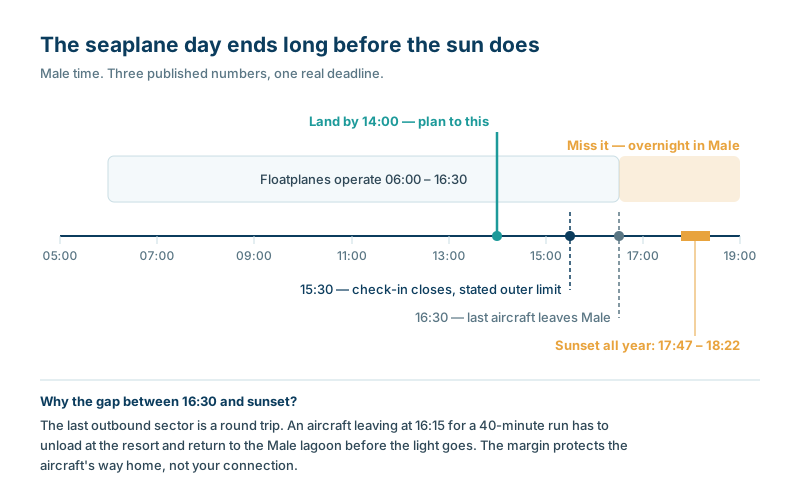
The operating window is roughly 06:00 to somewhere between 16:00 and 16:30. That describes when floatplanes are in the air, not when you can join one.
The seaplane check-in cut-off is earlier. The St. Regis Maldives Vommuli tells guests plainly that Trans Maldivian Airways closes seaplane check-in at 15:30. Miss the desk and the aircraft is irrelevant.
The arrival deadline is earlier still, and it is the only number that concerns you. Trans Maldivian advises international passengers to be on the ground by 15:30 for a same-day transfer. That is an outer edge, not a target. Between wheels-down and the check-in desk sit immigration queues, baggage reclaim and the walk to the counter — comfortably an hour on a busy afternoon, longer when three wide-bodies land together.
Individual resorts tighten it further. Soneva Secret requires arrival by 15:00 because its sector to Haa Dhaalu runs about 75 minutes. Land at 15:20 with that booking and you are staying overnight in Malé regardless of the operator’s general policy.
Our own seaplane transfer guide uses 14:00 as the practical planning figure, and that is the number worth writing down. It leaves ninety minutes of buffer, which is roughly what a delayed inbound flight eats — and ninety minutes is the difference between the villa and an overnight in Malé.
Why the last floatplane leaves two hours before sunset
Here is the part almost nobody explains, and it changes how you read every schedule.
Sunset in Malé is remarkably stable. We calculated civil sunrise and sunset for Malé across a full year: the sun goes down between 17:47 in early November and 18:22 in late July, a spread of just thirty-five minutes. Sunrise moves even less, from 05:51 to 06:20. There is no winter in this timetable.
So why does the last departure sit at 16:00 rather than 18:00?
Because the final aircraft of the day has to come back. A Twin Otter leaving Velana at 16:15 for a forty-minute sector lands at the resort near 17:00, unloads, and still needs to return to the lagoon at Malé before the light goes. Every outbound sector after mid-afternoon is really a round trip against a fixed sunset, and the operator builds in margin for weather and loading. The buffer you see is not caution about your flight. It is the aircraft protecting its own way home.
| Month | Sunset in Malé | Practical last departure window |
|---|---|---|
| January | 18:12 | Normal |
| April | 18:12 | Normal |
| July | 18:22 | Widest of the year |
| October | 17:52 | Tightening |
| November | 17:48 | Tightest of the year |
| December | 17:57 | Tightening |
Sunrise and sunset computed for Malé (4.18° N, 73.51° E) at mid-month, Maldives time.
The practical reading is counterintuitive. Booking a November trip does not shift your deadline by an hour — it shifts it by about half an hour against July. What genuinely changes your odds is the southwest monsoon between May and October. Cloud and rain compress the afternoon rotations, and an aircraft already running late slips past the point of no return. Weather, not the calendar, is what turns a tight schedule into an overnight in Malé.
What the extra night actually costs, in four tiers
This is the section to read before you compare flight prices, because the saving on a cheap evening arrival rarely survives contact with it.
The hotel is the smallest line. Rates sampled in August 2026 put Hulhumalé guesthouses at $32 to $70 a night for a double with breakfast — Portia Beach Grand around $38, Terminal 27 around $43, Turquoise Residence by UI around $49, Huvan Beach Hotel around $52. Tripadvisor’s Hulhumalé listings start near $52. Mid-range properties on the beach road run $70 to $170.
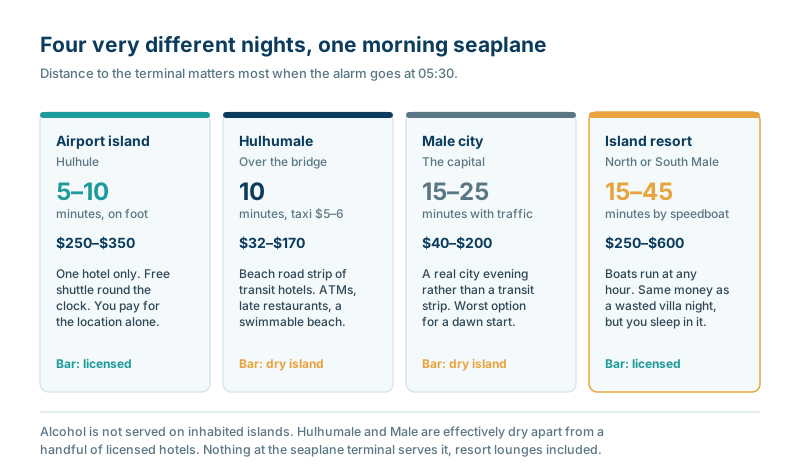
The airport island is a different market. Hulhulé Island Hotel is the only hotel on the island the airport sits on, five to ten minutes on foot from the terminal with a free round-the-clock shuttle. It runs roughly $250 to $350 a night, and guests describe it bluntly as overpriced for anything except its location. For a night that ends with a 05:30 alarm, the location is the entire product.
Now add the parts nobody budgets:
| Line item | Realistic cost |
|---|---|
| Room, Hulhumalé guesthouse to airport hotel | $35–$350 |
| Airport taxi, both directions | $10–$12 total |
| Dinner and breakfast outside the hotel | $20–$50 |
| Resort night paid for and not slept in | $400–$2,000+ |
| Lost half-day of the holiday | Not recoverable |
The fourth row is the real number. Your resort booking starts the day you land, whether or not you reach the island. An overnight in Malé does not add a night to your trip — it deletes one from the expensive end and replaces it with a cheaper one you also pay for.
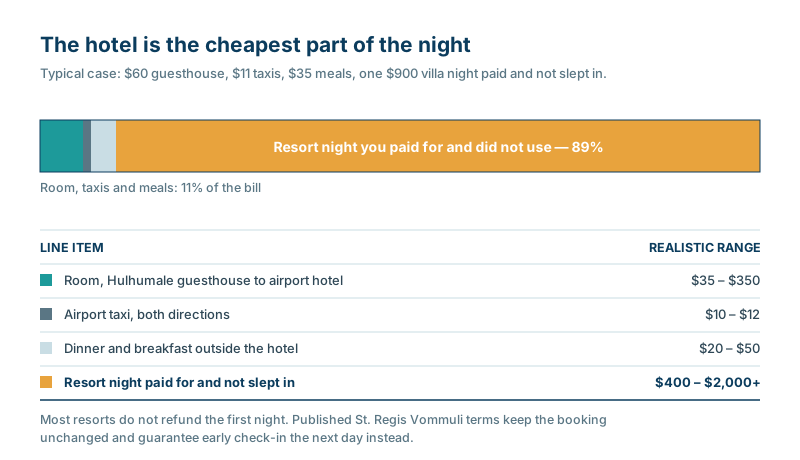
Run it against the flight saving. An evening arrival that saves £280 per person on a couple’s booking saves £560. A forfeited $900 villa night, a $60 transit room, transfers and meals put you level or behind. You have paid to swap a first afternoon on the reef for an overnight in Malé beside a runway.
Who pays: the clause sitting in your resort’s terms
Ask a travel agent and you will hear that the resort sorts it out. Read the published terms and the picture sharpens considerably.
The St. Regis Maldives Vommuli states its position clearly. Where considerable flight delays occur, the resort keeps the booking unchanged to guarantee early check-in the following day, and refunds nothing for the first night. Vakkaru Maldives goes further on the transfer itself: seaplane charges are non-refundable, and a same-day cancellation or no-show attracts the full one-way fee.
Read those together and the default becomes obvious. The resort will help — most genuinely do, and many hold standing relationships with named Hulhumalé properties — but helping means arranging, not absorbing. The overnight in Malé is yours to pay for on top of a resort night you have already bought.
Some properties do cover it. A minority of resorts, particularly at the top of the market and particularly when the delay sits with their own transfer rather than your airline, will book and pay for the overnight in Malé. There is no way to know which from the brochure.
So ask, in writing, before you pay the balance:
“If my flight lands after your seaplane cut-off, who books the overnight in Malé, who pays for it, and is my first resort night refunded or credited?”
Three answers, one email. A property that answers all three in writing is telling you something useful about how it handles everything else.
Where to sleep: four options that are genuinely different
The choice is not between hotels. An overnight in Malé comes in four distinct shapes, and the right one depends entirely on how early your seaplane leaves.
On the airport island. Hulhulé Island Hotel is a five-to-ten-minute walk or a free shuttle from the terminal. It is the only property where a 05:30 departure costs you no transfer and no traffic. It also holds a licence, which matters more than it sounds — see the next section.
Hulhumalé, ten minutes over the bridge. The dense option, and where most transit travellers end up. Rivethi Beach, Hotel Ocean Grand, Coral Grand, Hathaa Beach and h78 Veli all sit on the beach road within a short walk of each other, most offer airport pickup on request, and several routinely coordinate the morning handover with resorts. There is a real swimmable beach, ATMs, and restaurants open late.
Malé city. Best if you want an evening in an actual capital rather than a transit strip, and worth a look at our guide to Malé. It is further, the traffic is worse, and at 05:30 that difference is unwelcome.
A resort night instead. The move experienced travellers make. Rather than a guesthouse, spend night one at a speedboat-reachable island in North Malé or South Malé, which can collect you at any hour, then fly out to your main resort in the morning. You pay resort money and you sleep in a resort, which beats an overnight in Malé for roughly the same outlay.
The evening nobody plans for: a dry island with a dress code
Here is where an unplanned overnight in Malé stops being a logistics problem and starts being a cultural one.
Hulhumalé is an inhabited island, and Maldivian law keeps alcohol off inhabited islands. The island is effectively dry, with service limited to a small number of licensed hotels. Hulhulé Island Hotel, on the airport side, is licensed. Nothing at the seaplane terminal is — not even the branded resort lounges, which catches out anyone planning a celebratory arrival drink.
Local dress standards apply too. Swimwear is confined to the designated tourist beach; walking the streets in it is not acceptable, and our guide to dress codes and customs rules covers the detail. Honeymooners who pictured night one differently should know this in advance rather than at 21:00 in a taxi.
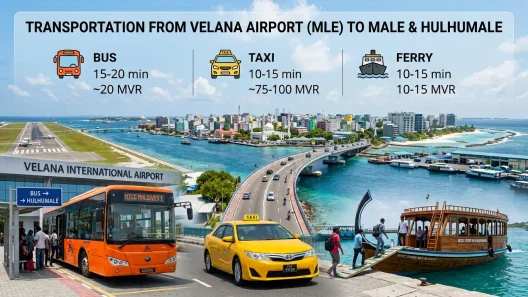
The practical logistics are easy once you know them. The regulated taxi fare from the airport to Hulhumalé is MVR 80–85, about $5 to $6, and there is no legitimate airport surcharge. The ride-hailing apps Avas Ride and Quick MV hold the fixed rate and let you book before you land. Bank of Maldives ATMs on the island dispense against Visa and Mastercard, and most restaurants take cards.
None of this is unpleasant. An overnight in Malé is simply a different country from the one in the brochure, met four hours earlier than expected.
Paperwork and luggage: two things to get right before you land
Two administrative details decide whether the transit night is smooth or tense.
Your Traveller Declaration. Every arriving traveller must submit the free IMUGA declaration through the official portal within 96 hours before the flight, and the portal rejects anything lodged earlier. Immigration checks it alongside your accommodation booking and onward ticket. The Maldives grants a free 30-day visa on arrival to all nationalities, so leaving the airport for an overnight in Malé is routine. If you book the transit hotel after submitting IMUGA, carry that confirmation on your phone next to the resort voucher — one screenshot removes the only question likely to come up twice.
Your bags. They come with you. There is no bag-drop arrangement that holds a suitcase overnight for a seaplane you have not yet checked into, so you are wheeling everything to the hotel and back. This is where the seaplane baggage discipline pays off twice: the 5 kg cabin bag you packed with medication, documents and a change of clothes is now also your overnight bag, and you can leave the large case closed.
Hard-shell suitcases are the recurring nuisance. They load badly into a float hold and occasionally travel on a later rotation, which matters more when your day has already been rearranged once.
The morning after: how the first seaplane actually works
The overnight in Malé ends earlier than most people expect, and the shape of the morning surprises them twice.
First departures begin around 06:00, and resorts push guests onto early rotations to recover the lost half-day. Expect to leave the hotel between 05:30 and 07:00 depending on your slot, confirmed the night before rather than at booking. Ask reception to arrange the transfer when you check in, not at breakfast.
Then comes the second surprise: you may still wait. Trans Maldivian loads aircraft once enough guests bound for the same resort have gathered, so an early arrival at the Noovilu terminal does not guarantee an early take-off. The wait there averages about two hours and ranges from under one to about four. Manta Air publishes schedules, which is why guests at its partner resorts get firmer times.
Practically, an overnight in Malé that starts at 20:00 delivers you to the resort around 09:00 to 11:00 the next day. You lose the arrival afternoon and the following morning. Most resorts hold the booking and guarantee an early check-in, which is worth confirming rather than assuming.
The same trap in reverse: departure day before 09:00
Nobody plans for this one, and it costs the same night at the other end of the trip.
Seaplanes cannot deliver you to Velana in time for an early international departure. Resorts generally require outbound flights to be scheduled after 09:00, and Vakkaru states the rule explicitly. Book a 07:30 flight home from a floatplane island and you spend the last night of the holiday in Malé rather than the villa — the same overnight in Malé, paid for twice over, with the added insult of leaving the resort a day early.
The opposite error is just as common. A seaplane that lands you at Velana at 11:00 for a 22:00 departure leaves eleven hours in a terminal where check-in desks open three hours before the flight. A day room at Hulhulé Island Hotel or a Hulhumalé hotel solves it for far less than the misery is worth.
Fix both ends before you buy the international ticket. Anyone building a honeymoon itinerary around a dawn flight home should check this first, not after the flights are non-refundable.
Five ways never to need this night at all
Work down this list. The first one that fits ends the problem.
- Land by 14:00. The single highest-value decision in the booking. Pay the fare difference for a midday arrival and the overnight in Malé disappears entirely, along with the transit room, the taxis and the forfeited villa night.
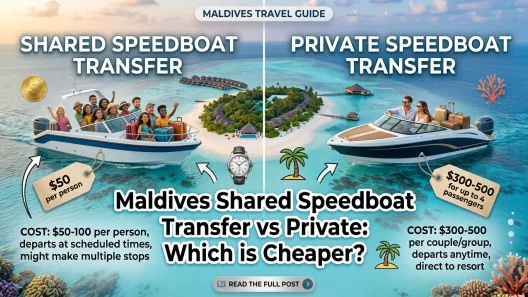
- Choose a speedboat island. Resorts in North and South Malé are reachable around the clock. Boats do not care what time the sun sets, and our speedboat transfer guide covers the crossings and their limits.
- Choose an atoll with a runway. Lit regional airports accept aircraft after dark. Lhaviyani, Baa, Raa, Noonu, Dhaalu and South Ari all now offer a fixed-wing route to the same islands, and our guides to domestic flights and airports by atoll map the network.
- Ask for the fixed-wing fallback in writing. Where both routes exist, some properties will switch you to a domestic flight for a late landing. That clause converts a lost day into a late dinner.
- Buy the night deliberately. If the flight is fixed and the resort is seaplane-only, turn the forced overnight in Malé into a night at a nearby island resort rather than a transit guesthouse. Same money, entirely different night.
Our transfer comparison prices the dual-route atolls in detail, and the Getting Around section collects the airport-level detail.
Who needs to worry about this, and who can ignore it entirely
This applies to you if your resort is served only by seaplane, your flight lands after mid-afternoon, or your flight home leaves before 09:00. It applies doubly on a short trip, where losing an afternoon and a morning removes a meaningful share of the holiday.
You can ignore all of it if your island is a speedboat transfer, or your route runs through a lit regional airport with a fixed-wing connection. Boats and turboprops both operate after dark. The daylight rule belongs to floatplanes alone.
It stops being a nuisance and becomes a real problem if you are travelling with small children on a long haul, arriving during the southwest monsoon on a four-night trip, or connecting on separate tickets with no protection. In those cases one overnight in Malé is not the risk — the second one is, when weather grounds the fleet the following morning too.
When none of the workarounds fit: if the flight is booked, the resort is floatplane-only and the property will not discount the forfeited night, changing islands is the honest answer. Our best atolls ranking sorts the options by what actually changes for a traveller.
What to take away
- The deadline that matters is your landing time, not the operating window. Plan for wheels-down by 14:00; treat the widely quoted 15:30 as the outer edge and check whether your resort sets something earlier.
- Sunset in Malé moves only 35 minutes across the whole year, from 17:47 in November to 18:22 in July. The last departure sits at 16:00 because the aircraft must fly home, not because the light fails at four.
- The transit room is the cheapest part. A $50 guesthouse plus a forfeited $900 villa night is the actual bill for an overnight in Malé.
- Most resorts arrange the overnight in Malé and do not pay for it. The St. Regis Vommuli publishes exactly that position: booking unchanged, early check-in guaranteed, first night not refunded.
- The same trap runs in reverse on departure day. A flight home before 09:00 costs the last night of the holiday.
Your next step is one email to the resort before the flights are ticketed: the seaplane cut-off for your specific island, who pays if you miss it, and whether a domestic-flight fallback exists. Then buy the arrival that lands before two o’clock. It is the cheapest insurance in the whole trip.
Frequently asked questions
What time do I need to land in the Maldives to reach a seaplane resort the same day? Aim for 14:00. Trans Maldivian Airways advises arrival by 15:30 for a same-day transfer, and seaplane check-in commonly closes at 15:30, but immigration, baggage and the walk to the desk eat the margin. Some resorts set earlier limits — Soneva Secret requires arrival by 15:00 because of its longer sector.
What happens if my flight lands after the seaplane cut-off? You clear immigration, leave the airport and spend an overnight in Malé or Hulhumalé, or at the airport hotel, then take the first available seaplane the next morning. The resort will usually arrange the hotel and rebook the flight. Your first resort night is generally not refunded.
How much does an overnight in Malé cost? The room runs $32–$70 at a Hulhumalé guesthouse, $70–$170 at a mid-range hotel, and roughly $250–$350 at Hulhulé Island Hotel on the airport island. Add about $10–$12 in taxis and $20–$50 for meals. The largest cost is the resort night you have paid for and will not sleep in.
Does the resort pay for the overnight in Malé? Usually not. Published terms from the St. Regis Maldives Vommuli leave the booking unchanged, guarantee early check-in the next day, and process no refund for the first night. A minority of properties cover the transit hotel, especially when the disruption sits with their own transfer. Ask in writing before paying the balance.
Can I leave the airport if I have to stay overnight? Yes. The Maldives grants a free 30-day visa on arrival to all nationalities, so you clear immigration normally and go to your hotel. Submit the free IMUGA Traveller Declaration within 96 hours before your flight, and keep both the transit hotel and resort bookings accessible on your phone.
Where is better for an overnight in Malé, Hulhumalé or the airport island? Hulhumalé is cheaper, has a beach, restaurants and ATMs, and sits about ten minutes away by taxi at a regulated MVR 80–85 fare. Hulhulé Island Hotel costs several times more but is a five-to-ten-minute walk from the terminal, which matters for a 05:30 departure.
Can I get a drink during an overnight in Malé? Only in a licensed hotel. Alcohol is not served on inhabited islands, and Hulhumalé is effectively dry apart from a few licensed properties. Hulhulé Island Hotel is licensed. The seaplane terminal serves none at all, including in resort-branded lounges.
Do seaplanes ever fly at night? No. They operate under visual flight rules, which require the pilot to see the water for take-off and landing. There are no lit water runways in the Maldives, so the fleet stops at dusk regardless of the aircraft or the fare paid.
Does the seaplane cut-off change in winter? Barely. Sunset in Malé ranges from 17:47 in early November to 18:22 in late July — a spread of 35 minutes across the entire year. Weather changes your odds far more than the calendar does, particularly during the southwest monsoon from May to October.
How do I avoid the problem completely? Land before 14:00, or book an island reached by speedboat or by a domestic flight to a lit regional airport. Both operate after dark. If none of that is possible, buying a deliberate first night at a nearby island resort beats an unplanned guesthouse for similar money.
Sources for this article
- Trans Maldivian Airways — transfer booking, daylight operation and same-day arrival guidance: https://www.transmaldivian.com/faq/
- The St. Regis Maldives Vommuli Resort — arrival and transfer information: seaplane check-in closing at 15:30, first-night refund position and guaranteed early check-in
- Vakkaru Maldives — published terms and conditions: non-refundable transfer charges, 96-hour deadline, post-09:00 departure requirement
- Vilamendhoo Island Resort & Spa — arrival and transfer page: daylight operation, last resort departure and the 09:00 onward-connection rule: https://www.vilamendhoo.com/facilities/arrival-and-transfer.html
- Maldives Immigration — Traveller Declaration (IMUGA), 96-hour submission window, no fee: https://imuga.immigration.gov.mv/traveller
- Maldives Immigration / visa policy — free 30-day visa on arrival for all nationalities, accommodation and onward-ticket requirements
- Sunrise and sunset times for Malé (4.1755° N, 73.5093° E) computed by this publication using the astral solar library, Maldives Standard Time, full-year run
- Air Traveler Club — routing analysis of Maldives-bound itineraries and the visual-flight-rules constraint, February 2026: https://www.airtraveler.club/intel/maldives-flights-arrive-by-1pm-or-lose-night/
- Wego Travel Blog — Maldives resort transfers and the operator’s 15:30 arrival guidance, July 2026: https://blog.wego.com/maldives-resort-transfer/
- IM Maldives — Hulhumalé transit guide: regulated taxi fare, licensed-hotel alcohol position and ride-hailing apps, June 2026
- Tripadvisor and Hotels.com — Hulhumalé and Hulhulé Island Hotel nightly rates sampled August 2026
- Maldives Airports Company — Noovilu Seaplane Terminal operations and lounge policy
Rates, schedules and rules were verified in August 2026. Transfer cut-offs are set by individual resorts as well as by operators; confirm your own times in writing before booking flights. Corrections are welcome via our corrections policy.