


A Maldives Booking Timeline: The Transfer Goes With the Room
Most Maldives booking failures come from the same mistake: the pieces are bought in the wrong order, at the wrong distance from the trip.
A resort booked before the flight can turn out to be unreachable on your arrival day. A transfer booked after the room can turn out not to connect. Excursions booked six months ahead get cancelled by wind you could not have forecast. And a guesthouse island booked twelve months out gains you nothing, because it was never going to sell out.
Different pieces of a Maldives trip have different lead times. This guide sets out what to book when, in what order, and what to leave until you arrive.
The three rules
Before any calendar, three principles that decide most Maldives bookings.
1. The flight and the property are decided together for peak dates. The flight’s arrival time determines which properties are reachable that day, and the property determines whether a late arrival is survivable — the mechanism is in our guide to choosing a flight.
2. The transfer is booked with the room, never afterwards. It is a separate contract from both the flight and the accommodation, and nobody owns the connection between them — which is the entire subject of our guide to missed connections.
3. Almost everything else waits. Excursions, dives, the spa and restaurants are booked on arrival, when you know the weather, the tides and how you feel.
Those three rules resolve most booking questions before you look at a calendar at all.
Why the Maldives books differently from other destinations
Worth explaining, because it is the reason this timeline looks unusual.
The binding constraint is seats, not rooms. Seaplane capacity is finite and shared across every property it serves, which means an island can have a villa available and no way to get you to it. Nowhere else does the transfer sell out before the hotel.
The pieces are separate contracts. Flight, room and transfer are three bookings with three parties and no one responsible for the joins — a structure our guide to missed connections covers in full.
The market is small. A hundred-odd resorts, most of them under a hundred and fifty rooms, against global demand in the festive fortnight. Scarcity arrives faster than in a destination with thousands of hotels.
And the arrival time is a constraint, not a preference. A flight landing at 15:00 rules out a whole category of property, which means the calendar and the accommodation choice cannot be made independently — the rule is in our guide to flights.
Which produces the pattern this article describes: two tightly coupled decisions made early, and a long tail of things that genuinely wait.
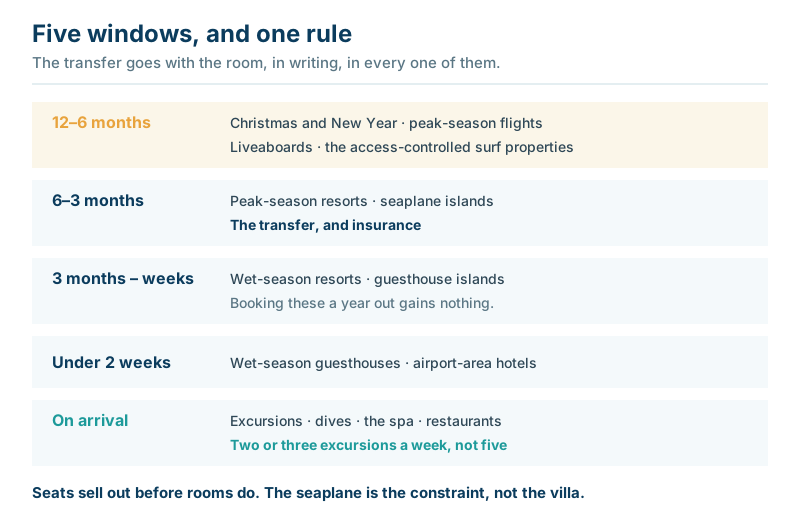
Twelve to six months out
What genuinely needs this much notice in the Maldives, which is less than most people think.
Christmas and New Year. Both flights and resorts, and they are the tightest dates of the year by a wide margin.
Peak-season flights, December to April generally, particularly from Europe where capacity is finite — the seasonal picture is in our monsoon guide.
Liveaboards, which sell a fixed number of berths and where the good boats for the peak months go a year out.
The access-controlled surf properties. Two waves in the country are surfable only by guests of the resorts in front of them, and those properties fill for the June-to-September swell window a long way ahead — the arrangement is in our guide to choosing a resort for surfing.
And Hanifaru season properties, roughly June to November, where the good bases near Baa fill early.
What does not need twelve months: everything else, including most resorts outside the festive fortnight.
Six to three months out
The main booking window for most trips.
Peak-season resorts, outside Christmas and New Year.
Seaplane-served islands specifically, because seaplane capacity is finite in a way boat capacity is not. A property may have rooms and no seats.
Domestic flights for the outer atolls, which run on a limited schedule — the operators are in our guide to domestic airlines.
The transfer, confirmed in writing against your actual flight numbers.
And the airport-area night, if your arrival lands after about 14:00 and your property needs a seaplane. Book it deliberately rather than at seven in the evening in an arrivals hall — the options are in our guide to hotels in Malé and Hulhumalé.
This is also the window for insurance, which should be bought when you book rather than before you travel, since cancellation cover starts from purchase.
Three months to a few weeks out
Where the wet season lives, and where value is.
Wet-season resorts, May to November, frequently available at short notice and at materially lower rates — the comparison is in our guide to high and low season.
Guesthouse islands at almost any time outside the December-to-April peak. They rarely sell out, and booking a year ahead buys nothing.
Speedboat transfers, which run frequently and do not have the capacity ceiling seaplanes do.
And the second leg of a split stay, if you are moving between islands — though it is simpler to book both at once.
What to avoid leaving this late: anything in the festive fortnight, and any seaplane island in high season.
Two weeks and under
Less than people assume, and more than nothing.
Wet-season guesthouse islands are genuinely bookable at two weeks, at good rates.
Airport-area hotels almost always have availability, which is why an unplanned night is possible — expensively.
Domestic flights occasionally, though not reliably for the outer atolls.
And that is largely it. The Maldives is not a last-minute destination in high season, because the constraint is not price but seats on seaplanes and rooms on small islands — the cost picture is in our budget guide.
On arrival
The largest category in any Maldives trip, and the one people over-book in advance.
Excursions. Sandbanks, dolphin cruises, snorkelling trips, fishing — all of them booked at the desk when you know the forecast. Our excursion price guide sets out what they cost.
Dives, beyond confirming that the centre can take you. Ten-dive packages are bought on arrival.
The spa, and it is worth booking on the first day rather than the last, because the good slots go.
Restaurants, at properties with more than one.
And the day-pass, if you are on a guesthouse island and want to see a resort.
The reason is not laziness. Wind cancels boats and the forecast three days out is worth more than the forecast three months out, as our guide to rainy days explains — and a week with everything pre-booked is a week that cannot absorb a change.
Two or three excursions is the right number, and booking on arrival makes it much easier to stop at three.
What must be pre-booked, and it is a short list
The exceptions to “book on arrival”, because they are genuinely capacity-limited.
Liveaboard berths. A fixed number, sold months ahead.
Hanifaru in season, where access is managed and the good bases fill.
Anything requiring a permit, which the property or operator will arrange but not overnight.
A specific dive course, if you want it completed within a fixed window — the certification economics are in our guide to choosing a resort for diving.
And a wedding or vow renewal, which is a scheduled event with a licence, a photographer and a supplement.
Everything else on a resort island is available on the day, because the property is selling to the guests already on it rather than to the market.
Booking with a family, and booking solo
Two variations that change the timeline rather than the order.
Families book earlier, because family rooms and connecting villas are a small share of any property’s inventory and they are the first category to go. Ask for them by name; booking platforms show them inconsistently, as our guide to choosing a resort for a family notes.
And families should price the transfer before the room. It is charged per person from about two years old, so four fares on a seaplane island can decide which atoll is affordable at all.
Solo travellers have the opposite problem. Resort rooms are priced per villa and the single supplement is real. A liveaboard sells berths per person, which makes it the format that books most economically alone.
Guesthouse islands sit in between, and they are also the easiest format to book late.
And for a honeymoon, tell the property at the time of booking rather than on arrival. Most will do something; none can do it retrospectively — our honeymoon guide covers what to ask for.
The dates that behave differently
Five windows in the Maldives calendar where the normal rules do not apply.
Christmas and New Year. The tightest fortnight of the year for flights, rooms and seaplane seats, and frequently subject to minimum stays and compulsory gala dinner supplements. Book twelve months out or choose different dates.
Chinese New Year, which moves each year and tightens capacity considerably.
Easter and the European school holidays, which push demand without the festive supplements.
The Hanifaru window, June to November, for anyone going for the mantas.
And Ramadan and Eid, which change little at a resort and a great deal on an inhabited island — and which fill domestic transport around Eid, as our public holidays calendar sets out.
Cancellation, and what it is worth paying for
The part of booking nobody reads until they need it.
Resort cancellation terms tighten as the date approaches, and festive-period bookings are frequently non-refundable well in advance.
Guesthouse islands are far more relaxed, which is part of what makes them bookable at short notice.
Free cancellation is worth paying for on one booking specifically: the airport-area night. It is the piece most likely to need changing, because flight schedules move.
Insurance is not a substitute for a flexible rate, and cancellation cover has conditions — the exclusions are in our guide to travel insurance.
And the transfer is frequently the least flexible piece of all, which is another argument for booking it with the room so that one party holds both.
Changing a Maldives booking after it is made
The scenario nobody plans for, and the order in which to fix it.
If the flight moves, check the transfer first. A new arrival time can turn a workable seaplane connection into a lost day, and the property needs to know before you do anything else.
If the arrival slips past 14:00 and the property is seaplane-served, add the airport-area night immediately rather than hoping. It is cheaper arranged in advance than at the desk.
If the property changes hands or rebrands, your reservation is honoured but the operation may differ — the mechanism is in our guide to resort brands.
If you need to move dates, the transfer is usually the least flexible piece, which is why holding it with the room matters.
And if a boat is cancelled on the day, that is weather rather than a booking problem, and the response is in our guide to rainy days — wind cancels boats, rain does not.
The general principle: every change propagates outward from the flight. Fix the flight, then the transfer, then the room, then everything else.
When the discounts are real
Three that are worth having, and two that are not.
Free-night offers — the fourth or seventh night free — are genuine, because the property is filling a room that would otherwise be empty.
Free transfer promotions are the strongest of all on a seaplane island, where the transfer runs USD 400 to 820 per person.
Board upgrades, half board to all-inclusive at no charge, are worth exactly what the supplement would have cost — which you can calculate using our guide to budget and all-inclusive.
What to be sceptical of: a percentage discount off an unpublished rack rate, and “resort credit”, which is spendable only on the highest-margin items.
And booking direct is worth an email even where the rate matches, because properties frequently add a room category or an upgrade that a channel cannot.
Booking a split stay
Two properties, one trip, and a sequence worth getting right.
Book both at the same time. The internal transfer between them depends on both dates, and a gap or an overlap is discovered late otherwise.
Same atoll where possible. A speedboat between islands in one atoll is an hour and a modest fare; across atolls it costs a day — the pattern is in our itineraries guide.
Village first, resort second, so the trip ends with rest and any diving sits well before the flight home.
The internal transfer is a third contract, arranged by one property or the other, and it needs confirming in writing like the first one.
And the guesthouse half books later than the resort half, so if you are waiting on a decision, wait on that one.
A worked timeline
One Maldives trip, planned properly, to show the shape.
A February trip for two, booked the previous June.
June — eight months out. Decide the length, the month and what the trip is for. Choose the atoll. Price flights and check arrival times against the 14:00 rule.
July — seven months out. Book flights and the property together. Confirm the transfer in writing against the flight numbers. Buy insurance.
August. Book the airport-area night if the arrival is late. Nothing else.
November — three months out. Confirm the transfer again, because operators change schedules.
January — one month out. Submit nothing yet; check the property’s excursion list to know what exists.
Three days before. Submit the IMUGA declaration, which must be within 96 hours of travel.
On arrival. Book two excursions, the spa, and the dives. Leave three days empty.
And that is the whole process — two decision points months apart, one form, and everything else at the desk.
The order, compressed
If you read nothing else on this page.
1. Length, month, purpose, atoll. No bookings yet — the sequence is in our trip planner.
2. Flight and property, together.
3. Transfer, immediately after, in writing.
4. Insurance, at the same time.
5. Airport-area night, if the arrival is late.
6. IMUGA, within 96 hours of travel.
7. Everything else, on arrival.
Which is a shorter list than most people expect, and the compression is the point: a Maldives trip has two real booking decisions and a great many optional ones that are better made on the island.
One thing this timeline cannot fix
Worth saying, because a booking article should not imply that planning eliminates risk.
Weather is not bookable. A week of wind in the southwest monsoon cancels boats whatever you arranged, and no lead time protects against it — which is the argument for leaving days empty rather than filling them.
Nor is availability, past a point. If the festive fortnight is full, it is full, and the answer is different dates rather than a better search.
And a property can disappoint regardless of when you booked it. That is why the checks this site keeps repeating — the house reef, the density, the transfer — matter more than the timing.
What a timeline does buy is the removal of avoidable failures: the transfer that was never arranged, the arrival that could not connect, the excursion booked into a forecast that did not exist yet.
Which is most of what goes wrong, and it is entirely within your control. The weather is not, and the honest response to that is a plan with space in it rather than a plan with more bookings.
Questions travellers ask
How far in advance should I book the Maldives? Twelve months for Christmas and New Year, liveaboards and the access-controlled surf properties. Six to three months for peak-season resorts and seaplane islands. Weeks for wet-season trips and guesthouse islands.
When should I book the transfer? At the same time as the room, and confirmed in writing against your actual flight numbers. It is a separate contract from both the flight and the accommodation, and leaving it until later is the commonest booking error.
Should I book excursions in advance? No, with a few exceptions. Book on arrival, when you know the forecast and the tides. The exceptions are liveaboards, Hanifaru in season, anything requiring a permit, and a dive course with a fixed window.
Do guesthouse islands sell out? Rarely, outside the December-to-April peak. They are bookable weeks ahead at good rates, which is part of what makes them flexible.
What sells out first? Seaplane seats, festive-period rooms, liveaboard berths and the two access-controlled surf properties. Seats rather than rooms are usually the binding constraint.
Which discounts are genuine? Free-night offers, free transfers on seaplane islands, and board upgrades. Be sceptical of percentage discounts off unpublished rates and of resort credit.
When should I buy insurance? When you book, not before you travel — cancellation cover generally runs from purchase, so buying it late forfeits most of its value.
What is the last thing to do before travelling? Submit the IMUGA traveller declaration, which must be within 96 hours of travel, in each direction.
What to take away
- Book the flight and the property together, then the transfer immediately after, in writing, against your flight numbers.
- Twelve months for Christmas, New Year, liveaboards and the access-controlled surf properties. Six to three months for peak-season resorts and seaplane islands.
- Guesthouse islands and wet-season resorts are bookable weeks ahead. Booking them a year out gains nothing.
- Excursions, dives and the spa are booked on arrival, when you know the forecast. Two or three excursions across a week, not five.
- Free cancellation is worth paying for on the airport-area night specifically, because flight schedules move.
Next step: work out which of the two real decisions you are at. If the flight and the property are not yet booked, do them in the same sitting and check the arrival time against the 14:00 rule before you compare anything else. If they are booked and the transfer is not, arrange that today. It is the single piece most likely to be assumed rather than booked, and it is the one that fails.