

Seaplane Baggage in the Maldives: Twenty Kilos, Five in the Cabin
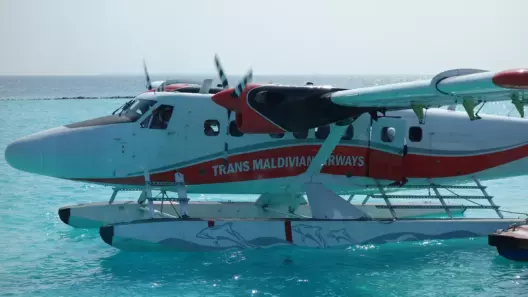
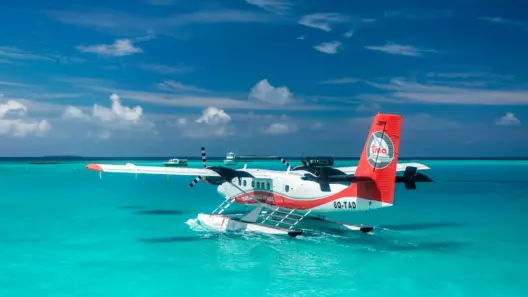
Your international airline may have flown you here with 30 kilos. The seaplane that covers the last twenty minutes allows 20 kilos checked and 5 in the cabin, and it is the seaplane that decides.
That mismatch is the single most common baggage surprise in the Maldives. It catches divers, photographers, surfers, families with pushchairs and anyone who packed for a beach holiday the way they would pack for Europe.
This guide covers the actual allowances, what excess costs, what happens to a bag that will not fit, and the one scenario nobody warns about: your luggage arriving on a later flight than you do.

The standard allowance
20 kg checked plus 5 kg hand luggage per person. That is the published figure for Trans Maldivian Airways, and Manta Air applies the same limit on its seaplane services. Twenty-five kilos in total per passenger.
Children usually get the same baggage allowance, though infants without a seat may not.
A single bag is generally capped around 30 kg as a handling limit, separate from the total allowance. One very heavy case can be refused even when your group is collectively under.
Cabin baggage means small. There are no overhead lockers on a Twin Otter. What you carry aboard is stowed at the rear of the cabin, and anything you actually want during the flight — camera, phone, water — should be on your lap.
The allowance is not arbitrary and it is not negotiable at the counter. It is a weight-and-balance calculation on a fifteen-seat aircraft, and the person weighing your bag is applying an aviation rule rather than a commercial one.
What excess actually costs
Around USD 5 per kilogram plus tax is the published TMA rate. Across operators the band runs roughly USD 4 to 6 per kilo.
Excess baggage is charged per leg. Ten kilos over, both ways, at USD 5 is USD 100 on top of a transfer that already costs several hundred dollars per person.
It is subject to space. Paying the excess fee does not guarantee carriage. If the aircraft is at its weight limit, the money does not create capacity, and this is where the surprise happens.
Payment is at the seaplane check-in desk, in dollars or by card, before you board. Our guide to money in the Maldives covers what to have on you at that point.
The part nobody warns about: split baggage
Here is the scenario that turns an inconvenience into a problem.
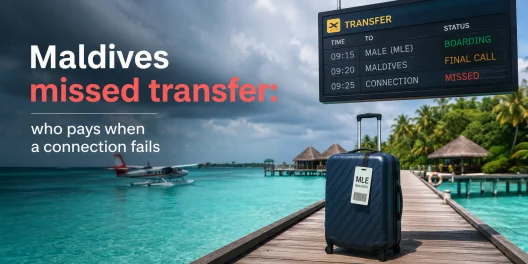
Excess or oversized baggage may travel on a later flight. Not lost, not refused — simply not on your aircraft. Operators load to weight and balance, and when the numbers do not work, bags come off before passengers do.
That can mean hours. Your bag follows on the next available service to your resort, which on a busy day is the next scheduled run and on a quiet one is tomorrow.
Sports equipment is the usual candidate. Surfboards, dive gear, golf bags and anything long or awkward. Several operators require advance approval for these items and may split them onto a later flight as a matter of routine.
The practical consequence is a first evening without your dive computer, your board or your clothes. It resolves, and it is not what you want on arrival day.
The mitigation is simple. Put one change of clothes, all medication, chargers and anything irreplaceable in the 5 kg you carry into the cabin. That bag travels with you regardless of what happens to the hold.
Declare oversized items before you fly
The single most useful action in this article, and it takes one email.
Tell the resort at booking what you are bringing: board bag, dive kit, golf clubs, a musical instrument, a pushchair, a wheelchair. The resort passes it to the transfer operator, and the operator plans around it.
Advance approval is a real requirement for some carriers and some items, not a formality. Turning up with an unannounced board bag at the seaplane counter is how items get bumped.
Ask for the answer in writing. Specifically: is the item accepted, at what charge, and will it travel on the same flight as the passengers.
Divers travelling to the channel sites of Vaavu or the Ari atolls, and surfers heading to the central atolls, should treat this as part of booking rather than as a detail.

How the other transfer modes compare
The seaplane is the tightest limit in the chain, and knowing the alternatives changes some booking decisions.
| Mode | Typical allowance | Excess |
|---|---|---|
| Seaplane | 20 kg checked + 5 kg cabin | USD 4–6 per kg, subject to space |
| Domestic flight | 20–22 kg checked + 5 kg cabin | Per-kg charge rising with route distance |
| Private speedboat | No meaningful limit — the boat has a hold | Not applicable |
| Shared speedboat | Often 1 bag + handbag | Charge for extra pieces |
| Public ferry | 1 hand item + 1 bag up to 20 kg | Extra bags need a separate ticket |
Two implications worth acting on.
A speedboat resort has no baggage problem. If you are travelling with dive gear or a family’s worth of luggage, that is a genuine argument for choosing a resort within speedboat range rather than a seaplane one.
A domestic flight plus a boat is more generous than a seaplane and often cheaper, as our transfer comparison and full transfers guide set out. For heavy travellers, that combination is frequently the better route to a distant atoll.
Your international allowance does not carry over
A structural point that explains why so many people are caught out.
Baggage is not checked through to the seaplane. Your international bags come off the belt at Velana, you collect them, you clear customs, and only then do you present them at the seaplane operator’s desk. The two allowances are separate contracts with separate airlines.
The generous number is the one you booked months ago. A business-class ticket with 40 kg, or a Gulf carrier’s 30 kg economy allowance, has no bearing on the 25 kg the floatplane will take.
Nobody flags it at the point of sale. The resort quotes a transfer price, the airline sells a ticket, and the two conversations never meet. By the time the numbers collide you are in the arrivals hall.
The same applies in reverse. Your bag leaves the island under the seaplane rule, then travels home under the international one, which is why the excess is charged separately on each leg.
The fix is to treat 20 and 5 as the real limit for the whole trip, and the international allowance as headroom you happen not to be using. Everything else in your arrival sequence — immigration, the declaration, customs — happens before anyone weighs a bag.
Why the limit is so tight
Not meanness, physics.
The aircraft is small. A DHC-6 Twin Otter carries around fifteen passengers, and every kilogram is accounted for in a weight-and-balance sheet before departure.
Water take-offs are demanding. A floatplane leaving a lagoon needs more power and more runway than a wheeled aircraft on tarmac, and payload is the variable the operator controls.
Heat reduces performance. Equatorial air is thin and hot, particularly in the middle of the day, which lowers the maximum weight an aircraft can lift. On a hot afternoon the same aircraft carries less than it does at eight in the morning.
Passengers are weighed too. Not always visibly, but passenger weights feed the same calculation, which is why the limits are enforced consistently rather than at the discretion of the person at the desk.
Trans Maldivian operates the world’s largest seaplane fleet with hundreds of daily movements, and the system works because the arithmetic is not negotiable.
Packing for a 25 kg ceiling
Practical, because most people can hit it with a small amount of planning.
Weigh both bags at home. The luggage number that matters is 20 and 5, not the 30 kg your international ticket allowed.
Wear the heavy things. Boots, jacket, the heaviest camera body. Cabin weight is checked less rigorously than hold weight in practice, though it is checked.
Soft bags beat hard cases. A hard shell can be two to four kilos before you pack anything, and it is harder to load into a float compartment.
Leave the beach kit at home. Every resort provides towels, snorkelling gear, hairdryers and beach bags. Our guide to what to pack for power and electronics makes the same point about converters and hairdryers.
Do not bring a wetsuit unless you dive daily. Water sits at 26 to 30°C year-round and rental is universal.
Books and shoes are the two categories that quietly consume five kilos. An e-reader and two pairs of sandals cover a Maldives week.
Families, pushchairs and the awkward items
Family luggage is where the allowance bites hardest, because the weight is real and the items are bulky.
Children get their own allowance on most seaplane bookings, which helps considerably: a family of four has 80 kg checked between them. Infants without a seat may not, so confirm.
Pushchairs are usually carried and should be declared. A compact folding buggy is far easier to accommodate than a full travel system, and on an island of sand a buggy is less useful than you expect.
Car seats are almost always pointless. There are no roads to speak of outside the capital area, and no vehicle journey on a resort island that needs one.
Nappies, formula and specialist food are the categories worth carrying rather than trusting to a resort shop, and they are heavy. Ask the property what it stocks before you allocate five kilos to it.
Cots, high chairs and beach toys are provided by every family-oriented resort. Bringing them is weight spent on something already waiting for you.
For families weighing an atoll choice, this is another quiet argument for a speedboat-served property in Kaafu over a seaplane one further out — our atoll decision guide covers the trade-offs.
Storing what you cannot carry
An option most travellers do not know exists.
Left luggage at Velana. If you are arriving from a longer trip with equipment you do not need on the island, storage facilities at the airport allow you to leave bags and collect them on departure. Useful for anyone combining the Maldives with a wider itinerary.
Hotel storage in Hulhumalé. If you are spending a night near the airport before or after — a common pattern after a late arrival — many properties will hold a bag for the duration of your resort stay.
Resort storage for anything you fly in with and do not need immediately — worth asking about on a guesthouse island too, where rooms are smaller.
The pattern that works: travel to the island light, leave the rest in Malé, collect on the way out. It removes the excess charge in both directions.
If the flight is cancelled
Weather cancellations happen, mostly in the southwest monsoon, and baggage is part of what goes wrong.
Seaplanes do not fly in poor visibility or heavy weather, and they do not fly after dark at all. A cancellation late in the day usually means an overnight near the airport rather than a delayed departure.
Your hold bag may already be with the operator. Establish whether you can retrieve it before agreeing to an overnight, because a night in a hotel without your luggage is avoidable if you ask early.
This is another argument for the cabin bag carrying medication, chargers and a change of clothes.
Costs vary. Some resorts absorb the hotel, others do not, and our guide to missed connections covers who pays for what.
The monsoon guide explains when this is most likely — broadly June through September — and a late-afternoon arrival in those months is when the risk is highest.
Special cases
Dive equipment. Heavy, and the single most common excess. Regulators, computers and masks in the cabin bag; the rest declared in advance. Most dive centres rent everything, and our guide to the diving season covers what a week actually requires.
Surfboards. Long, awkward, and the item most likely to travel on a later flight. Board bags need advance approval on seaplanes, and several surf destinations in the central atolls are reached by boat rather than air anyway, which removes the problem.
Photography gear. Bodies and lenses in the cabin bag, tripods in the hold. Drones need permission to fly and are covered by our guide to banned and restricted items.
Pushchairs and car seats. Declare them. A pushchair is usually carried, and a car seat is usually pointless in a country with almost no roads.
Medical equipment. Declare in advance, carry documentation, and keep medication in the cabin bag. Our guide to health and medical care covers the wider picture, including how far the nearest pharmacy may be.
Musical instruments and anything fragile. Advance approval, and expect it to be handled by people loading a boat in salt spray.
Duty free, shopping and the way home
The return leg has its own trap.
What you bought counts. A case of duty free, a haul of souvenirs and a bag of coral-free shells all add weight to the same 20 kg allowance on the way back.
Alcohol bought at the resort generally cannot leave the island. Alcohol bought at arrival duty free is bonded rather than carried, as our guide to alcohol rules explains.
Weigh before checkout. Resorts have scales, and asking to use one before the transfer is normal.
The excess is charged again. Both legs, separately. A traveller who paid on the way in and forgot about the way out pays twice.
What actually happens at the counter
The sequence, so nothing surprises you.
You are met at arrivals by a resort representative holding a sign. That person walks you to the seaplane operator’s check-in desk inside the terminal.
Baggage is weighed there, not at the seaplane terminal. Excess is calculated and charged before you leave the building.
A minibus takes you to the seaplane terminal, a separate building a few minutes away, and one no public bus reaches. No public bus goes there, as our guide to getting around the airport island notes.
You wait in a lounge, sometimes for a considerable time, because seaplanes are consolidated from several international arrivals in the same way shared speedboats are.
Boarding is by the dock, with hold bags loaded by hand into the float compartments and the rear of the cabin.
Total time from landing to boarding, on a normal day, is two to four hours including immigration.
If you are over the limit at the desk
Four options, in the order the staff will offer them.
Pay the excess. Fastest, if space exists.
Repack on the spot. Moving two kilos of luggage from hold to cabin bag sometimes resolves it. Staff generally allow this and it costs nothing.
Leave a bag in storage at the airport, to be collected on departure.
Accept split carriage. The bag follows on a later flight. This is the one to avoid on arrival day if it contains anything you need that evening.
What will not work: arguing. The number comes from a weight sheet, and the person at the desk cannot change it.
Questions travellers ask
What is the seaplane baggage allowance in the Maldives? Twenty kilograms of checked baggage plus five kilograms of hand luggage per person, applied by both Trans Maldivian Airways and Manta Air. A single bag is generally capped near 30 kg as a handling limit.
How much is excess baggage on a Maldives seaplane? Around USD 5 per kilogram plus tax, with a band of roughly USD 4 to 6 across operators. It is charged on each leg and does not guarantee carriage if the aircraft is at its weight limit.
Why is the seaplane allowance lower than my international flight? Because it is a fifteen-seat floatplane with a weight-and-balance calculation, not a wide-body jet. Heat and water take-offs reduce the payload further.
Can I take a surfboard or dive gear on a seaplane? Usually, with advance approval. Oversized items may be carried on a later flight than the passengers, so declare them at booking and ask in writing whether they travel with you.
What if my bag does not fit on my flight? It follows on the next available service to your resort. Keep medication, chargers and one change of clothes in your cabin bag so a delayed hold bag is an inconvenience rather than a problem.
Do speedboat transfers have a baggage limit? Private speedboats effectively do not — there is a hold. Shared scheduled boats often allow one bag plus a handbag, with a charge beyond that.
Can I store luggage in Malé? Yes. Left-luggage facilities exist at Velana International Airport, and many Hulhumalé hotels will hold bags during a resort stay.
Is the allowance per person or per booking? Per person. A couple has 40 kg checked and 10 kg cabin between them, though a single bag over about 30 kg can still be refused.
What to take away
- The seaplane allowance is 20 kg checked plus 5 kg cabin per person, and it overrides whatever your international ticket allowed.
- Excess runs about USD 5 per kilo plus tax, charged on each leg, and paying does not guarantee space on the aircraft.
- Oversized items need advance approval and may travel on a later flight than you do. Declare them at booking, in writing.
- Keep medication, chargers and one change of clothes in the 5 kg cabin bag, which stays with you regardless.
- If baggage is a real constraint, a speedboat resort or a domestic flight plus boat gives you far more room than a seaplane.
Next step: weigh both bags at home against 20 and 5, not against your airline’s allowance. If you are over, decide now between paying, repacking, storing in Malé or choosing a resort the boat can reach — because all four options are easier at home than at a check-in desk with a queue behind you.