

Which Maldives Atoll Suits Which Traveller
Most guides rank atolls. They tell you Baa is best for mantas, Vaavu is best for sharks, North Malé is best for convenience, and leave you to work out which of those descriptions is actually about you. The ranking approach fails because the deciding factor for most trips is not which Maldives atoll has the best reef. It is what time your flight lands, how many nights you have, and who is travelling with you. Those three answers eliminate most of the country before reef quality enters the conversation. This guide works in that order: constraints first, then atoll.
Start with the transfer, not the atoll
The single most useful reframing in Maldives atoll planning is this: you are not choosing an atoll, you are choosing a transfer, and the atoll follows.
Transfer mode is rarely a free choice anyway. Resorts assign it. A property in Baa arranges a seaplane because that is what reaches it; a property fifteen minutes from the runway sends a speedboat. Genuine choice exists only where a resort sits in an atoll served by both a seaplane and a domestic runway, which is a minority of properties. Our transfer comparison covers where that choice does and does not exist.
What you can control is which tier of transfer you are willing to accept. That decision does most of the work of choosing a Maldives atoll, and it is far more consequential than any reef description.
| Tier | Transfer | Typical time | Atolls it reaches |
|---|---|---|---|
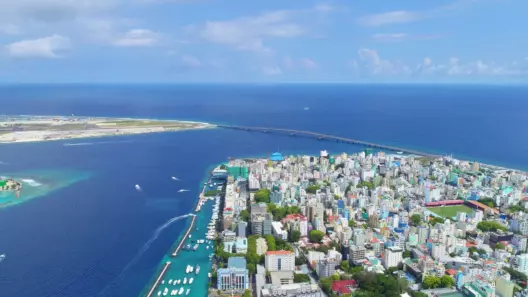
| 1 | Speedboat only | 15–50 minutes | North Malé, South Malé |
| 2 | Seaplane | 20–45 minutes airborne | Baa, Raa, Lhaviyani, North Ari, parts of South Ari, Noonu |
| 3 | Domestic flight plus boat | 45–80 min flying, then 10–60 min by sea | Addu, Gaafu Alifu, Gaafu Dhaalu, Laamu, Haa Dhaalu, Dhaalu, Thaa |
Each tier costs roughly double the previous one in time, and often in money. A tier 3 trip realistically consumes a travel day at each end.

The late-arrival filter that eliminates half the country
This is the constraint that catches the most people, and almost no Maldives atoll ranking mentions it.
Seaplanes operate in daylight only, typically from around 6:00 AM to 4:30 PM. Speedboats run around the clock. Domestic flights operate into the evening. So an international flight landing at 9:00 PM does not simply make your seaplane transfer inconvenient — it makes it impossible until the following morning.
The consequence is concrete. If your arrival is late and you have not planned for it, you are staying a night in the capital before continuing, which costs a hotel, a day of your holiday, and often an unbudgeted transfer. Our guide to overnighting in Malé covers the options.
So the first filter is mechanical rather than aesthetic:
- Late arrival, no overnight planned → tier 1 only. The Malé atolls, reachable by speedboat at any hour.
- Late arrival, overnight acceptable → any tier, with a night in the capital budgeted.
- Daytime arrival → all tiers open.
Roughly half the resorts in the country sit behind a seaplane. A late landing removes them from consideration on the day of arrival, regardless of how good the reef is. Check the seaplane guide for current operating windows before assuming otherwise.
The trip-length filter
The second filter on any Maldives atoll shortlist is arithmetic. Transfer time is dead time, and it scales badly against short trips.
On a five-night trip, a tier 3 transfer consumes roughly 20% of your holiday in transit. On a ten-night trip the same transfer costs 10%. The transfer has not changed; its proportional cost has halved.
That produces a simple rule that holds up well in practice:
- Under 5 nights → tier 1. Do not spend a fifth of a short trip travelling.
- 5 to 7 nights → tier 1 or 2. Seaplane is defensible from six nights up.
- 8 nights or more → any tier. The far south becomes genuinely worth reaching.
This is where most bad Maldives atoll recommendations originate. A guide describes the deep south as spectacular, which it is, without noting that reaching it costs a travel day at each end. For a week-long trip that advice is actively harmful.
Divers
Diving is the one traveller type where Maldives atoll reef quality genuinely should override convenience, because the differences between atolls are real and large.
For channel diving with sharks and current: Vaavu is the reference. Its channels concentrate current and pelagic traffic, and it sits close enough for a manageable transfer. Huvadhu in the deep south offers similar diving with far fewer boats, at the cost of a domestic flight.
For guaranteed large animals: South Ari holds a year-round resident whale shark population. Not seasonal, not occasional — resident. No other atoll offers a comparable reliability, and the runway at Maamigili makes it tier 2 or 3 depending on the property.
For mantas: Baa during the Hanifaru season, which runs roughly May to November. Outside that window Baa is a good atoll rather than an exceptional one, and booking it in February for mantas is a common and expensive mistake. Check manta season before fixing dates.
For tiger sharks: Fuvahmulah is the only realistic answer, and it is a specialist destination with its own airport and very little resort infrastructure.
For hammerheads: Rasdhoo in North Ari, on early morning descents into open water.
The honest caveat: none of these is a guarantee except the South Ari whale sharks. Marine life moves. A dive operator promising specific encounters outside these patterns is overselling.
Families with young children
Transfer tolerance is the dominant variable in the Maldives atoll decision for families, and it is much lower than most parents expect.
Seaplanes are loud, unpressurised, have no toilet, and offer no meaningful child restraint. A 45-minute seaplane leg after a long-haul flight is difficult with a toddler and genuinely unpleasant with an infant. Some operators also apply age restrictions.
That pushes families toward tier 1 by default. The Malé atolls hold the highest concentration of family-capable resorts in the country and the shortest transfers, which is not a coincidence — properties built for families were built where families could reach them.
The exception is Baa, where several strong family properties sit and where the seaplane leg is short. It works for children over roughly six.
The second family variable is lagoon shape rather than atoll. A shallow, sheltered lagoon matters more to a family than which atoll it sits in, and that is a property-level question no atoll guide can answer.
Honeymooners and couples
This is where the Maldives atoll choice matters least and gets discussed most.
Nearly every atoll in the country holds properties built for couples. Water villas, private decks and adults-only zones are distributed across the whole archipelago rather than concentrated anywhere. The decision is a property decision.
What the atoll does affect is the arrival experience. A seaplane transfer is genuinely spectacular and functions as part of the holiday rather than as a cost — for a couple without children and without a tight schedule, tier 2 is the sweet spot. Baa, Raa, Lhaviyani and Noonu all deliver it.
The counter-case: if the trip is short or the arrival is late, the romance of the seaplane is not worth losing a night to. See our honeymoon guide for the property-level detail.
Budget and independent travellers
The Maldives atoll question changes shape entirely here, because guesthouses sit on inhabited islands rather than resort islands, and inhabited islands are not evenly distributed.
Cheapest and most accessible: South Malé, where Maafushi has the densest guesthouse concentration in the country and a public ferry from the capital.
Better beaches, still accessible: North Ari, where Ukulhas, Thoddoo and Rasdhoo each work as a base, reachable by ferry or speedboat. North Ari is probably the best overall compromise for independent travel.
Whale sharks on a budget: Dhigurah and Maamigili in South Ari, both with guesthouses and daily boats.
Surf on a budget: Thulusdhoo in Kaafu, which is the atoll capital and sits beside the Cokes break.
The constraint independent travellers underestimate is the ferry network. Public ferries run within atolls, on limited schedules, and rarely between them. Island-hopping across atolls needs speedboats or flights, and the cost climbs quickly. The dress code rules apply on every inhabited island and not on resort islands.
Surfers
Surfing splits the Maldives atoll map by season rather than by quality, which makes it the clearest case of all.
Central atolls (Kaafu, North and South Malé): the classic breaks — Cokes, Chickens, Sultans, Jailbreaks. Season runs roughly April to October. Accessible, crowded by Maldivian standards, and cheap if you base on Thulusdhoo or Himmafushi.
Deep south (Gaafu Dhaalu, Addu): more consistent swell, far emptier lineups, and a domestic flight to reach. Worth it for a longer trip.
Outer atolls generally: boat-access breaks, usually via liveaboard.
The Dhivehi Surf League and the Four Seasons Surfing Champions Trophy both run in the central atolls during the southwest swell window. That scheduling is a useful signal about where the reliable waves are.
Repeat visitors
If you have been to the Malé atolls and want something different, the useful axis is not “a better atoll” but “a different kind of trip.”
For emptiness: the deep south. Huvadhu, Laamu, Addu. Fewer boats, stronger current, genuine remoteness. Budget eight nights minimum.
For culture and history: the Nilandhe atolls, where Nilandhoo may have held seven Buddhist temples, or Huvadhu, where the local dialect is closer to Sinhala than to standard Dhivehi.
For a different reef structure: Fuvahmulah, which is a single island rather than a ring and behaves nothing like the rest of the country.
For the north: Haa Alifu and Haa Dhaalu, reachable via Hanimaadhoo and largely undeveloped for tourism.
The seasonal filter
The third constraint is the monsoon, and it interacts with atoll choice in a way that most rankings flatten into a single “best time to visit” line.
The Maldives runs on two monsoons. The northeast monsoon, roughly December to April, brings drier weather and calmer seas. The southwest monsoon, roughly May to November, brings more rain, more wind and stronger current. Neither makes a trip bad, but they move where the good diving sits.
Current direction reverses between the two, which matters more than rainfall does. During the northeast monsoon, plankton concentrates on the western side of the archipelago; during the southwest, it shifts east. Marine life follows the plankton, and so do the dive boats. A site that is exceptional in July can be unremarkable in February on the same reef.
This is why the manta season at Hanifaru falls where it does, and why the whale sharks of South Ari are unusual — they are resident rather than seasonal, which removes the timing problem entirely for that one encounter.
For most travellers the practical version is short. If your dates are fixed and fall in the wet season, weight your choice of Maldives atoll toward eastern-side sites and accept some rain. If your dates are flexible and you are diving, pick the animal first, then the season, then the atoll. Our month-by-month guides — from January through to December — set out conditions in detail.
Solo travellers
Resorts in the Maldives are built for pairs, and the pricing structure reflects that assumption throughout.
Most rates are quoted per villa rather than per person, which means a solo traveller pays close to the couple’s price for the same room. Some properties apply an explicit single supplement on top. The result is that a resort trip alone costs disproportionately more than the same trip shared, and no choice of Maldives atoll changes that arithmetic.
Two routes work better. Guesthouses on inhabited islands price per room at a far lower level and put you among other travellers, which suits North Ari and South Malé particularly well. Liveaboards solve the problem differently, charging per berth and delivering a fixed social group for the duration of the trip.
If a resort is the requirement, the atoll question reduces to transfer cost, because a solo traveller pays the full seaplane fare rather than splitting a boat. That pushes solo resort trips toward tier 1 for reasons of price rather than convenience.
Groups and multi-generational trips
Larger parties invert several of the rules above, and it is worth setting out how.
Transfer economics change first. A private speedboat costs roughly the same whether it carries four people or ten, so per-head transfer cost falls as the group grows. That makes tier 1 and the shorter end of tier 3 more attractive for groups than for couples, while seaplanes stay stubbornly per-person and expensive.
Villa configuration then matters more than any atoll characteristic. Two-bedroom villas, connecting rooms and beach houses are distributed unevenly across the country and cluster in the larger resorts, which in turn cluster in the Malé atolls and Baa. A group is effectively choosing from a short list of properties, and the Maldives atoll follows from that list rather than the other way round.
The third consideration is range of activity. A multi-generational group usually needs a shallow lagoon for children, decent diving for the adults, and something for people who want neither. Larger islands handle that better than small ones, which again points toward the central atolls where the bigger properties sit.
The honest verdict for groups: the deep south rarely works. Fewer properties, smaller villa inventory, longer transfers multiplied across more people, and less redundancy if something goes wrong. Save it for a couples trip or a dive trip.
The matrix
| If you are | Prioritise | Realistic atolls | Minimum nights |
|---|---|---|---|
| First-timer, short trip | Transfer time | North Malé, South Malé | 4 |
| Family, young children | Short transfer, shallow lagoon | North Malé, South Malé | 5 |
| Family, older children | Balance | Baa, Lhaviyani, North Ari | 6 |
| Honeymoon | Property, seaplane arrival | Baa, Raa, Noonu, Lhaviyani | 5 |
| Diver, big animals | Species, season | South Ari, Baa, Vaavu | 7 |
| Diver, current and sharks | Channel access | Vaavu, Huvadhu, Fuvahmulah | 7 |
| Budget independent | Ferry access, guesthouses | South Malé, North Ari | 5 |
| Surfer | Season and swell window | Kaafu, Gaafu Dhaalu, Addu | 7 |
| Repeat visitor | Emptiness or culture | Huvadhu, Laamu, Addu, Nilandhe | 8 |
| Late arrival, any type | Speedboat availability | North Malé, South Malé | any |
How atoll recommendations usually go wrong
Four recurring failures worth naming, because they appear across most published Maldives atoll rankings.
Recommending by reef quality alone. The best reef you cannot reach on your schedule is worse than the adequate reef you can. Constraints come first.
Ignoring the seasonal dimension. Recommending Baa for mantas without stating the May-to-November window sends people at the wrong time of year. Every marine encounter in the country except the South Ari whale sharks is seasonal.
Treating administrative atolls as travel units. Kaafu spans everything from a fifteen-minute speedboat to an island 86 kilometres out. “Kaafu Atoll” tells you almost nothing about transfer time. The same applies to Ari, where booking “North Ari” may place you on an entirely separate atoll.
Confusing atoll with property. Lagoon depth, house reef quality, villa type and food are property variables. No atoll guarantees any of them, and a mediocre resort in an excellent atoll is still a mediocre holiday.
What no atoll will do for you
Worth stating plainly, because expectation management is most of what makes a Maldives atoll trip work.
No Maldives atoll guarantees clear water year-round; visibility varies with monsoon. No atoll guarantees a specific animal on a specific week. No atoll makes a poorly chosen resort good. And no atoll in the country is genuinely undiscovered — every one has been surveyed, dived and photographed, and the difference between them is boat traffic rather than novelty.
Our ranking of the best atolls sets out where the strongest cases are, and the atolls to skip piece is blunter about which do not repay the journey.
Frequently asked questions
Which Maldives atoll is best for a first visit? North or South Malé, in almost all cases. Shortest transfers, widest resort choice, and no risk of losing a day to a missed seaplane.
Which Maldives atoll has the best diving? It depends on the target. Vaavu for channel sharks, South Ari for whale sharks, Baa for seasonal mantas, Fuvahmulah for tiger sharks. There is no single best.
Does the Maldives atoll matter more than the resort? No. The atoll sets transfer time and broad marine character. Everything you experience daily — lagoon, reef, food, villa — is set by the property.
Can I visit more than one atoll? Possible but rarely worth it under ten nights. Inter-atoll transfers cost most of a day and often more than the nightly rate difference.
Which Maldives atoll is cheapest? South Malé for guesthouses, because Maafushi has the most competition and a public ferry. Resort pricing does not correlate cleanly with atoll.
What if my flight lands after dark? Choose a speedboat-accessible resort in the Malé atolls, or budget a night in the capital. Seaplanes do not fly after sunset.
Are the far southern atolls worth the extra travel? For eight nights or more, and for divers, yes. For a week or less, the travel time outweighs the gain.
Which Maldives atoll for a honeymoon? Any of them, honestly. Pick the property first, then check the transfer suits your arrival time.
Should I split my stay across two atolls? Only on trips of ten nights or more. The inter-atoll transfer costs a substantial part of a day and frequently exceeds the nightly rate difference between the two properties, so shorter trips lose more than they gain.
Do I get any say in my transfer type? Usually not. Resorts assign transfers based on their location, and genuine choice exists only for properties sitting in an atoll served by both a seaplane and a domestic runway. Confirm the arrangement at booking rather than assuming.
What to take from this
Choosing a Maldives atoll works backwards from constraints, not forwards from reef descriptions. Arrival time sets your transfer tier. Trip length sets how far out you can justify going. Traveller type narrows what to prioritise once those two filters have done their work.
Applied in that order the country shrinks fast, usually to two or three realistic Maldives atolls, and the remaining decision is a property decision rather than a geographic one. Applied in the wrong order you end up with a beautiful recommendation that does not fit your flight.
Next step: confirm your arrival time, then read the transfer comparison before shortlisting properties.
Verified 14 August 2026. Transfer times and operating windows from published operator schedules; seaplane daylight restrictions and domestic flight ranges as reported for the 2026 season. Confirm current schedules directly before booking.