
Rasdhoo Atoll: Hammerheads From a Guesthouse
Scalloped hammerheads are one of the harder sightings in recreational diving. In most of the world they require a liveaboard, a remote seamount and a week of your life. In the Maldives they require a $50 guesthouse room and a five-minute boat ride. Rasdhoo Atoll is the reason, and it is also one of the more misunderstood places in the country — administratively part of North Ari, geographically a separate atoll entirely, and the subject of dive-site claims that range from cautious to wildly overstated. This guide sets out what is actually there, what the odds actually are, and where published sources contradict each other.
A separate atoll wearing another atoll’s name
Start with the geography of Rasdhoo Atoll, because almost every booking page gets this subtly wrong.
Rasdhoo — properly Rasdhukuramathi — is its own natural atoll. It sits roughly 56 to 60 kilometres west of the capital, northeast of the main Ari reef, with deep water between the two. Our hub covering all 26 atolls places it in the national picture. Rasdhoo Atoll is small, clam-shaped, and about nine kilometres across.
Administratively Rasdhoo Atoll belongs to Alifu Alifu, the division marketed in English as North Ari. That happened in 1984, when the old Alifu Atoll was divided and the northern half absorbed both Rasdhoo Atoll and the isolated island of Thoddoo alongside the northern section of the main reef. Our guide to the Ari split covers how that division worked.
The practical consequence is worth stating plainly. A traveller who books “North Ari” expecting to hop between resorts by dhoni may find themselves on Rasdhoo Atoll, across a channel, with the main reef out of easy reach. That is not a problem — Rasdhoo is arguably the better destination — but it is not what the name implies.
One further wrinkle: Rasdhoo island is the administrative capital of Alifu Alifu. So the division is governed from an island that sits on a completely different reef from most of the territory it governs. That is unusual but not unique — Kaafu manages something comparable at the other end of the scale.

Four islands, one small ring
Rasdhoo Atoll holds four islands, and the roles they play are completely different from one another.
| Island | What it is |
|---|---|
| Rasdhoo | The inhabited island. Guesthouses, dive centres, dhoni shipyards, atoll capital |
| Kuramathi | A resort island occupying the western side |
| Madivaru | A very small island at the end of a long reef, beside the main channel |
| Madivaru Finolhu | A sandbank island, an excursion destination |
Rasdhoo island itself is tiny — roughly 575 by 400 metres, with about 1,282 residents at the 2022 census. That is small enough to walk end to end in ten minutes and still contains around 25 guesthouses and roughly seven dive centres.
The density is the point. Nowhere else in the Maldives packs as much dive infrastructure onto an island the size of Rasdhoo Atoll’s inhabited one, and the reason is that world-class sites sit within five minutes of the harbour.
Hammerhead Point: what it actually is
The Rasdhoo Atoll site everyone comes for deserves an accurate description, because the reality is more demanding than the marketing suggests.
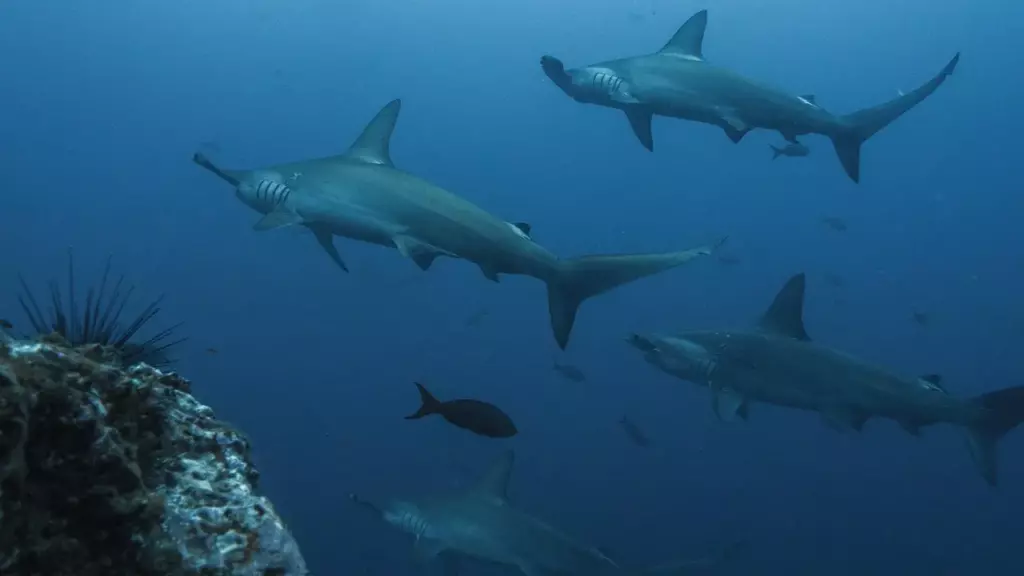
Hammerhead Point sits in open water in front of Madivaru. It is a bluewater dive: there is no reef below you. You descend into open ocean, hang in the blue at depth, and look out into nothing while a divemaster watches for shapes. If sharks appear they usually pass below, moving without apparent effort, occasionally rising for a closer look.
The animals are scalloped hammerheads, typically reaching around three metres, and they move in schools that range from small groups to large aggregations. They are wary of divers, so encounters tend to be distant rather than intimate.
Dives run at dawn. That is not a preference; it is the whole strategy. The sharks are near the surface layer early and drop deeper as light increases, so a 6:00 AM departure is standard and a mid-morning attempt is close to pointless.
This is not a beginner dive. Open water in deep blue with no visual reference, at depth, sometimes in current — it demands buoyancy control and comfort with disorientation. Divers uncertain about either should build experience on the atoll’s reef sites first.
The honest odds
Here is where published sources diverge most sharply, and where a traveller most needs a straight answer.
One dive operator states there is no real season for hammerheads at Madivaru Corner because they are resident year-round. Another describes encounters as rare. A third says they are seen regularly, with a bit of luck. A fourth mentions schools numbering over 200.
These are not describing different places. They are describing the same site with different commercial incentives.
Our reading of the evidence: the population is resident rather than migratory, which is genuinely unusual and means there is no wrong month to try. But residency is not the same as reliability. The sharks are in the area; whether they are at your depth, in your visibility window, on your morning, is not something any operator controls.
Treat the figure of 200-strong schools with particular caution. Large aggregations of scalloped hammerheads do occur at seamounts worldwide, and a number like that is the kind of claim that propagates between pages without ever being sourced. Plan for a possible distant sighting, not a wall of sharks.
The practical planning advice follows from that. If hammerheads are the reason for your trip, budget at least three or four dawn attempts across several days rather than one. A single morning is a lottery ticket. Four mornings is a reasonable bet.
Manta Block, November to April
The second draw at Rasdhoo Atoll is seasonal and considerably more reliable.
Manta Block is a cleaning station in the north of the atoll. Between roughly November and April, mantas enter through the northern channel to be cleaned. The site is shallow, which means no-decompression limits barely constrain the dive and even Open Water divers can work it comfortably.
It can also be snorkelled, though the experience from below is substantially better — mantas at a cleaning station hold position and circle, which reads as a spectacle underwater and as distant shapes from the surface.
This does not compete with Hanifaru Bay in Baa, where seasonal aggregations run to dozens of animals feeding at once. What Rasdhoo Atoll offers is a quieter, less regulated encounter without the permit system and boat queue. For context on when and where mantas appear nationally, see our manta season guide.
The rest of the diving
Reducing Rasdhoo Atoll to two sites undersells it considerably. The atoll supports a full week of varied diving.
| Site | Character | Level |
|---|---|---|
| Madivaru Corner | Horseshoe ridge, grey and whitetip reef sharks, eagle rays, barracuda schools | Intermediate to advanced |
| Hammerhead Point | Bluewater, dawn only, no reef below | Advanced |
| Manta Block | Shallow cleaning station, Nov–Apr | All levels, snorkellable |
| Rasdhoo Channel | Drift between Rasdhoo and Kuramathi, 20–25 m | Intermediate |
| Rasdhoo Reef | Hard coral, thilas, steep drop-off | All levels |
| Fan Reef | Gentle slope, easy conditions | All levels |
| Freighter wreck | 40-metre vessel sunk 1987 near Kuramathi, now an artificial reef | All levels |
Madivaru Corner is the site that most divers end up rating highest, ahead of the hammerheads. It is a horseshoe-shaped ridge patrolled by reef sharks and eagle rays, with schooling barracuda and Napoleon wrasse, and it delivers consistently rather than occasionally.
The outer wall drops into deep water and attracts trevallies, tuna and barracuda. There are also caves, and macro life including ghost pipefish, frogfish and leaf fish for anyone who prefers small subjects to large ones. Divers comparing this against the country’s other shark destinations should read our guides to Vaavu and Fuvahmulah, which offer different species and very different logistics.
Because conditions range from sheltered shallows to current-charged channels, Rasdhoo Atoll works unusually well as a place to learn. Dive centres run discovery dives and full certification courses, and a beginner can progress from a sheltered sandy shallow to a channel drift inside a single week.
Staying on Rasdhoo
Rasdhoo Atoll runs on guesthouses rather than resorts, and that shapes everything about a stay here.
Around 25 guesthouses cover a range of budgets, generally starting well below resort pricing. Meals are taken at guesthouse restaurants or local cafés, with Maldivian dishes alongside the fusion menus that guesthouse islands everywhere have converged on.
Rasdhoo has a designated bikini beach, which is the mechanism that makes guesthouse tourism work on an inhabited island. Outside that beach, the national dress code applies: covered shoulders and knees, no swimwear, no alcohol. This is not a resort island and does not behave like one.
Two practical notes that catch people out. There are no ATMs on the island, so bring cash in rufiyaa; many guesthouses take cards but confirm before arriving. And the island has working dhoni shipyards, which are genuinely interesting to walk past and also mean the island is a functioning community rather than a tourism set.
Excursions run to sandbanks, Madivaru Finolhu, dolphin cruises and snorkelling trips. For travellers weighing guesthouse islands against resorts more broadly, our atoll selection guide sets out the trade-offs.
When to go
Because the hammerheads are resident rather than migratory, the seasonal calculation here works differently from most of the Maldives.
Manta season is the one hard date range: roughly November to April at Manta Block. Outside it the mantas are gone and that dive comes off the list, which is the single biggest seasonal swing in what Rasdhoo Atoll offers.
Everything else moves with the monsoon rather than switching on and off. The northeast monsoon, December to April, brings calmer seas and better visibility, and it overlaps neatly with manta season — which makes January to March the strongest window overall. Our guides to January, February and March cover conditions in detail.
The southwest monsoon, May to November, brings more wind and current. Diving continues throughout, and the stronger current at the channel sites arguably improves the shark action at Madivaru Corner, but crossings get rougher and the speedboat transfer from the capital becomes less comfortable. May and June are the shoulder months where pricing softens noticeably.
The one thing the calendar cannot help with is the hammerhead sighting itself. Residency means every month is in play, and no month is a guarantee.
Snorkelling and non-divers
A fair question, since not everyone in a travelling party dives, and Rasdhoo Atoll is heavily marketed to divers.
Manta Block is snorkellable during the season, and it is the strongest option for a non-diver. The station is shallow enough that mantas circling below are clearly visible from the surface, though the experience is meaningfully better from underwater.
Beyond that, the house reef and the shallow sandy areas near Madivaru work well for snorkelling, with turtles, rays and reef fish. Snorkelling safaris run as half-day and full-day excursions, usually combined with a sandbank stop.
What a non-diver will not get is the hammerheads. That encounter happens in open water at depth, and there is no surface version of it.
For a mixed party the practical arrangement is straightforward: divers take the dawn boat, everyone else joins the later snorkelling and sandbank trips. It works, but a non-diving traveller should understand that the reason this atoll is famous is not accessible to them.
Life on the island
Rasdhoo functions as a working Maldivian community rather than a tourism installation, and that is a substantial part of what makes staying here different from a resort.
The shipyards are the clearest sign of it. Dhonis — the traditional Maldivian vessel, now mostly built with modern materials but the same hull shape — are constructed and repaired on the island, and walking past a half-built hull is an ordinary part of a day here.
The island also runs its own rhythms around prayer times, school hours and the fishing day, none of which bend around visitors. Guesthouse tourism in the Maldives was only legalised in 2009, and islands like this one worked out how to accommodate travellers without reorganising themselves entirely.
Food is where the difference shows most usefully. Local cafés serve mas huni, grilled reef fish and coconut curries alongside the pasta-and-burgers menus that guesthouse restaurants everywhere have adopted. Eating at a local café rather than a guesthouse is both cheaper and more interesting.
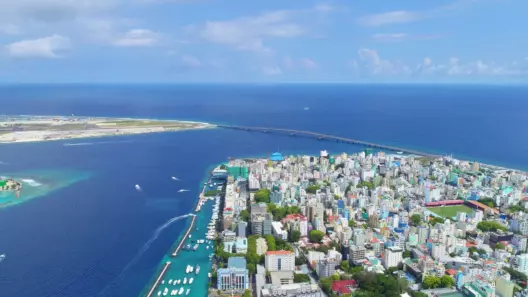
For travellers who have only seen the Maldives from a resort island, a few days on Rasdhoo Atoll is the clearest available correction to the idea that the country is a chain of private islands. Our guide to Malé covers the other end of that spectrum.
What published sources disagree about
Four contradictions about Rasdhoo Atoll worth knowing before you plan around any single page.
| Claim | Assessment |
|---|---|
| The atoll has three islands | It has four: Rasdhoo, Kuramathi, Madivaru and Madivaru Finolhu |
| Distance from Malé is 56 km / 58 km / 60 km | Sources vary by four kilometres; all are approximately right |
| Hammerhead schools of over 200 | Unsourced and improbable as a routine expectation; treat with caution |
| “Rasdhoo Atoll is the capital of Alifu Alifu” | An atoll cannot be a capital. Rasdhoo island is the capital |
The island count matters most, because it changes what you are booking. A page describing three islands has usually omitted Madivaru Finolhu, the sandbank that features in most excursion itineraries.
The hammerhead numbers matter for a different reason. Overstated wildlife claims set expectations that the site cannot meet, and a diver who arrives expecting 200 sharks and sees four distant shapes has had an excellent dive and will feel cheated. Accurate framing is not pessimism; it is what makes the encounter land properly.
Getting there
Rasdhoo Atoll is unusually accessible for a dive destination of this quality.
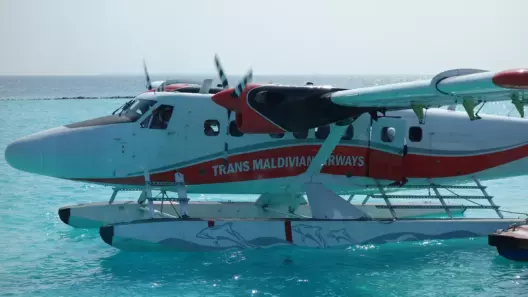
Speedboats run from the capital in roughly 60 to 90 minutes depending on operator and sea state. Public ferries also serve the island at a fraction of the cost and several times the duration, on a limited schedule that does not run daily. The transfer comparison sets out costs across all modes. Our speedboat guide covers booking and conditions.
There is no runway on this side of the division. Resorts in the northern half of Ari are reached by seaplane, which operates in daylight only, so a late arrival at Velana means either a speedboat or a night in the capital — see our guide to overnighting in Malé.
Liveaboards also work Rasdhoo Atoll as part of central-atoll routes, which is how most divers historically encountered it before the guesthouses opened.
Who this suits, and who it does not
The honest assessment, since Rasdhoo Atoll is genuinely not for everyone.
It suits divers who want serious sites at guesthouse prices, beginners who want to certify somewhere with real marine life, independent travellers comfortable with local-island rules, and anyone specifically chasing hammerheads without a liveaboard budget.
It does not suit travellers wanting a resort experience — for that, look at the main Ari reef or the Malé atolls. It does not suit anyone expecting alcohol, unrestricted swimwear or resort service. And it does not suit travellers who need guaranteed marine encounters: South Ari’s whale sharks are the only genuinely reliable large-animal sighting in the country.
It also does not suit very short trips. The hammerhead dive needs multiple attempts, which means five nights minimum and preferably seven. Our ranking of atolls and the piece on which to skip place it against the alternatives.
Frequently asked questions
Is Rasdhoo part of Ari Atoll? Administratively yes, geographically no. It is a separate natural atoll assigned to the Alifu Alifu division in 1984, with deep water between it and the main Ari reef.
Are hammerheads guaranteed? No. The population is resident year-round rather than seasonal, so there is no wrong month, but sightings are not reliable on any given morning. Plan several dawn dives.
When can I see mantas? Roughly November to April, at Manta Block in the north of the atoll. The site is shallow and can be snorkelled, though diving it is better.
Do I need to be an experienced diver? For Hammerhead Point, yes — it is a bluewater dive with no reef reference. The atoll also has sheltered sites suitable for complete beginners, and dive centres run certification courses.
Is there a resort in Rasdhoo Atoll? Kuramathi occupies the western side of the atoll. The inhabited island of Rasdhoo runs on guesthouses instead.
How much does it cost? Guesthouse rates start well below resort pricing, and diving is priced accordingly. Bring cash — there are no ATMs on the island.
Can I drink alcohol? Not on the inhabited island. Guesthouse islands in the Maldives are dry; alcohol is available on resort islands and, in some places, on offshore floating bars.
How long should I stay? Five nights minimum, seven if hammerheads are the priority. A single dawn attempt is unlikely to deliver.
Is Rasdhoo good for a first Maldives trip? Only if diving is the point of the trip. A first-time visitor wanting beaches, service and a short transfer will be better served in the Malé atolls. A first-time visitor who dives will get considerably more here for considerably less money.
Can I visit Kuramathi from Rasdhoo? The resort occupies the western side of the same atoll, and the channel between them is itself a dive site. Day access to resort islands varies by property and is usually restricted or charged, so confirm directly rather than assuming.
What to take from this
Rasdhoo Atoll is a separate reef carrying another atoll’s administrative name, four islands wide, with a resident hammerhead population and around 25 guesthouses on a strip of land you can walk in ten minutes.
It is the cheapest realistic access to scalloped hammerheads anywhere, and that access comes with honest conditions attached: dawn starts, bluewater diving, no guarantees, no alcohol, and local-island rules. Plan several attempts rather than one, ignore the sharks-in-their-hundreds framing, and treat Madivaru Corner as the reason to come rather than the consolation prize.
Next step: read the North Ari guide for the main reef alternative, and check the atoll selection framework if you are still deciding.
Verified 14 August 2026. Dive site descriptions compiled from multiple operator sources; where those sources conflict, the disagreement is set out above rather than resolved silently. Marine encounter frequencies are not guaranteed by any operator.