Maldives or Thailand: One Country Has Somewhere Else to Eat
In the Maldives, a bottle of water at a resort can be charged to your room. In Thailand, a plate of grilled skewers from a street stall costs less, and there is a stall on the next corner too.
That is not a joke about prices. It is a structural difference: one country has an economy you can buy things in, and the other has a resort that is the only seller on the island.
Everything else in this comparison follows from that, and from its twin — that Thailand has roads, ferries, towns, mountains and rivers, and the Maldives has none of them.
We have been to both, and every photograph here is our own.
One caveat stated up front: on the Thai side we know Bangkok and Ko Pha Ngan, which are two points in a large and varied country. This article compares the Maldives with Thailand’s structure — how it is organised, priced and travelled — rather than with every Thai beach.
1. What things cost
The dimension that decides this for most people, and the gap is not marginal.
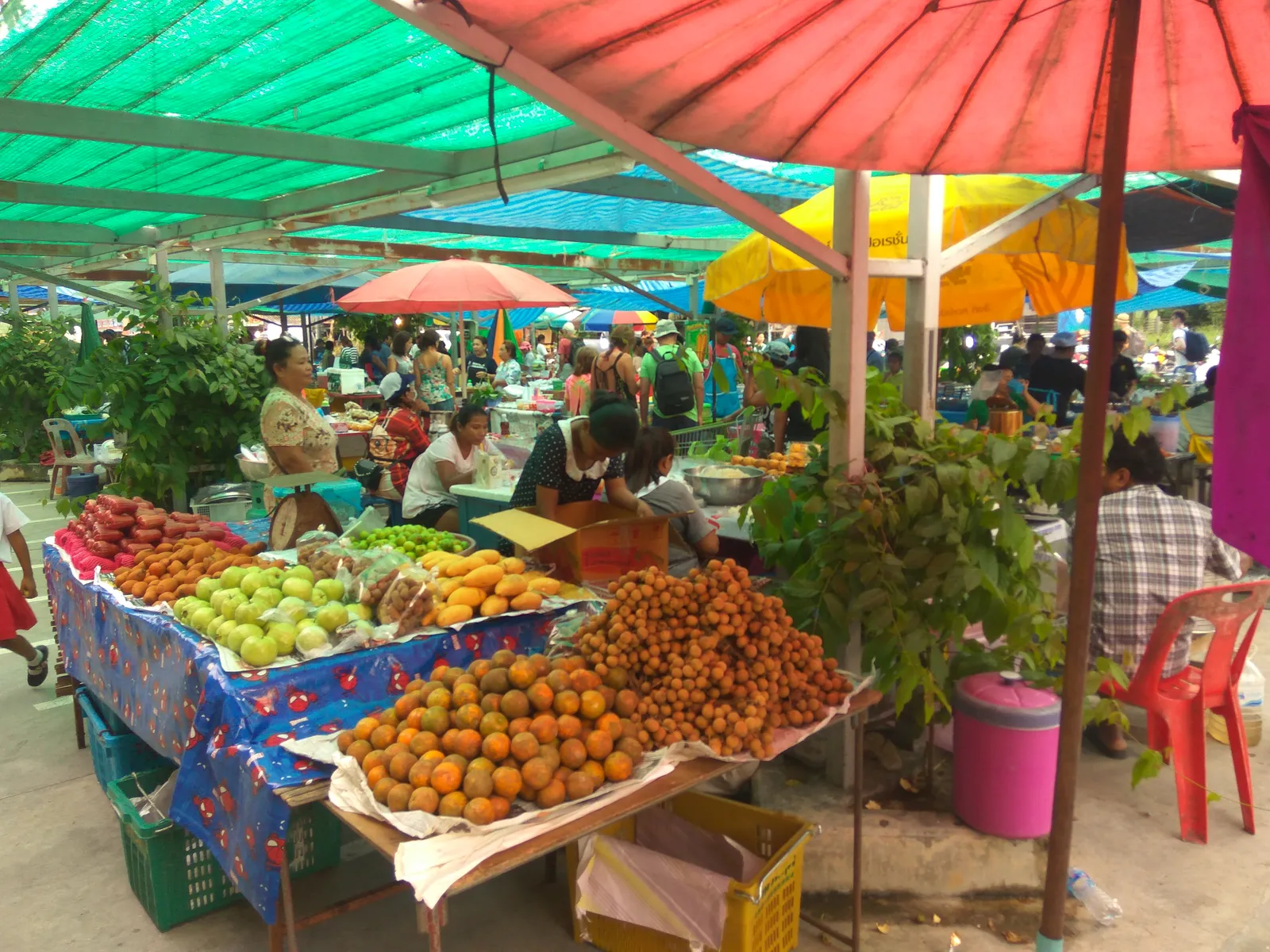
In Thailand there is a street economy. Food from stalls with the prices written on cards, at figures that would not buy a coffee at a Maldivian resort. Markets, convenience stores, restaurants at every price point, and competition between them.
In the Maldives there is one seller. On a resort island the property owns every outlet and there is no alternative. Our guide to budget and all-inclusive sets out the room-only trap that creates.
Then the Maldivian bill compounds. A 10% service charge and 17% goods and services tax reach roughly 28.7% on almost every resort line, as our guide to money in the Maldives explains.
A week for two, excluding international flights. Maldivian figures from our own budget work; Thai figures are orientation.
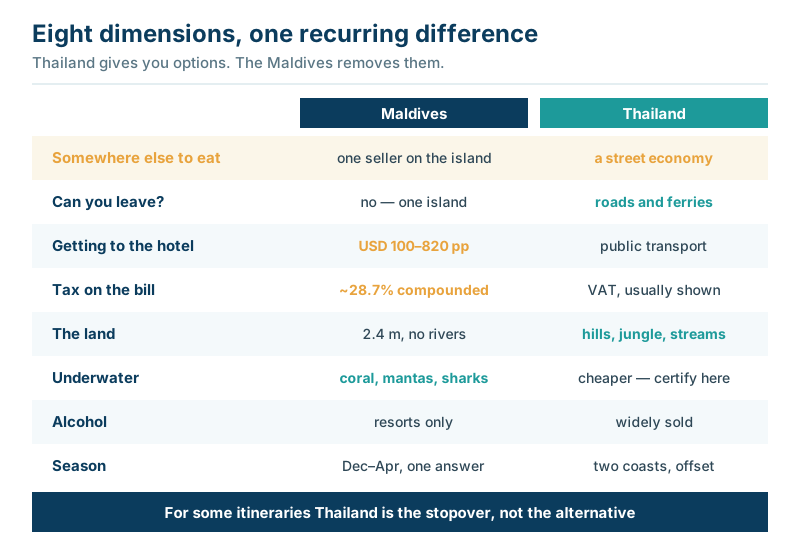
| Maldives | Thailand | |
|---|---|---|
| Budget | USD 1,100–1,900 on a guesthouse island | Comfortably below |
| Mid-range | USD 4,500–8,000 at a resort | A fraction of it |
| Transfer to the hotel | USD 200–1,640 for two | A taxi, a bus or a ferry |
| Eating outside the hotel | Impossible at a resort | The normal way to eat |
| Tax on the bill | ~28.7% compounded | VAT, usually in the price |
Where the Maldives competes is at the very bottom: a guesthouse island at around USD 60 a night, with meals at USD 5 to 13. That is the one Maldivian format that stands next to Thailand on price, and almost nobody comparing the two countries knows it exists.

2. Can you leave?
The same question this whole comparison set asks, and Thailand answers it more emphatically than anywhere.
A Maldivian resort occupies its island. No road, no second restaurant, no shop, nowhere to walk. The alternative is a guesthouse island, which is a village you can cross in twenty minutes.
A Thai island has a road network, scooters, songthaews and taxis. You can eat somewhere different every night, drive to the other side of the island, and change your plans in the morning.
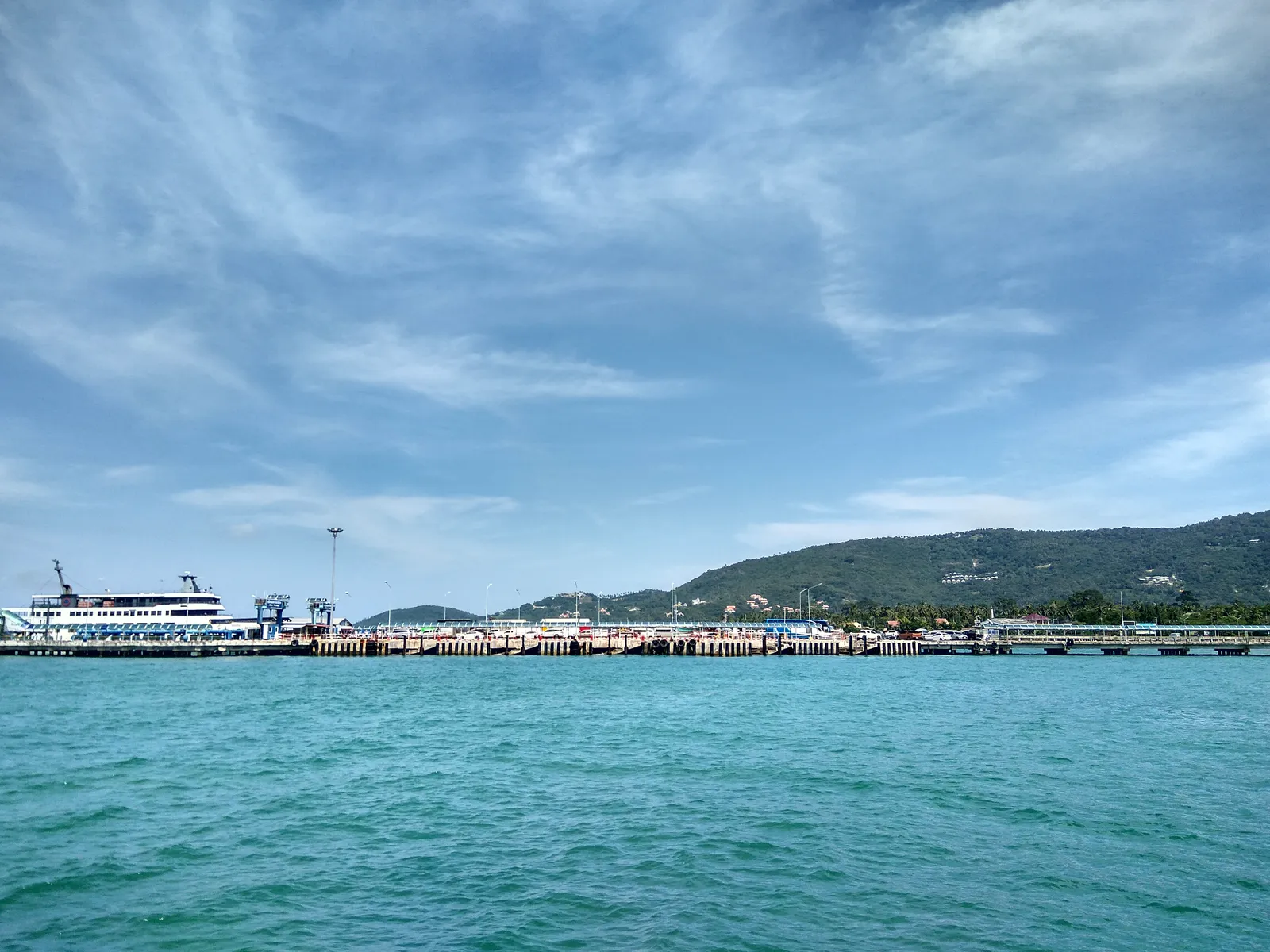
And you can leave the island entirely. Ferries connect the Gulf islands to each other and to the mainland, cheaply and often. Island-hopping is ordinary rather than chartered.
In the Maldives, moving between islands is a boat you pay for per person, every time, as our transfers guide sets out.
Which is the real difference in freedom. Not that Thailand is cheaper — that too — but that a Thai trip can be changed after it starts and a Maldivian one largely cannot.
3. Getting there and getting around
Where the hidden cost sits.
Both are long-haul from Europe. Thailand is served by a very large number of routes into Bangkok; the Maldives by fewer into Velana.
Then the Maldives adds a second journey. Speedboat at USD 100 to 400 per person return, or seaplane at USD 400 to 820, charged per person including children. Seaplanes fly in daylight only and stop between about 15:30 and 16:00, so a late arrival costs a day — the arithmetic is in our guide to missed connections.
Thailand adds a domestic flight and a ferry, or a bus, or a train — all of them public transport with published fares, all of them buyable on the day.
And Bangkok is a genuine Maldives stopover, alongside the Gulf hubs, Istanbul and Colombo. For some travellers Thailand is not the alternative but the stop on the way — a point our guide to getting to the Maldives covers.
4. What the land is
The dimension where the two countries are least alike, and where photographs make it obvious immediately.
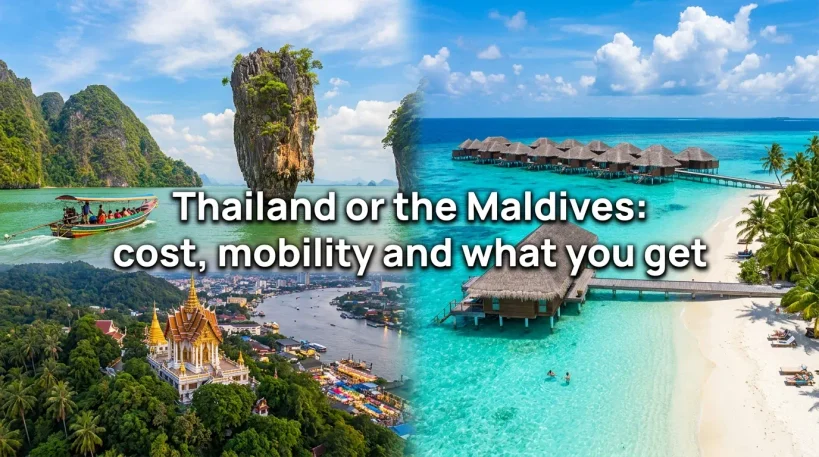
The Maldives has almost no land. The high point is about 2.4 metres. No hills, no rivers, no streams, no forests beyond island vegetation, no interior — because there is no inside to an island four hundred metres across.
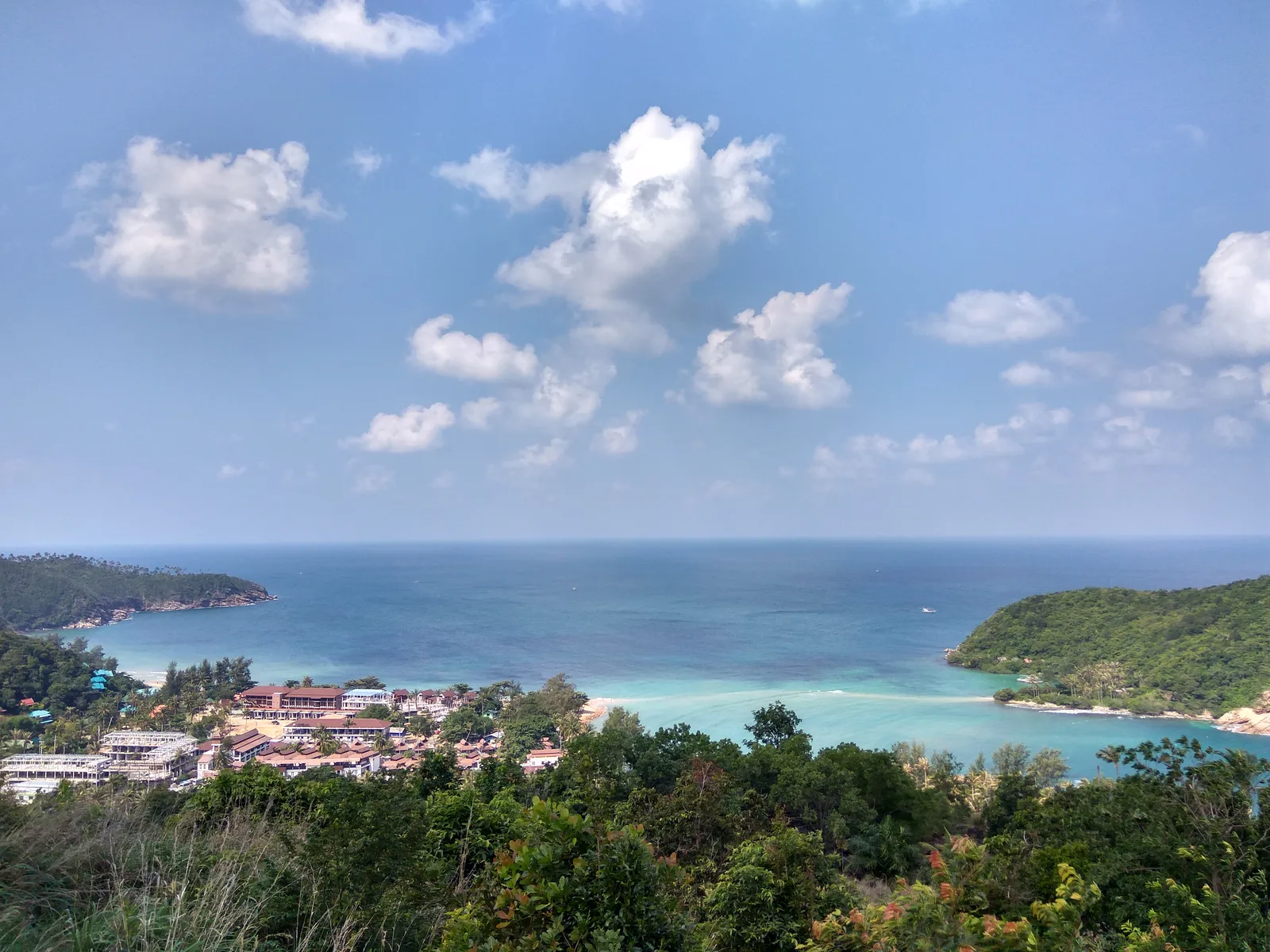
Thailand has all of it. Hills covered in jungle, granite headlands, waterfalls, freshwater streams running to the sea, and an interior you can walk into.
Fresh surface water is the sharpest version of the point. There are no rivers or streams anywhere in the Maldives. A photograph of water running over rocks is not a photograph that country can produce.
And there is terrestrial wildlife, national parks and forest — a whole category of excursion that the Maldives structurally cannot offer, where every trip is a boat.
Which changes what a wet day means. In Thailand, rain sends you inland; in the Maldives, wind cancels the boat and you are on the island, as our guide to rainy days explains.

5. What is in the water
Both are genuine diving destinations, and they are good at different things.
The Maldives has the better reef. More coral, more reef fish, and reliable encounters with manta rays, whale sharks, reef sharks and turtles. For big-animal diving it is not a close contest — with the caveat our guide to reef health records about the 2024 bleaching.
Thailand has the cheaper diving by a wide margin, and it is where an enormous number of divers certify. Learning to dive there costs a fraction of the Maldivian equivalent, which our guide to choosing a resort for divers prices.
The sensible combination is therefore obvious: certify in Thailand, dive the Maldives. Our diving guide makes the same recommendation about certifying at home rather than paying resort prices for a course.
Snorkelling from the beach favours the Maldives, where a close house reef gives unlimited free snorkelling — if you check for one, using the method in our guide to reading a house reef.
And Thai water is more variable. Two coasts with different seasons, different visibility and different conditions, which is a complication and also an option.
6. The rules you live under
Very different, and it is a bigger deal than most comparisons acknowledge.
The Maldives is a Muslim country with two legal regimes. Alcohol is served on resort islands under licence and is unavailable on every inhabited island. Swimwear is for resorts and designated tourist beaches only, and shoulders and knees are covered elsewhere — the detail is in our guides to alcohol and dress codes.
Thailand is a Buddhist-majority country with none of that. Alcohol is sold widely, dress is a matter of ordinary courtesy, and temples ask for covered shoulders and knees in the same way churches do elsewhere.
Which produces the reputational difference too. Thailand has a nightlife industry the Maldives does not have and could not have. Ko Pha Ngan in particular is known for a monthly beach party, and whether that is an attraction or a reason to book a different island is entirely a matter of what you want.
The Maldives has no nightlife anywhere, at any price, as our activities overview states plainly. An island is quiet by eleven — the closest thing to an evening out is a sunset cruise.
7. Season, and the thing about two coasts
Thailand’s seasons are more complicated than the Maldives’, in a way that is useful rather than annoying.
The Maldives runs on one monsoon system: December to April is dry, clear and expensive; May to November is wetter, cheaper and better for big animals. The mechanism is in our monsoon guide, the pricing in our guide to high and low season.
Thailand has two coasts with offset seasons. The Andaman side and the Gulf side do not peak at the same time, which means that at almost any point in the year one Thai coast is in reasonable shape.
That is a genuine planning advantage. With fixed dates there is somewhere to go in Thailand in most months. The Maldives offers one national answer.
Ko Pha Ngan and the Gulf islands sit on the side whose wettest period arrives late in the year, which is when the Andaman coast is coming into its best.
Check the coast, not the country. “The best time to visit Thailand” is a question with two different answers and no single one.
8. Who each one suits
Choose the Maldives if: the water is the point. Big animals, coral, an overwater villa, seclusion, and a week where nothing is asked of you and nothing is available either.
Choose Thailand if: you want variety, choice, food, mobility and change — a trip that can be a different thing on Tuesday than it was on Monday.
Budget travellers: Thailand, comfortably. Or a Maldivian guesthouse island, which is the one comparable option.
Divers: the Maldives for the diving, Thailand for the certification and the price.
Long trips: Thailand. A month there is a country; a month in the Maldives is a very long time on a small island unless you are moving between several.
Short trips: the Maldives has an advantage only if you pick a property near the airport, on the arithmetic in our guide to staying near the airport. Otherwise Thailand’s domestic connections are simpler.
Honeymooners: the Maldives for seclusion, Thailand if you would rather do things together — our honeymoon guide covers the Maldivian case.
Families: Thailand for variety and cost; the Maldives for a contained, shallow, safe lagoon and no traffic anywhere, which our guide to choosing a resort for a family explains.
And anyone who wants to be genuinely unreachable: the Maldives, which is better at that than anywhere.
The thing Thailand has that nothing else in this comparison set does
Worth its own section, because it is the reason Thailand keeps appearing in these conversations.
Scale. Thailand is a country of tens of millions of people with a metropolis, an internal aviation network, two coastlines, mountains in the north and a food culture that is one of the reasons people travel.
Which means the beach is optional. A trip there can contain almost no beach at all and still be a good trip. No Maldivian itinerary works that way, because there is nothing else to substitute.
And it means the beach competes internally. Thai islands compete with each other on price and character, which keeps standards up and prices down in a way that a market of one-resort islands cannot.
The Maldives has the opposite structure and the opposite advantage. Every island does one thing, does it without interruption, and cannot be diluted by anything else on the itinerary. That is why people go.
Which is the honest summary of the whole article: Thailand gives you options and the Maldives removes them, and for some trips removing them is precisely the point.
A note on Ko Pha Ngan specifically
Since it is where our photographs come from, and since it illustrates something general.
It is two islands in one. The southern end carries the party reputation and the monthly beach event. Most of the rest is quiet bays, fishing villages and forest, half an hour apart by road.
Which is a thing Thai islands can do and Maldivian ones cannot. A single Thai island holds several kinds of holiday, and you choose by where you book and how far you ride. A Maldivian resort island holds exactly one, decided before you arrive.
The practical version: researching “Ko Pha Ngan” as a single entity produces contradictory reviews, because reviewers were on different parts of it. Researching a Maldivian island produces consistent ones, because there is only one thing there.
And it is why our own caveat matters. We saw part of one island and one city. That is enough to describe how Thailand is organised and not enough to rank its beaches, which is why this article does neither.
One last practical difference
Small, and it comes up on every trip.
Connectivity. Thailand has ubiquitous cheap mobile data and reliable coverage across its islands. The Maldives has good coverage too, and a resort’s wifi is generally fine — but the SIM or eSIM you buy on arrival matters more there, because a boat between islands has no other signal.
Cash. Thailand runs on cash and QR payments at street level. A Maldivian resort runs on your room number and settles at the end, which is why bills surprise people.
Medical. Thailand has hospitals with international standards in its cities. The Maldives has a clinic on larger islands and evacuation to Malé from smaller ones — the picture is in our safety guide.
And what you carry. A Thai trip needs walking shoes and a day bag. A Maldivian one needs a rash guard, reef shoes and very little else, because you will not be going anywhere.
9. Can you do both?
Not as a holiday, but frequently as an itinerary, and the distinction matters.
They are not a natural pair. Both are hot, both are beach destinations, and a fortnight split between them is two long flights for two versions of warm water.
But Bangkok is a Maldives routing hub, which means combining them is logistically straightforward if you want to. A few days in Bangkok on the way to or from an atoll is a real itinerary, and it is a very different few days.
That is the honest framing: Thailand is more likely to be your stopover than your alternative, if you are already set on the Maldives.
And if you are not set on either, the question is not which beach but which kind of trip: a country with a beach in it, or an island with nothing else.
The Maldives’ own natural pair is Sri Lanka — a short hop, a completely different trip, and a fortnight that works properly.
What we know first-hand, and what we do not
We have been to both countries, and every photograph here is ours, from 2017 and dated in the captions.
On the Thai side we know Bangkok and Ko Pha Ngan. That is two points in a country of considerable variety, and the comparison is drawn against Thailand’s structure — its transport, its prices, its terrain, its rules — rather than against every Thai beach. Where the article says “Thailand”, it means that structure.
On the Maldivian side we have stayed on Maafushi, an inhabited island, and day-visited one resort. We have not stayed overnight at a Maldivian resort, which is why this article compares structures rather than judging service, food or atmosphere at either end.
The Thai figures are looser than the Maldivian ones, because we have published price work on one country and not the other. Every Thai number here is a band, labelled as orientation.
And nothing price-specific from 2017 is quoted, for obvious reasons. The photographs of price cards are shown as evidence that a street economy exists, not as a current menu.
That is a narrower promise than most comparison articles make, and it is one we can keep.
Questions travellers ask
Which is better, the Maldives or Thailand? Different trips. The Maldives is one island, one resort and the best reef water in the Indian Ocean. Thailand is a country with beaches in it, where you can move, choose and change your mind — at a small fraction of the cost.
Which is cheaper? Thailand, by a very wide margin. There is a street economy, public transport and competition, while a Maldivian resort is the only seller on its island and adds a service charge and tax compounding to about 28.7%.
Which has better diving? The Maldives, on coral and big animals. Thailand is far cheaper and is where an enormous number of divers certify — so the sensible pattern is to certify there and dive here.
Can you leave your hotel? In Thailand, obviously and constantly. On a Maldivian resort island, no — the property occupies the whole island. On a Maldivian inhabited island you can walk the village.
Is alcohol available in both? In Thailand, widely. In the Maldives, only on resort islands and floating bars; every inhabited island is dry.
When should I go to each? The Maldives is best December to April. Thailand has two coasts with offset seasons, so in most months one of them is in reasonable shape — check the coast rather than the country.
Can I visit both in one trip? As a holiday, there is little reason to. As an itinerary, yes — Bangkok is a common routing hub for the Maldives, so a few days there on the way is straightforward.
Which suits a first long-haul beach trip? Thailand if you want somewhere to explore and a budget that stretches. The Maldives if the water is the whole point and you have the money for it.
What to take away
- Thailand has a street economy; a Maldivian resort island has one seller and a bill that compounds by about 28.7%.
- You can leave in Thailand — roads, scooters, ferries — and you cannot leave a Maldivian resort island. That is freedom of a kind, not just cost.
- Thailand has hills, jungle, waterfalls and freshwater streams. The Maldives has no rivers at all and a high point of about 2.4 metres.
- The Maldives wins underwater; Thailand is where to certify, at a fraction of the price.
- Thailand’s two coasts have offset seasons, so most months work somewhere. The Maldives offers one national answer.
Next step: work out which sentence describes the trip you actually want. “I want to see a country and spend some of it on a beach” is Thailand, and no amount of Maldivian marketing will change that. “I want to be in the water, and reachable by nobody, and asked for nothing” is the Maldives, and Thailand cannot sell you that at any price. Both are good answers. They are answers to different questions, and the mistake is spending a fortnight discovering which question you were asking.